.svg)
Top 10 Stock Forecasting Software for Shopify Stores in 2026


If you’ve ever stared at your Shopify dashboard wondering whether your next sales spike will leave you stocked or scrambling, you’re not alone.
Most Shopify merchants don’t struggle because they don’t sell, they struggle because demand changes faster than their inventory decisions.
That’s where stock forecasting tools make life easier.
These tools analyze your sales patterns, seasonality, and channel data so you can reorder on time, avoid stockouts, and keep cash flow under control.
In this guide, we’ll break down what stock forecasting software is, the essentials to look for, and the top tools worth considering in 2026.
What Is Stock Forecasting Software for Shopify?
Stock forecasting software helps Shopify merchants predict how much inventory they’ll need over the coming days, weeks, or months.
Instead of relying on intuition or rough spreadsheets, these tools use historical sales, trends, and demand signals to estimate future stock requirements.
For Shopify sellers, this is especially valuable because:
- Sales can fluctuate rapidly across seasons, promotions, and channels.
- Running out of inventory means lost revenue and lower search ranking.
- Overstocking locks up cash and increases storage or fulfillment costs.
Key Features to Look for in a Stock Forecasting Tool
Picking the right forecasting tool can make inventory planning dramatically easier for your Shopify store.
The best systems don’t just predict demand they save you from second-guessing every purchase order. Here are the five features that matter most:
1. Accurate Demand Forecasting
A great tool should analyze historical sales, seasonality, and trends to give you reliable predictions, not just simple averages. Better accuracy means fewer stockouts and less excess stock tying up your cash.
2. Real-Time Shopify Sync
Your forecasts depend on fresh data. Tools that sync instantly with Shopify ensure your stock levels, orders, and sales insights are always up-to-date, so every recommendation is based on the real picture.
3. Automated Reorder Recommendations
Instead of manually calculating reorder points (or relying on gut feel), a good tool should clearly tell you what to reorder, when, and why. This is where most spreadsheets fall apart as order volume grows.
4. Multi-Channel Inventory Support
If you sell beyond Shopify, Amazon, Etsy, retail, or 3PLs, the tool should bring all your sales and inventory data into one place. This makes forecasting far more accurate across your entire business.
5. Clear, Actionable Dashboards
Great forecasting isn’t useful unless it’s easy to understand. Look for tools with simple, visual dashboards that highlight what needs attention, so you can act quickly without digging through complex reports.
Here are the top 10 Stock Forecasting Software for Shopify in 2026:
1. Sumtracker
Sumtracker is a multichannel inventory management and forecasting platform designed for e-commerce sellers. It provides real-time stock sync, demand forecasting, purchase order automation, and bundled inventory tracking, all tightly integrated with Shopify and other platforms.
%20(1).avif)
Key Features
- Real-time Multichannel Inventory Sync: Keeps stock levels updated across Shopify, Amazon, Etsy, eBay, and more.
- Inventory Forecasting: Predicts future demand based on sales velocity, seasonality, and trends.
- Automated Reorder Points & Recommendations: Tells you exactly when to restock and how much to order.
- Purchase Order Management: Create and manage POs within minutes, with supplier and cost details auto-filled.
- Kits & Bundles Support: Automatically adjusts stock for packed or bundled products.
- Low Stock Alerts: Prevent stockouts with timely alerts.
- Inventory Health Reports: Insights into fast-moving, slow-moving, aging, and overstocked items.
- Multi-Location Support: Manage warehouses and 3PL stock with complete visibility.
Pros
- Extremely easy to set up and use
- Fast and accurate syncing across sales channels
- Affordable compared to complex enterprise tools
- Excellent customer support with hands-on onboarding
Pricing
- Starts at $59/month, with higher tiers available for larger order volumes.
- Free trial available.
Customer Reviews
- Rated 5 stars on Shopify.
- Highly rated by users for ease of use, responsive support, and reliable forecasting.
- Merchants highlight its simplicity and how it saves hours in restocking and purchasing.
.avif)
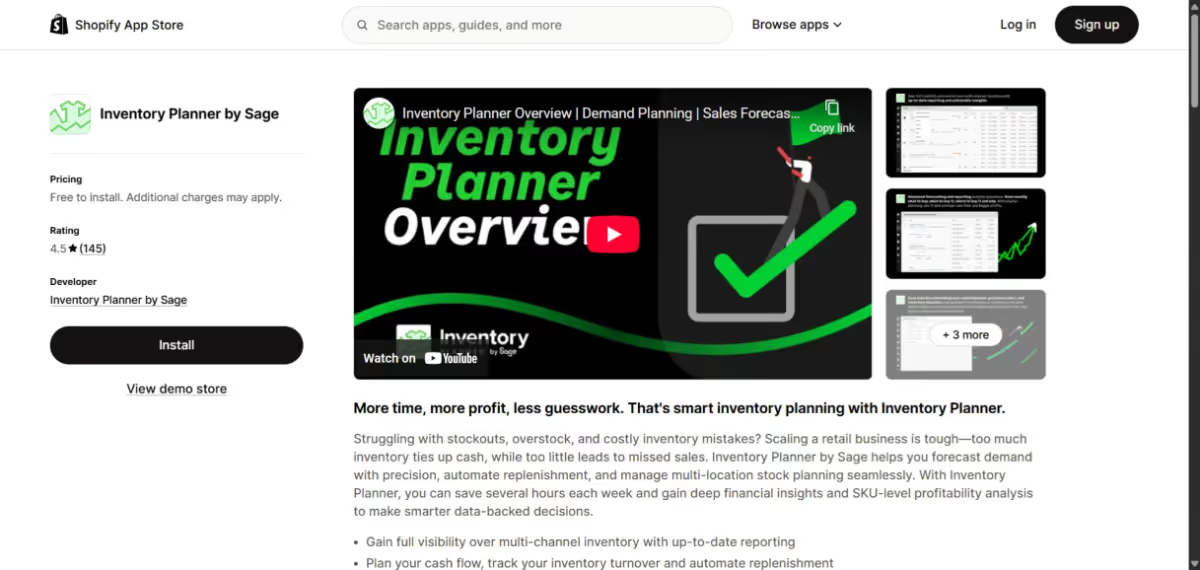
2. Inventory Planner by Sage
Inventory Planner is a forecasting and purchasing tool used by larger Shopify and DTC brands. It focuses heavily on analytics, helping merchants understand when to reorder based on trends, seasonality, and detailed SKU insights.
Key Features
- Demand forecasting based on historical sales
- Automated purchase recommendations
- Multi-channel and multi-location support
- Deep analytics and customizable reporting
- Replenishment planning for complex catalogs
Pricing
- Pricing is custom and generally on the higher side, often starting around mid-tier levels.
Customer Reviews
- Rated 4.4 stars on Shopify
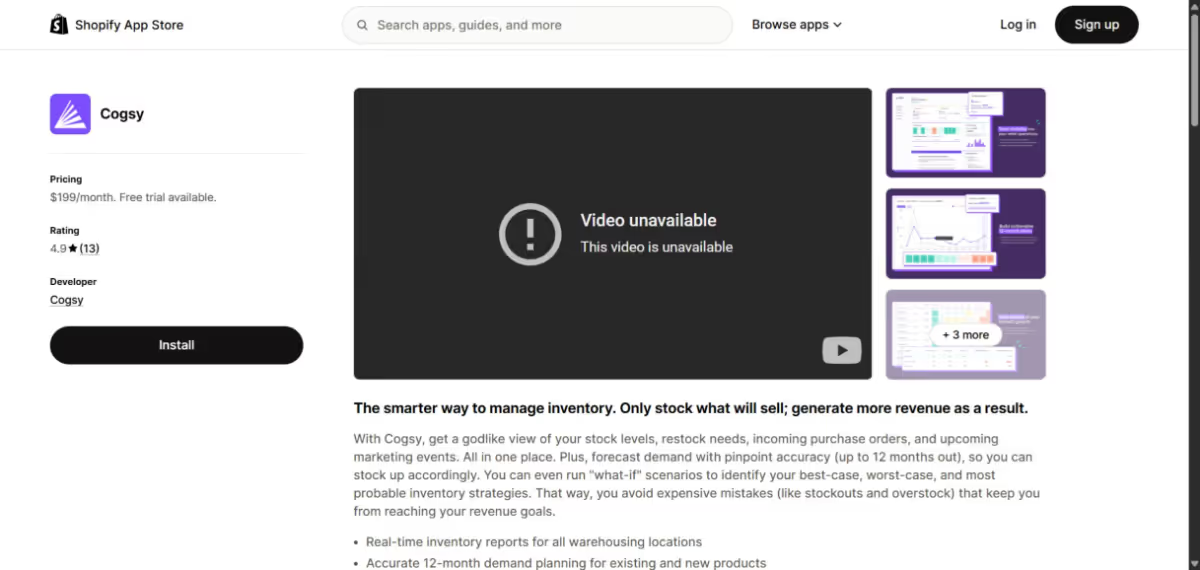
3. Cogsy
Cogsy is a forecasting and operations planning platform built for fast-scaling Shopify brands. It helps merchants plan inventory months ahead, simulate demand scenarios, and automate purchasing workflows.
Key Features
- 12-month demand forecasting
- Scenario modeling for growth planning
- Automated purchase orders
- Restock alerts and low-inventory monitoring
- Inventory and sales dashboards
Pricing
- Starts around $199/month.
Customer Reviews
- Rated 4.9 stars on Shopify from 13 reviews.
4. Katana Cloud Inventory
Katana works best for Shopify brands that manufacture, assemble, or manage production workflows.
For pure resellers, though, it can feel heavier than necessary, but sometimes more complex than what growing ecommerce teams actually need.

Key Features
- Real-time stock and order management
- Reorder points and PO automation
- Batch and barcode tracking
- Multi-warehouse support
- Production planning tools for makers and manufacturers
Pricing
- Plans typically begin around $399/month.
Customer Reviews
- Rated 4.6 stars on Shopify
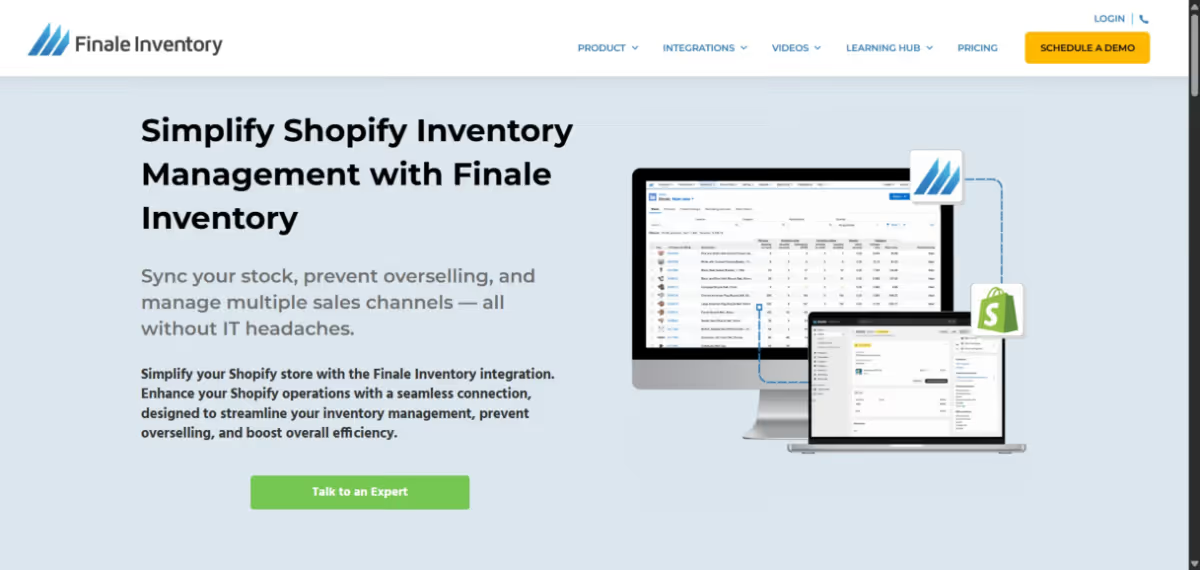
5. Finale Inventory
Finale Inventory is a flexible inventory management solution offering advanced forecasting and replenishment suited for multi-warehouse ecommerce sellers. It’s known for scalability and customization.
Key Features
- Reorder point automation
- Safety stock planning
- Barcode and real-time inventory tracking
- Purchase order management
- Multi-location forecasting
Pricing
- Tiered pricing based on order volume; mid- to enterprise-level pricing.
Customer Reviews
- Some users mention that the interface feels outdated.
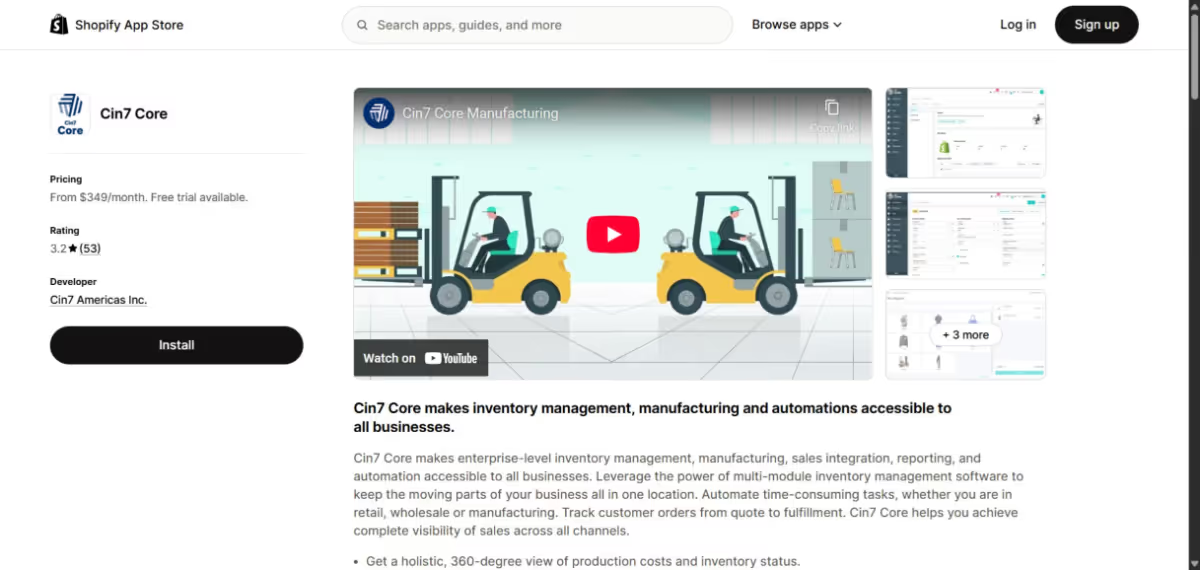
6. Cin7 Core
Cin7 Core (formerly DEAR Systems) is an ERP-style inventory platform with forecasting, purchasing, manufacturing, and warehouse features. It’s ideal for larger Shopify and multi-channel operations.
Key Features
- Demand forecasting and planning
- Warehouse and multi-location management
- Purchase order automation
- Manufacturing workflows
- Integrations with major sales channels
Pricing
- Starts around $349/month, depending on modules.
Customer Reviews
- Rated 3.4 stars on Shopify app store
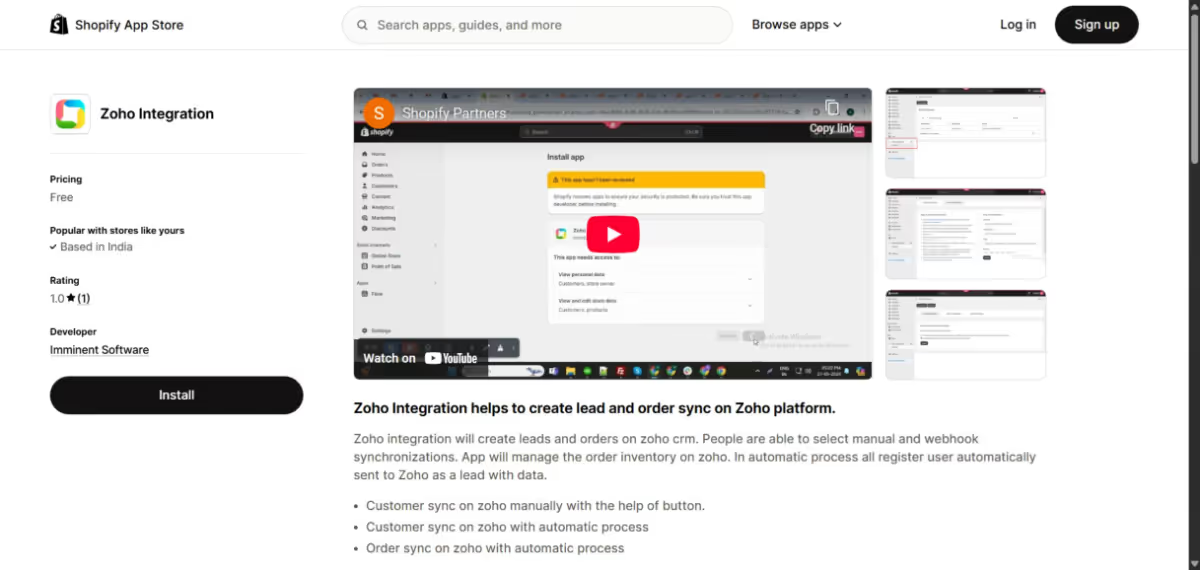
7. Zoho Inventory
Zoho Inventory is a budget-friendly inventory management system with basic forecasting, stock tracking, and strong integrations across Zoho’s ecosystem. It’s ideal for small and mid-sized Shopify stores.
Key Features
- Stock tracking with reorder alerts
- Multi-warehouse management
- Barcode and batch tracking
- Shopify integration
- Reporting and basic forecasting insights
Pricing
- Free plan available; paid plans start around $29/month.
Customer Reviews
- Some users note limitations in advanced forecasting.
8. StockTrim
StockTrim is a lightweight forecasting and demand planning software that turns your sales history into clear, actionable restock recommendations. It helps Shopify merchants maintain ideal stock levels without guesswork.
.avif)
Key Features
- Forecast by variant (colour/size) and parent product
- Forecast new products by simulating sales and purchasing needs
- Multi-location forecasting and planning
- Automated purchasing with auto-generated purchase orders
- Support for container sizes and minimum order quantities (MOQs)
Pricing
- Starter plan typically begins around $199/month.
Customer Reviews
- Limited public reviews available.
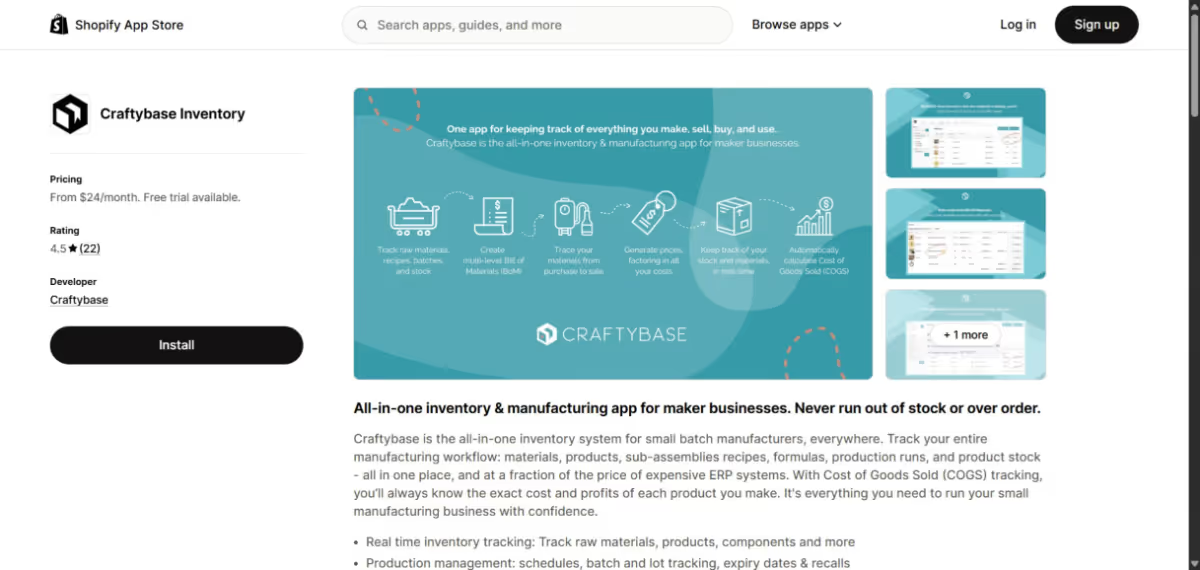
9. Craftybase
Craftybase is designed specifically for makers and handmade brands. It focuses on material-level forecasting, production planning, and COGS tracking rather than full inventory ERP capabilities.
Key Features
- Material-level inventory tracking
- Recipe and bill-of-materials management
- Production planning for handmade workflows
- COGS tracking and automated cost calculations
- Batch, lot, and compliance record management
- Basic forecasting for raw materials and finished products
Pricing
- Pricing starts $24/month
Customer Reviews
- Rated 4.5 stars on Shopify app store.
10. Skubana (Extensiv)
Skubana, now part of Extensiv, is a powerful operations and forecasting platform used by high-volume ecommerce brands. It excels at automation, order routing, and forecasting for large SKU catalogs.
.avif)
Key Features
- Demand forecasting and replenishment planning
- Automated order routing and workflow automation
- Centralized inventory management across all channels
- Advanced analytics and operational reporting
- High-SKU and high-order-volume scalability
Pricing
- Priced at the higher end, typically for businesses with larger order volume.
Customer Reviews
- Well-reviewed for robust automation and forecasting capabilities.
Conclusion
Most Shopify stores don’t run into inventory trouble because forecasting is impossible, they run into trouble because they start too late.
Even a “good enough” forecasting tool is better than continuing to guess reorder quantities during sales spikes or busy seasons.
The right choice depends on how complex your operations are, how many channels you sell on, and how much time you want to spend planning inventory versus selling.
Start simple, get visibility, and improve forecasting as your business grows.
FAQs
1. What is stock forecasting software, and why do Shopify stores need it?
Stock forecasting software predicts future inventory needs using sales history, seasonality, trends, and demand patterns. Use it to avoid stockouts, reduce overstock, and plan purchases better.
2. Which stock forecasting tool is best for small or mid-sized Shopify brands?
For small to mid-sized merchants, Sumtracker is popular because it offers accurate forecasting, real-time multichannel syncing, and easy setup without the complexity or cost of enterprise platforms.
3. How accurate are forecasting tools for ecommerce?
Accuracy depends on the quality of your sales data and the forecasting model used. Tools that factor in seasonality, sales velocity, promotions, and multichannel demand tend to deliver the most reliable predictions.
4. Do I need forecasting software if I already use Shopify’s inventory system?
Shopify’s native inventory system doesn’t forecast demand or calculate optimal reorder points. Stock forecasting tools add automation, insights, and predictive analytics, helping you restock proactively instead of reactively.
5. Can forecasting tools help reduce warehouse costs?
Yes. By preventing overstocking and helping you order the right quantities at the right time, forecasting tools reduce storage fees, dead stock, and cash tied up in slow-moving inventory.
Conclusion

Bhoomi writes about inventory management and multichannel selling at Sumtracker. Her focus is on solving real operational problems for Shopify, Amazon, and marketplace sellers through well-researched content. She covers everything from multi-location inventory syncing and stock error troubleshooting to replenishment planning and platform comparisons, turning complex eCommerce operations into clear, actionable guidance.
LinkedInRelated Articles
Tool and strategies modern teams need to help their companies grow.


Ready to Simplify Your Inventory Management?
Join hundreds of e-commerce merchants who rely on Sumtracker to save time, eliminate errors, and grow their business.