.svg)
Inventory Order Cycle Explained: How Often Should Businesses Reorder Stock?


If you’ve ever found yourself staring at low stock levels and wondering
“Should I reorder now or wait a little longer?”
You’re not alone.
Reordering inventory isn’t just about running out of products, it’s about timing purchases in a way that protects cash flow, avoids overstocking, and keeps customers happy.
That’s exactly what the inventory order cycle helps you figure out. It defines how often you should replenish stock based on how fast products sell, how long suppliers take to deliver, and how much inventory your business can realistically afford to hold.
In this guide, we’ll break down how the inventory order cycle works, what influences it, and how to set one that actually fits your business.
What Is the Inventory Order Cycle?
The inventory order cycle refers to the time interval between two consecutive restocking orders for the same product.
In simple terms, it answers one basic question:
How often should you reorder this item?
For example, if you place a purchase order for a product every 14 days, then that product has a 14-day inventory order cycle. Fast-moving items usually have shorter order cycles, while slower-moving or seasonal products follow longer ones.
The inventory order cycle is not a fixed number. It changes based on several practical factors, including:
- How quickly the product sells
- Supplier lead time
- Available cash for purchasing inventory
- Storage or warehouse capacity

Why the Inventory Order Cycle Matters for Businesses
Inventory decisions directly impact both day-to-day operations and long-term profitability. The inventory order cycle plays a key role in ensuring products are available when customers want them without tying up too much cash in excess stock.
When the order cycle is too short, businesses may reorder too frequently, increasing purchasing and shipping costs. When it’s too long, they risk stockouts, delayed fulfillment, and lost sales.
Finding the right balance helps businesses operate more smoothly and predictably.
A well-defined inventory order cycle helps businesses:
- Maintain consistent product availability
- Avoid last-minute emergency purchases
- Use cash more efficiently
- Reduce overstock and inventory holding costs
- Plan purchasing, storage, and staffing more accurately
Beyond cost and availability, a reliable order cycle also improves decision-making. Teams spend less time reacting to low stock situations and more time planning inventory based on actual demand.
What Factors Determine an Inventory Order Cycle?
An inventory order cycle is shaped by everyday business realities, not theory. It depends on how much stock you can afford to buy, how quickly it sells, and how long it takes to replace.

Here are the key factors that influence how often businesses reorder inventory:
1. Cash in Hand
Cash flow directly limits how frequently you can place inventory orders.
If cash is tight, businesses usually place fewer, carefully planned orders to avoid locking too much money in stock. When cash flow is strong, it becomes easier to reorder more often and keep inventory lean.
Simply put:
If you can’t afford to restock frequently, your order cycle will be longer.
2. Supplier Lead Time
Lead time is the time between placing an order and receiving the inventory.
Long or unpredictable lead times force businesses to reorder earlier and sometimes in larger quantities. Short and reliable lead times allow shorter order cycles and more flexibility.
Simply put:
The longer your supplier takes to deliver, the earlier you need to reorder.
3. Sales Velocity and Demand Patterns
Products that sell quickly run out faster and need to be reordered more often. Slow-moving or seasonal items don’t require frequent reordering.
Understanding how consistently a product sells helps businesses decide whether a weekly, monthly, or seasonal order cycle makes sense.
Simply put:
Faster sales = shorter reorder cycles.
4. Storage and Warehouse Space
Physical space limits how much inventory you can hold at any given time.
Businesses with limited storage usually reorder more frequently in smaller quantities. Those with larger warehouses can place bigger, less frequent orders.
Simply put:
Less space means shorter, more frequent order cycles.
5. Supplier Constraints and Order Minimums
Some suppliers require minimum order quantities or only ship on fixed schedules. These restrictions can override ideal reorder timing.
In such cases, businesses often adjust their order cycle to match supplier rules rather than internal preference.
Simply put:
Supplier rules can decide your order cycle for you.
How Different Business Types Handle Inventory Order Cycles
Different businesses reorder inventory at different frequencies depending on how they sell, store, and replenish stock.
Here’s how inventory order cycles typically vary by business type:
- eCommerce businesses
Usually follow shorter order cycles because products sell daily and stockouts lead to immediate lost sales. Bestsellers are often reordered weekly or biweekly.
- Retail stores
Tend to reorder on fixed schedules due to limited shelf and storage space. Weekly or monthly cycles are common to keep stores organized and stocked.
- Wholesale businesses
Operate with longer order cycles, placing larger orders less frequently. Demand is more predictable, making bulk reordering more efficient.
- Manufacturing businesses
Align order cycles with production plans, not daily sales. Raw materials are reordered based on production runs and supplier lead times.
- Seasonal businesses
Adjust order cycles throughout the year, reordering more frequently during peak seasons and scaling back during slow periods.
How to Calculate the Ideal Inventory Order Cycle
For Shopify merchants, calculating the ideal inventory order cycle is about one thing, keeping products in stock without locking up too much cash.
You don’t need complex formulas. You just need to understand how fast products sell, how long restocking takes, and how much buffer you can afford.
Step 1: Check Your Average Sales per Day
Start by looking at your Shopify sales data.
Ask:
- How many units does this product sell per day?
- Is demand consistent or driven by ads, promotions, or seasonality?
Fast-selling products need shorter reorder cycles. Slower-moving items can be reordered less frequently.
Step 2: Account for Supplier Lead Time
Lead time is critical for eCommerce.
Include:
- Supplier processing time
- Shipping duration
- Customs or fulfillment delays (if applicable)
If your supplier takes 20 days to deliver, your reorder cycle must start well before inventory reaches zero.
Step 3: Add a Safety Stock Buffer
Online demand can spike unexpectedly ads perform better than expected, a product goes viral, or a sale drives higher volume.
Safety stock protects you from:
- Sudden sales spikes
- Delayed shipments
- Supplier issues
Higher volatility = larger buffer.
Step 4: Factor in Cash Flow and Storage
Even if demand supports frequent reordering, Shopify merchants still need to work within:
- Available working capital
- Warehouse or 3PL storage limits
This determines whether you reorder smaller quantities more often or larger quantities less frequently.
Step 5: Set a Clear Reorder Rhythm
Based on all the above, define a simple reorder schedule weekly, biweekly, or monthly.
The goal is not perfection. It’s having a repeatable system that you review and adjust as sales change.
Common Inventory Order Cycle Mistakes to Avoid
Many inventory problems don’t come from bad products or suppliers, they come from poorly managed order cycles. Below are the most common mistakes businesses make, explained in simple, practical terms.

Reordering Without Looking at Actual Sales Data
When businesses reorder based on instinct or past habits, they risk ordering too early or too late. Sales patterns change over time, and ignoring current data leads to stockouts or excess inventory.
What it leads to: Unpredictable stock levels and frequent firefighting.
Ignoring Supplier Lead Times
Some businesses place reorders only after stock runs low, without factoring in how long suppliers take to deliver. If lead times are long or inconsistent, inventory may run out before new stock arrives.
What it leads to: Delayed fulfillment and lost sales.
Using the Same Order Cycle for All Products
Not all products sell at the same speed. Applying a single reorder schedule to every item ignores differences in demand.
What it leads to: Overstocked slow-moving items and understocked bestsellers.
Ordering More Inventory Than Needed “Just to Be Safe”
Overordering is often driven by fear of stockouts. While it may prevent shortages, it locks up cash and increases storage and holding costs.
What it leads to: Poor cash flow and excess unsold stock.
Never Updating the Order Cycle as the Business Grows
As sales increase, new channels are added, or suppliers change, inventory behavior shifts. Businesses that never revisit their order cycles operate on outdated assumptions.
What it leads to: Inventory plans that no longer match reality.
How Inventory Software Helps Optimize Reordering Frequency
As an eCommerce merchant, managing reordering frequency manually becomes difficult as soon as sales grow, products increase, or multiple locations and channels are involved. This is where inventory software plays a critical role.
Instead of relying on spreadsheets or gut instinct, inventory software uses real sales and stock data to help businesses reorder at the right time, in the right quantities.
Here’s how inventory software like Sumtracker makes reordering more accurate and predictable:
- Real-time inventory tracking
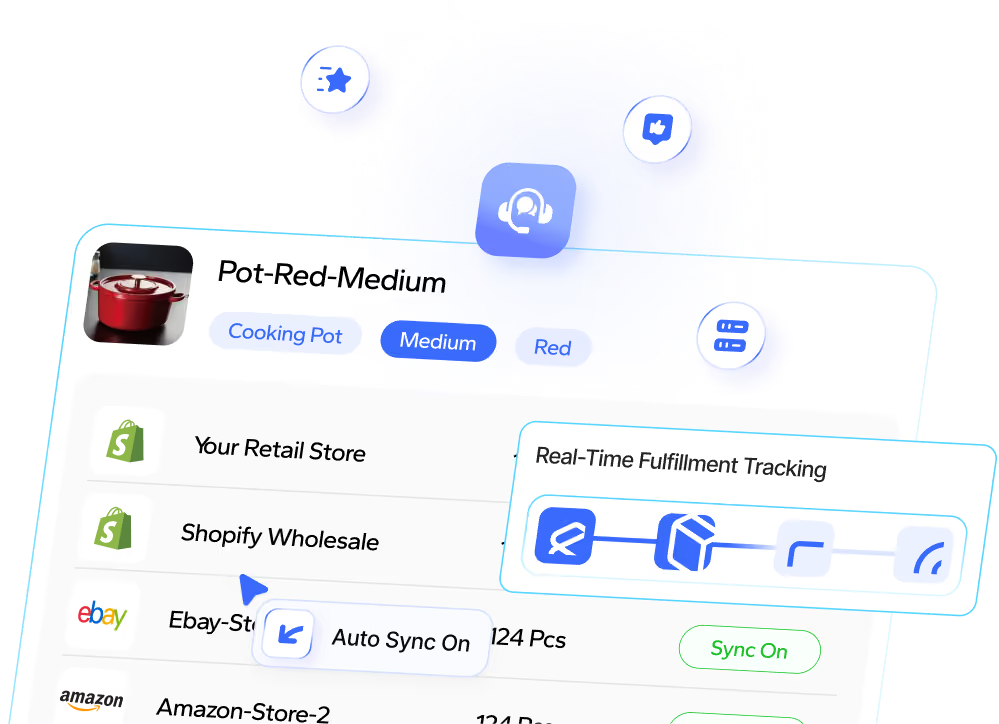
Inventory software continuously tracks stock levels across Shopify and other connected sales channels. This ensures reorder decisions are based on actual inventory positions, not delayed or outdated data.
- Sales velocity–based reordering
By analyzing how fast products sell, inventory software helps identify which SKUs need shorter reorder cycles and which can be reordered less frequently. This is especially important for fast-moving Shopify bestsellers.
- Lead time–aware reorder planning
Good inventory tools factor in supplier lead times so reorders are triggered early enough to prevent stockouts, even when suppliers take weeks to deliver.
- Low-stock alerts and reorder recommendations
Instead of manually checking inventory, merchants receive alerts or suggested reorder points when stock reaches critical levels. This reduces last-minute purchasing and emergency restocking.
- Better cash flow control
With clearer visibility into upcoming inventory needs, businesses can plan purchases in advance, avoid overordering, and allocate cash more efficiently.
Conclusion
Getting the inventory order cycle right is less about complex formulas and more about making smarter, more timely decisions.
When you understand how fast your products sell, how long suppliers take to deliver, and how much inventory your business can realistically afford to hold, reordering stops being reactive and starts becoming predictable.
For eCommerce merchants, a well-defined inventory order cycle helps prevent stockouts, reduce excess inventory, and protect cash flow as the business grows.
It creates a clear rhythm for purchasing, so you’re not constantly second-guessing when to reorder or scrambling to restock.
With the help of inventory software like Sumtracker, merchants can move away from spreadsheets and manual checks and manage reordering based on real-time data and actual demand.
The result is a cleaner, more reliable inventory process that scales with your business without unnecessary stress or guesswork.
FAQs
How often should an eCommerce business reorder inventory?
There’s no fixed rule. Most eCommerce and Shopify merchants reorder weekly, biweekly, or monthly, depending on sales velocity, supplier lead time, cash flow, and storage capacity.
What is a good inventory order cycle for Shopify stores?
A good inventory order cycle for Shopify stores is one that prevents stockouts without overstocking. Fast-selling products usually need shorter cycles, while slow-moving items can be reordered less frequently.
Is inventory order cycle the same as reorder point?
No. The inventory order cycle refers to how often you reorder, while the reorder point is when you place the order based on stock levels. Both work together to manage inventory effectively.
How does supplier lead time affect the inventory order cycle?
Longer supplier lead times usually require earlier and sometimes less frequent reorders. Short and reliable lead times allow businesses to follow shorter, more flexible order cycles.
Should all products follow the same inventory order cycle?
No. Products sell at different speeds. Bestsellers often need shorter reorder cycles, while slow-moving or seasonal products perform better with longer cycles.
Can inventory software help decide how often to reorder?
Yes. Inventory software tracks real-time stock levels, sales velocity, and lead times to suggest when and how often to reorder, reducing manual work and guesswork.
Conclusion

Bhoomi writes about inventory management and multichannel selling at Sumtracker. Her focus is on solving real operational problems for Shopify, Amazon, and marketplace sellers through well-researched content. She covers everything from multi-location inventory syncing and stock error troubleshooting to replenishment planning and platform comparisons, turning complex eCommerce operations into clear, actionable guidance.
LinkedInRelated Articles
Tool and strategies modern teams need to help their companies grow.


Ready to Simplify Your Inventory Management?
Join hundreds of e-commerce merchants who rely on Sumtracker to save time, eliminate errors, and grow their business.