.svg)
Amazon Inventory Statistics 2026: Key Trends Every Seller Must Know


Amazon’s seller ecosystem has grown into one of the most diverse and competitive marketplaces in the world.
Millions of brands, private-label sellers, wholesalers, and small businesses rely on Amazon to reach customers across dozens of categories and the data behind this ecosystem reveals just how massive it has become.
From the number of active sellers and where they’re located to what they sell and how much they earn, these statistics offer a clear look at the real dynamics of selling on Amazon.
This blog compiles the most important numbers that define the seller landscape today.
Total Number of Amazon Sellers in 2025
As of December 2025, Amazon has over 9.7 million sellers worldwide, of which approximately 2 million sell actively on the platform.
Each year, Amazon adds hundreds of thousands of new sellers, with recent years showing a steady upward trend.
New Amazon Sellers Added Each Year (Global):
- 2024: ~920,000 new sellers
- 2023: ~760,000 new sellers
- 2022: 1,000,000+ new sellers (major spike)
- 2021: ~520,000 new sellers (biggest slowdown)
- 2020: ~740,000 new sellers
- 2019: ~780,000 new sellers
- 2018: ~780,000 new sellers
- 2017: ~820,000 new sellers

Active Amazon Sellers by Country
Curious about which countries have the most active Amazon sellers? Here’s a breakdown of where the marketplace is most vibrant:
- United States: Around 1.9 million active sellers (37.82%), making it the largest and most dominant seller base on Amazon.
- United Kingdom: Roughly 281,257 sellers (9.54%), supported by a strong and mature e-commerce environment.
- Germany: Approximately 244,425 sellers (8.30%), reflecting its influence in Europe’s online retail market.
- Italy: About 216,610 sellers (7.36%), showing rapid growth in participation.
- France: Nearly 211,859 sellers (7.19%), representing a solid community of online merchants.
Beyond these major markets, several other countries also host a sizable number of active sellers:
- India: 205,884 sellers (6.99%)
- Spain: 203,413 sellers (6.90%)
- Japan: 173,483 sellers (5.89%)
- Canada: 163,595 sellers (5.55%)
- Mexico: 51,087 sellers (1.73%)
- Australia: 24,227 sellers (0.82%)
- UAE: 20,842 sellers (0.71%)
- Brazil: 15,605 sellers (0.53%)
- Turkey: 5,987 sellers (0.20%)
- Singapore: 1,721 sellers (0.06%)

Amazon Seller Demographics (Age, Gender)
Amazon’s seller base spans a wide mix of age groups and genders, showing how diverse the marketplace has become. Here’s a quick breakdown of who’s selling on Amazon:
Age Distribution
- 29% are aged 25–34
- 28% are 35–44
- 21% fall in the 45–54 group
- 11% are 55–64
- 6% are 18–24
- 4% are 65–80
- <1% are 80+

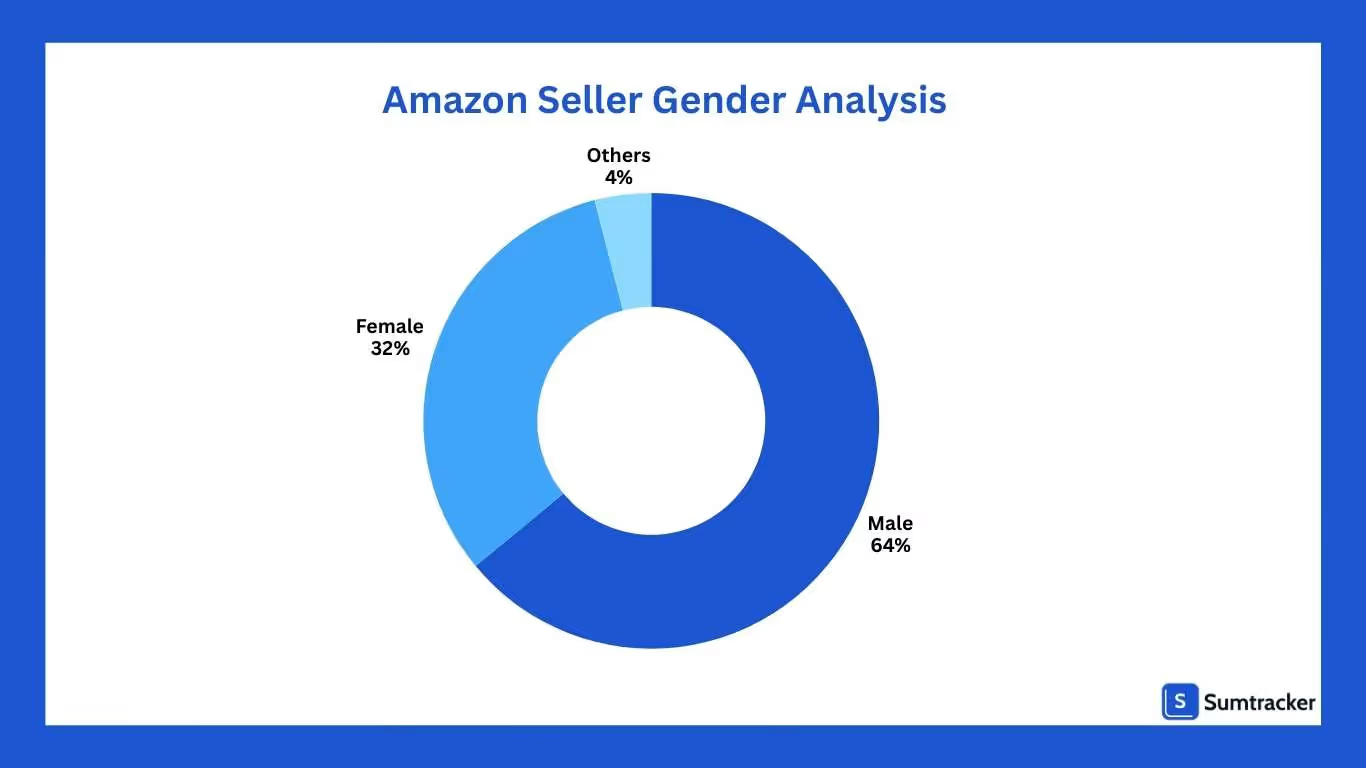
Amazon Seller Gender Analysis
Amazon’s seller base is still male-dominated, but female and other gender identities make up a meaningful share of the marketplace. Here’s how the distribution looks:
- 64% of sellers identify as male
- 32% identify as female
- 4% fall under other gender identities
Number of Products Listed by Amazon Sellers
Most Amazon sellers keep their catalog sizes small, with a large share focusing on a limited number of SKUs.
One in four Amazon sellers lists just a single product, and the majority sell fewer than 10 items. This shows how accessible Amazon is even for small businesses and individual entrepreneurs.
- 26% of sellers list only one product.
- 77% offer fewer than 10 products.
- 89% list 50 products or fewer.
- Only 3% have 51–100 products in their catalog.
- Sellers offering only one product grew by nearly 300% year-over-year in 2023.
Distribution of Sellers by Number of Products
Top Amazon Seller Product Categories
Amazon sellers list products across dozens of categories, but some niches consistently attract the highest seller participation.
Home & Kitchen, Beauty & Personal Care, and Clothing & Accessories remain the most competitive and profitable categories for both new and established sellers.
Here are the top 6 Amazon categories sellers participate in the most:
- Home & Kitchen – 35%
- Beauty & Personal Care – 26%
- Clothing, Shoes & Jewelry – 20%
- Toys & Games – 18%
- Health, Household & Baby Care – 17%
- Electronics – 16%

How Much Money Amazon Sellers Spend to Get Started
Starting a business on Amazon doesn’t always require a huge investment, but most sellers do spend more than $1,000 to launch their first product. The majority invest in essentials like inventory, packaging, branding, and Amazon fees before making their first sale.
Here’s how much sellers typically spend when starting out:
- 74% of sellers spend over $1,000 to begin selling on Amazon.
- 25% of sellers spend less than $1,000 to get started.
- 23% invest $2,501–$5,000, while 17% invest more than $10,000.
- About 2% said they weren’t sure how much they spent.
Average Money Spent to Start Selling on Amazon
Amazon Sellers Revenue Statistics
Amazon sellers show strong earning potential across different business sizes. More than half of sellers generate over $1,000 in monthly revenue, while a smaller share reaches higher income brackets. Here’s a quick breakdown of how much sellers typically earn on Amazon.
- 52% of sellers make over $1,000 per month.
- 31% earn under $500 per month, making it the most common starting range.
- 22% earn between $1,001 and $5,000 monthly.
- 19% report over $10,000 per month in sales.
- Among large brands and retailers, 63% generate over $100,000 per month.
Amazon Seller Profitability
Amazon seller profits have shifted noticeably over the past three years. While more sellers saw their profits rise from 2023 to 2024, overall profit growth has slowed, and fewer businesses are experiencing strong year-over-year gains.
The data shows a more cautious marketplace, with many sellers reporting stable or uncertain profit levels.
- More sellers saw profit increases in 2024 than in 2023.
- However, 30% fewer sellers reported profit growth in 2024 compared to the previous year.
- Nearly 50% of sellers said their profits either stayed the same or they were unsure about changes.
- Large profit jumps of 50%+ have become less common since 2022.
- Fewer businesses are seeing major losses, but overall profit momentum is slowing.
- The data suggests increasing uncertainty, even for experienced Amazon brands and SMBs.
FBA vs FBM Seller Distribution
Amazon sellers use different fulfillment methods here’s how they are distributed across FBA, FBM, and hybrid setups:
- 71% of sellers use FBA for Amazon-managed storage, packing, and delivery.
- 10% of sellers use FBM, handling their own shipping and logistics.
- 19% follow a hybrid FBA + FBM model, switching based on product margin, size, or seasonality.

Conclusion
Amazon’s marketplace continues to grow, diversify, and shift, shaped by millions of sellers, evolving buyer demand, and rapidly changing ecommerce trends.
These statistics reveal that opportunities on Amazon are still massive, but the path to success is no longer uniform.
Sellers differ widely in age, product range, revenue levels, and profit margins, yet they all contribute to one of the most competitive ecosystems in the world.
Whether you're just getting started or scaling an established brand, understanding these numbers helps you navigate the platform with clarity.
From choosing the right fulfillment model to optimizing profitability and product selection, data-backed decisions will matter more than ever as Amazon continues to expand globally.
Sources:
FAQS
1. How many active Amazon sellers are there?
As of 2025, Amazon has over 9.7 million sellers worldwide, with about 2 million actively selling on the platform.
2. Which country has the most Amazon sellers?
The United States leads with 1.9 million active sellers, making up nearly 38% of all Amazon sellers.
3. What is the average age of an Amazon seller?
The majority of sellers fall between 25–44 years old, with these two age groups accounting for 57% of all sellers.
4. Do most Amazon sellers make a profit?
Yes. Over 76% of sellers report turning a profit. While profit growth has slowed, most sellers remain profitable month over month.
5. How much do Amazon sellers earn per month?
Most Amazon sellers earn anywhere from a few hundred dollars to several thousand per month, with over half making more than $1,000 and about 19% earning upward of $10,000 monthly.
Conclusion

Bhoomi writes about inventory management and multichannel selling at Sumtracker. Her focus is on solving real operational problems for Shopify, Amazon, and marketplace sellers through well-researched content. She covers everything from multi-location inventory syncing and stock error troubleshooting to replenishment planning and platform comparisons, turning complex eCommerce operations into clear, actionable guidance.
LinkedInRelated Articles
Tool and strategies modern teams need to help their companies grow.
.avif)
.avif)
.avif)
Ready to Simplify Your Inventory Management?
Join hundreds of e-commerce merchants who rely on Sumtracker to save time, eliminate errors, and grow their business.