.svg)
Inventory Logs: How 18 Months of Data Improves Decisions


Having data isn’t the advantage anymore, understanding it over time is.
You might know what sold last week.
You might even have inventory reports for the past month.
But when it comes to making confident decisions like how much to reorder, when demand actually spikes, or which products are quietly draining your cash, short-term data falls apart.
That’s where inventory logs come in.
When you can look back at 18 months of inventory history, things start to click. Patterns become clearer. Mistakes become easier to spot. And decisions stop feeling like guesses.
Instead of reacting to what just happened, you start planning based on what consistently happens.
What Are Inventory Logs and Why They Matter
Inventory logs are a detailed, time-stamped record of every movement your stock goes through sales, purchases, returns, adjustments, and transfers.
But more than just records, they give you context.
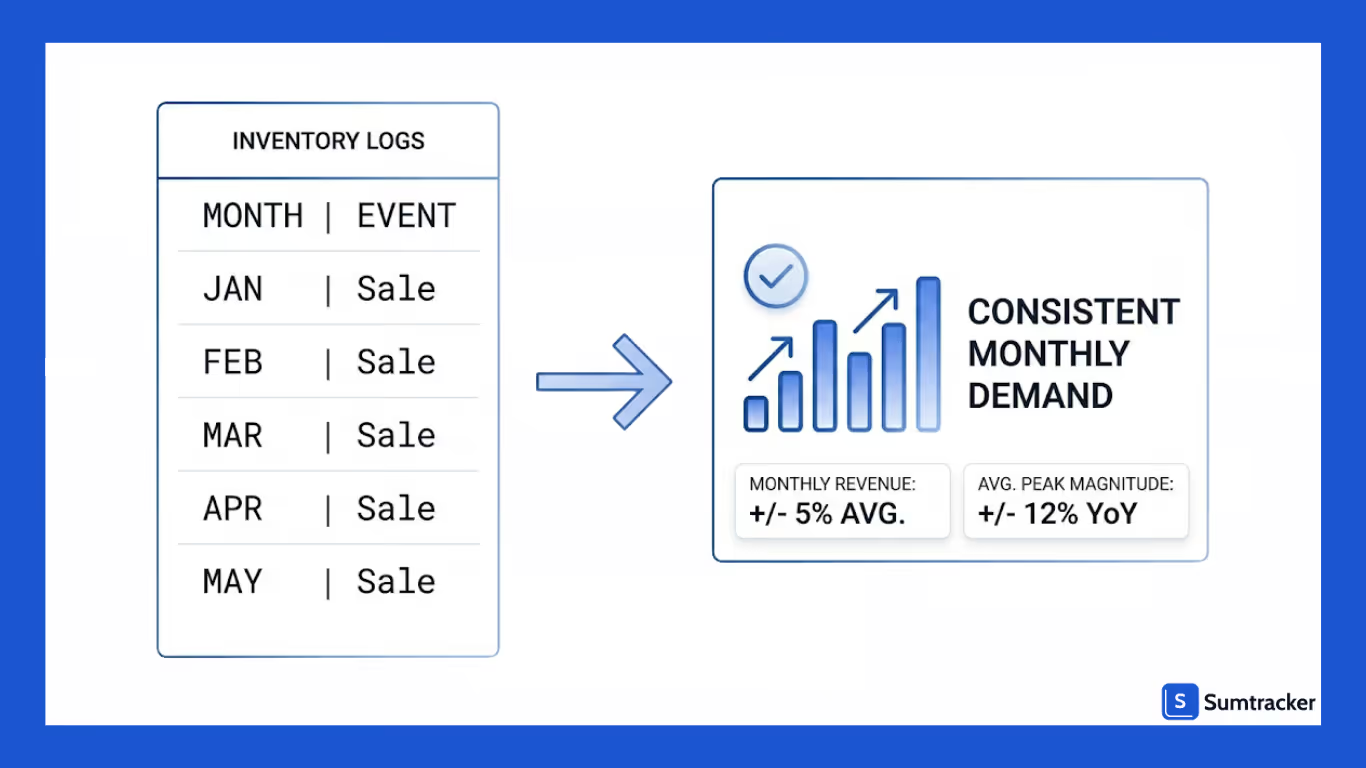
At any given moment, you might know how much stock you have. What you don’t see without logs is how it got there.
Did a sudden drop happen because of a sales spike, a bulk order, or a manual inventory adjustment?
Did stock increase due to a new purchase or a returned shipment?
Inventory logs answer these questions.
They help you:
- Trace every stock change back to its source
- Understand how frequently products move
- Identify patterns in buying and selling behavior
- Build confidence in your inventory data
Without logs, you’re working with static numbers that can be misleading.
The Problem with Limited Inventory History
Relying on short-term inventory data might feel sufficient, but it often leads to decisions based on incomplete or misleading trends. Without enough historical context, it’s easy to mistake temporary spikes or dips for long-term patterns.
Reacting to Short-Term Noise
Recent data is heavily influenced by promotions, sudden demand changes, or one-off events. This can push you to make decisions that don’t hold up over time.
Missing Seasonal Patterns
Without at least a year of data, you can’t clearly see recurring trends like festive spikes or slow periods, leading to poor planning.
Poor Reordering Decisions
Limited history often results in overstocking fast-moving items temporarily or understocking products that have consistent long-term demand.
Slow-Moving Inventory Goes Unnoticed
Products that sell slowly over months are harder to identify, which means they quietly tie up your cash and storage space.
How Long-Term Logs Reveal True Demand Patterns
Short-term data can often be noisy and misleading. What looks like a trend today might just be a temporary spike. But when you analyze inventory over a longer period, real patterns begin to emerge, giving you a much clearer and more reliable view of demand.
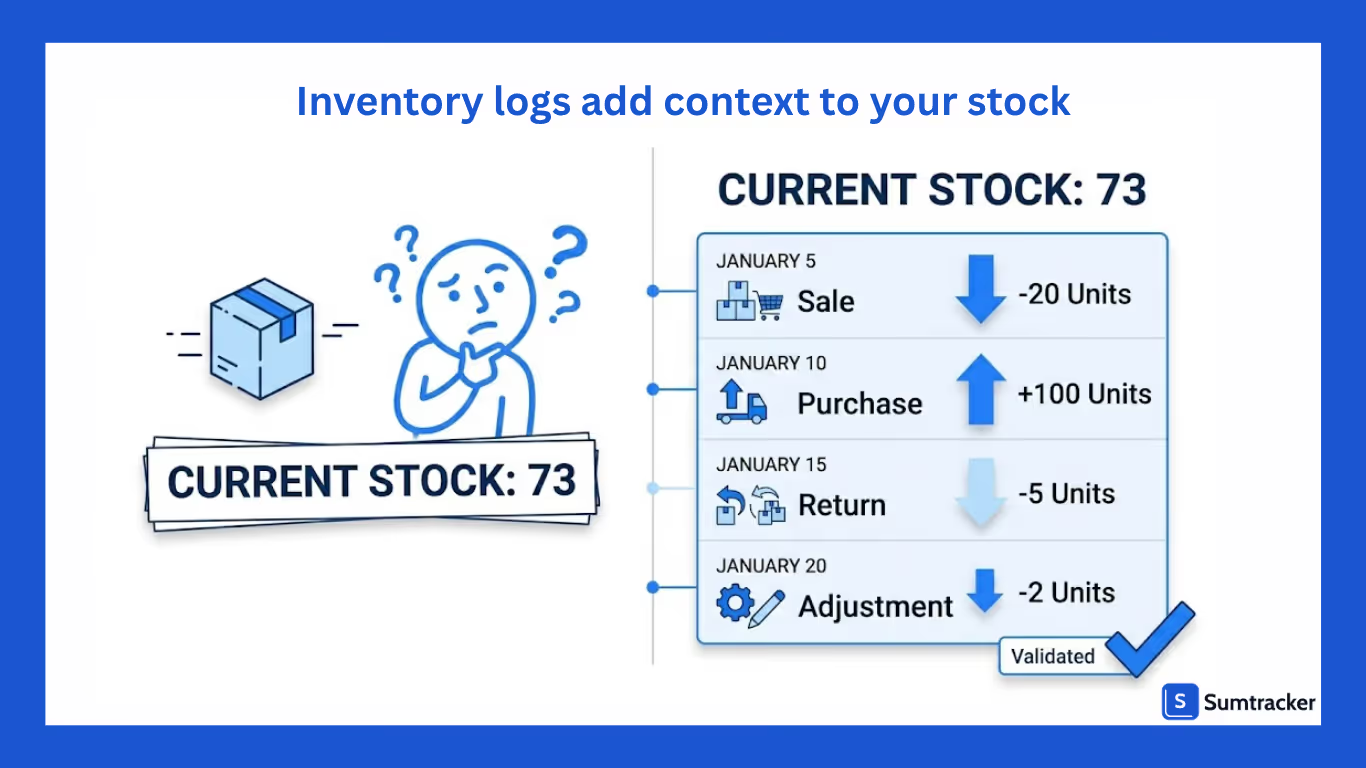
Here’s what long-term inventory logs help you uncover:
- Consistent vs Temporary Demand: Understand whether a product is truly a steady seller or just benefiting from a short-term boost like a promotion or campaign.
- Reliable Bestsellers: Identify products that perform consistently over time, so you can prioritize them in your purchasing and stocking decisions.
- Seasonal Trends: Spot recurring patterns such as festive spikes, holiday demand, or predictable slow periods across the year.
- True Growth vs Fluctuations: Distinguish between actual business growth and temporary increases that don’t sustain over time.
- Demand Stability: See which products have predictable demand and which ones are volatile, helping you plan inventory more confidently.
How Inventory Logs Help Audit and Fix Discrepancies
Inventory mismatches are almost inevitable as your business grows. What matters is how quickly you can identify the issue and fix it. This is where inventory logs become incredibly valuable.
Instead of guessing where things went wrong, logs give you a clear trail to follow, showing exactly when and why your stock levels changed.
Here’s how they help:
- Trace Every Stock Movement: Every sale, return, transfer, or adjustment is recorded, making it easy to track where the discrepancy originated.
- Pinpoint the Exact Moment of Error: You can identify when stock levels first went off, rather than digging through days or weeks of data.
- Identify the Root Cause: Whether it’s a sync issue, manual error, or missed update, logs help you understand why the inventory mismatch happened.
- Reduce Time Spent on Investigations: Instead of manual reconciliation, you can quickly follow the log history and resolve issues faster.
- Prevent Recurring Problems: By spotting patterns in discrepancies, you can fix underlying process gaps and avoid repeated mistakes.
Why 18 Months of Inventory Data Is a Game Changer
Eighteen months isn’t just a longer timeline, it’s the point where your inventory data starts giving you real, reliable insight instead of short-term signals.

With enough history, you begin to capture:
- At least one complete seasonal cycle
- Repeat buying and demand patterns
- Long-term product performance
- Operational gaps that show up over time
That’s what turns raw data into meaningful context.
It’s the difference between:
- “This product sold well recently”
- vs
- “This product consistently performs every Q4”
And that shift in understanding directly impacts how you run your inventory.
With this level of clarity, you can:
- Forecast demand with more accuracy
- Plan purchase orders with confidence
- Allocate stock across channels more effectively
- Manage cash flow tied up in inventory
How Sumtracker Helps You Track and Leverage 18 Months of Inventory History
Having access to long-term inventory data is only useful if you can actually use it. That’s where Sumtracker comes in, it doesn’t just store your data, it makes it easy to understand and act on.
With Sumtracker, you get a clear and continuous view of your inventory over time, so you’re not stuck piecing together information from different tools or limited reports.
Here’s how it helps:
- Centralized inventory logs: Track every stock movement like sales, purchases, returns, and adjustments, all in one place across all your channels.
- Long-term historical visibility: Access up to 18 months of inventory data to identify patterns, trends, and recurring demand cycles.
- Accurate multi-channel syncing: Keep inventory consistent across platforms like Shopify, Amazon, and more, reducing discrepancies and confusion.
- Better forecasting and planning: Use historical data to make smarter replenishment decisions and avoid stockouts or overstocking.
- Quick discrepancy tracking: Easily trace inventory mismatches back to their source with detailed logs.
Conclusion
Inventory decisions become difficult when you’re only looking at what just happened. Short-term data might help you react, but it rarely helps you plan.
That’s why inventory logs especially when backed by 18 months of history, change the way you operate.
With enough data, patterns become predictable, discrepancies become easier to fix, and demand becomes easier to forecast. You move from guessing to knowing, from reacting to planning.
And that’s the real shift, inventory management stops being a constant struggle and starts becoming a system you can rely on.
Start your Sumtracker free trial today!
FAQs
1. What are inventory logs in simple terms?
Inventory logs are records of every stock movement like sales, purchases, returns, and adjustments, helping you track how your inventory changes over time.
2. Why is 18 months of inventory data important?
It gives you enough history to identify seasonal trends, consistent demand patterns, and long-term product performance, leading to better decision-making.
3. How do inventory logs help reduce stock discrepancies?
They provide a clear timeline of stock movements, making it easy to trace errors, identify causes, and fix issues quickly.
4. Can I manage inventory effectively with only short-term data?
You can manage day-to-day operations, but long-term planning like forecasting and purchasing decisions will be less accurate without sufficient history.
5. How does Sumtracker help with inventory logs?
Sumtracker tracks all inventory movements across channels, provides long-term historical data, and helps you use that data for better forecasting and stock management.
Conclusion

Bhoomi writes about inventory management and multichannel selling at Sumtracker. Her focus is on solving real operational problems for Shopify, Amazon, and marketplace sellers through well-researched content. She covers everything from multi-location inventory syncing and stock error troubleshooting to replenishment planning and platform comparisons, turning complex eCommerce operations into clear, actionable guidance.
LinkedInRelated Articles
Tool and strategies modern teams need to help their companies grow.
.avif)

Ready to Simplify Your Inventory Management?
Join hundreds of e-commerce merchants who rely on Sumtracker to save time, eliminate errors, and grow their business.