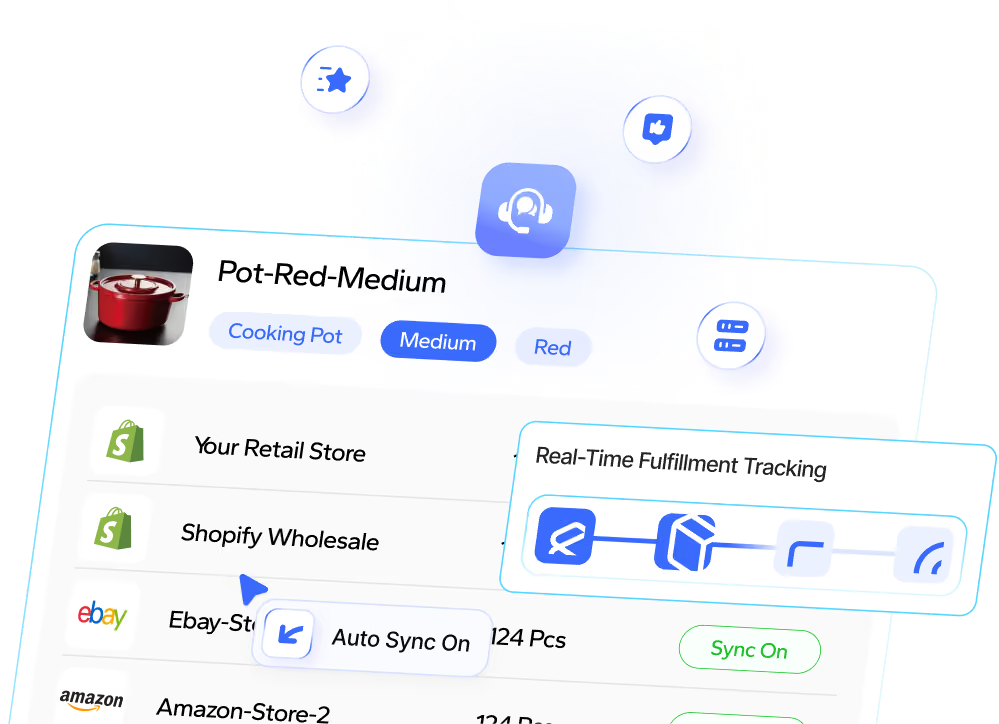
.svg)
10 Best Demand Planning Tools for Shopify Stores in 2026


Selling on Shopify means inventory decisions don’t happen in isolation.
You’re constantly balancing supplier lead times, incoming stock, fast-moving SKUs, and products that need to be reordered before they even look low.
The challenge isn’t knowing what sold yesterday. It’s making sure the right inventory is available when customers place their next order.
Demand planning tools help Shopify merchants coordinate these moving parts. They bring sales, stock levels, and replenishment timelines into one place, so purchasing decisions are deliberate rather than rushed.
In this guide, we’ve listed the best demand planning tools Shopify merchants are using in 2026 to stay ahead of restocking needs, reduce last-minute purchasing, and keep inventory flowing smoothly as sales grow.
How Demand Planning Software Works with Shopify Inventory
Demand planning software connects directly to your Shopify inventory and keeps track of how your stock is actually moving.
It looks at what you have in stock, what is selling, and what is already on the way. This helps you understand how long your current inventory will last and when it makes sense to place your next order.
Instead of waiting for products to run low, you get a clearer view of upcoming replenishment needs. As sales happen or inventory changes, the planning view updates automatically, so decisions are always based on current data.
For Shopify merchants, this means inventory planning becomes calmer and more predictable. Stock levels stay aligned with sales activity, and purchase decisions feel planned rather than rushed.
What Makes a Good Demand Planning Tool for Shopify
Instead of complex models that live in spreadsheets or behind dashboards no one visits, a good tool helps you answer core questions like
What should I reorder?
When should I reorder it?
How long will my current stock last?
Here are the key qualities that make a demand planning tool truly useful for Shopify stores:
Seamless Shopify Integration
A planning tool should connect directly with your Shopify store and keep itself updated automatically. When sales happen, stock levels change and your planning view should reflect that in real time without manual imports.
Clear, Decision-Ready Insights
Good tools don’t bury insights in charts no one reads. Instead, they deliver clear guidance such as recommended reorder quantities or alerts when stock is projected to run low, so you can take action, not just observe data.
Actionable Planning Workflows
The best tools help you turn insights into actions. This includes features like:
- Suggesting reorder timing and quantities
- Helping create and track purchase orders
- Showing coverage by product and location
These make planning more operational and less theoretical.
Support for Lead Times and Stock Coverage
A tool that ignores supplier lead times or incoming stock isn’t giving you the full picture. Good demand planning tools consider:
- Supplier lead times
- Incoming purchase orders
- Safety stock levels
- This helps you avoid last-minute rush orders or overbuying.
Scalability and Flexibility
Whether you’re a small Shopify store or growing into multiple channels, the tool should scale with you. That means handling:
- Larger SKU counts
- Multiple warehouses or locations
- Multi-channel sales if needed
Ease of Use and Adoption
All the data in the world isn’t useful if no one on your team uses the tool. A solid planning system should be intuitive, not intimidating, with dashboards and workflows that team members actually enjoy working with.
Here are the top 10 best demand planning tools:
1. Sumtracker
Sumtracker is a demand planning and inventory platform that helps merchants keep stock accurate across channels and make smarter purchasing decisions. It ties real sales and inventory data into clear planning views so you can confidently decide what to reorder and when.
%20(1).avif)
Key Features
- Real-Time Inventory Sync
Keeps stock levels accurate across Shopify and other sales channels so planning is always based on live data, not stale numbers. - Demand-Driven Reorder Suggestions
Provides clear when and how much to reorder guidance based on actual sales and stock movement — not just simple low-stock alerts. - Smart Purchase Order Management
Create, send, track, and receive purchase orders from within the same system, with insights tied directly to planning needs. - Low-Stock & Stock Health Alerts
Proactive notifications notify you before products reach critical levels, so you can act early rather than react. - Multi-Channel Demand Visibility
Brings together sales from Shopify plus Amazon, eBay, Etsy, Walmart, and more, giving you a full picture of demand and inventory needs. - User-Friendly Planning Dashboards
Easy-to-read views that highlight priority SKUs, upcoming replenishment needs, and actionable insights without manual spreadsheets. - Custom Reporting & Data Exporting
Build and export reports that help you analyze trends, share insights with your team, or support financial planning.
Limitations
- Does not offer manufacturing or production planning workflows
Pricing
Starts from $59/month, with plans that scale based on order volume and number of stores.
Customer Reviews
- Rated 5 stars on Shopify App Store
- Merchants consistently highlight Sumtracker’s ease of use, practical planning guidance, and responsive support, with many noting a significant reduction in stockouts and excess inventory after switching.
2. IFH – Inventory Forecasting Hero
IFH Inventory Forecasting Hero is a lightweight planning tool designed for Shopify merchants who want a simple alternative to spreadsheets. It focuses on restock reminders and basic planning insights.
.avif)
Key Features
- Restock alerts based on sales history
- Reorder quantity suggestions
- CSV exports for manual planning
Limitations
- Limited support for complex inventory setups
- Better suited for single-store or smaller catalogs
Pricing
Free plan available, with paid plans starting around $25/month.
Customer Reviews
Rated 4.9 stars on Shopify App Store
3. StockTrim
StockTrim is a demand planning and forecasting tool designed to help merchants balance inventory levels using data-driven planning models. It’s commonly used by brands with larger catalogs.
.avif)
Key Features
- SKU-level demand planning
- Automated reorder recommendations
- Multi-location planning support
Limitations
- Higher starting price compared to Shopify-native tools
- Can feel complex for smaller stores
Pricing
Plans typically start around $199/month.
Customer Reviews
Praised for planning accuracy, with some feedback around cost and learning curve.
4. Rewize
Rewize is a modern demand planning tool focused on AI-driven inventory insights for Shopify stores. It aims to simplify replenishment decisions with clean dashboards and recommendations.
.png)
Key Features
- AI-powered demand planning
- Purchase order recommendations
- Inventory health dashboards
Limitations
- Relatively new product with a smaller user base
- Best used alongside a full inventory system
Pricing
Free to install with usage-based or tiered paid plans.
Customer Reviews
Highly rated for clean UI and helpful support, especially among early adopters.
5. Inventory Management by Mipler
Inventory Management by Mipler combines inventory tracking with basic planning and replenishment alerts. It’s designed for Shopify merchants who want better visibility without heavy automation.
.avif)
Key Features
- Sales-based inventory projections
- Low-stock and reorder alerts
- Custom inventory reports
Limitations
- Planning features are fairly basic
- Limited automation for purchase orders
Pricing
Free install with plans starting from $29.99/ month
Customer Reviews
Merchants appreciate its reporting and alerts
6. Fabrikatör
Fabrikatör is built to replace spreadsheets with structured demand planning and purchasing workflows. It combines inventory insights with automated purchase order creation.
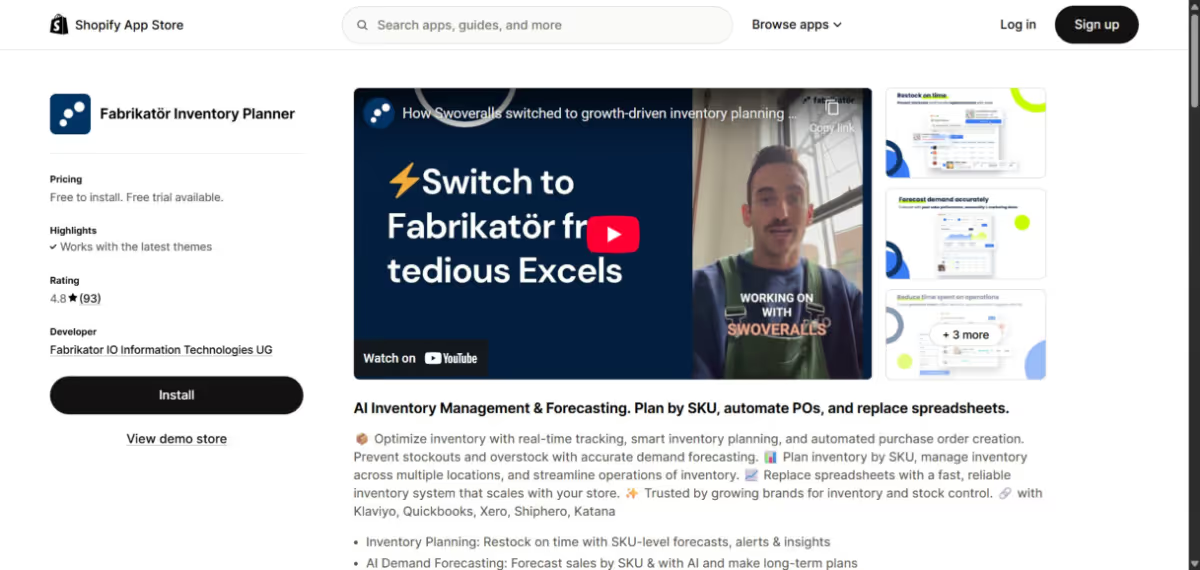
Key Features
- SKU-level inventory planning
- Automated purchase order creation
- Multi-location inventory views
Limitations
- Forecasting logic may require tuning
- Pricing can be high for very small stores
Pricing
Plans start from $99/month
Customer Reviews
Users like the planning dashboards and PO automation, though feedback varies by store complexity.
7. Inventory Planner by Sage
Inventory Planner by Sage is a well-known demand planning tool focused on forecasting, replenishment, and long-term inventory optimization. It’s often used by established Shopify brands.
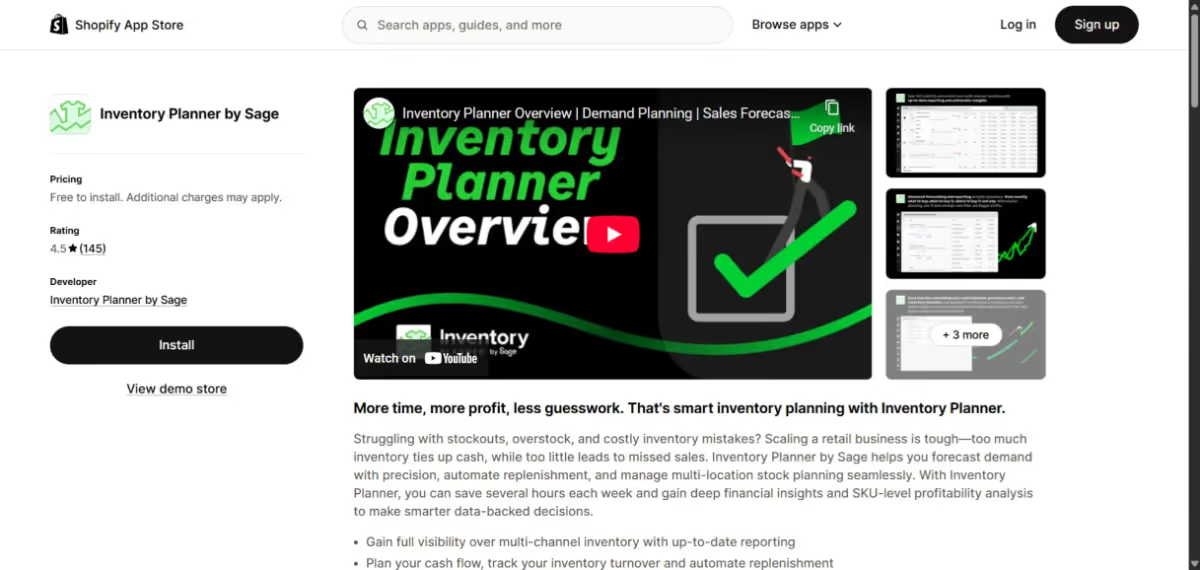
Key Features
- Advanced demand planning and forecasting
- Automated replenishment and POs
- Multi-location and multi-channel planning
Limitations
- Pricing is not transparent
- Can feel heavy for smaller Shopify merchants
Pricing
Custom pricing based on business size and requirements.
Customer Reviews
Generally positive for planning depth, with some merchants reporting sync or support delays.
8. Monocle AI Inventory Forecasts
Monocle AI Inventory Forecasts is focused on AI-driven demand forecasting and planning insights. It helps merchants understand future stock needs and prioritize SKUs that require attention before inventory issues arise.
.avif)
Key Features
- AI-based demand forecasting for Shopify products
- SKU-level demand insights and restock recommendations
- ABC and XYZ analysis to prioritize critical inventory
- Visual dashboards for planning and trend analysis
Limitations
- Primarily focused on forecasting insights rather than execution
- Does not offer built-in purchase order workflows or inventory sync
Pricing
Plans typically start around $47/month.
Customer Reviews
Merchants appreciate the clarity of insights and visual dashboards, especially for identifying high-risk SKUs.
9. Godfrey
Godfrey is an inventory forecasting and automated purchase order tool for Shopify that focuses on reducing stockouts and overstock with minimal manual work.
.avif)
Key Features
- Automated forecasting and reorder alerts
- Two-click purchase order creation
- Inventory planning suggested actions
Limitations
- Relatively new with fewer public reviews
- Forecasting depth varies by product complexity
Pricing
Pricing varies; typically starts $10/month.
Customer Reviews
Users praise automation and reduced manual monitoring efforts.
10. Katana Cloud Inventory
Katana Cloud Inventory is primarily a manufacturing-focused inventory system with basic planning features. Shopify merchants use it mainly when production workflows are involved.

Key Features
- Real-time inventory visibility
- Reorder points and purchasing tools
- Multi-location inventory support
Limitations
- Stronger fit for manufacturing businesses
- Can feel complex for pure Shopify retailers
Pricing
Starts at $399/month
Customer Reviews
Well-reviewed for inventory control, but often described as overkill for non-manufacturing brands.
Conclusion
Demand planning for Shopify isn’t about predicting the future perfectly. It’s about making informed inventory decisions early enough so stock levels don’t turn into daily fire drills.
The right demand planning tool brings sales, inventory, and replenishment timelines together, helping you understand what to reorder, when to reorder it, and how much stock actually makes sense for your business.
As Shopify stores grow, this kind of structure becomes essential to staying in stock without tying up unnecessary cash.
Tools like Sumtracker stand out by keeping demand planning practical, actionable, and directly tied to real inventory movement, making it easier for Shopify merchants to turn planning into confident purchasing decisions.
Ultimately, demand planning works best when it fits naturally into your day-to-day operations. When that happens, inventory stops being reactive and starts supporting steady, sustainable growth.
Frequently Asked Questions
What should Shopify merchants use demand planning tools for?
Shopify merchants use demand planning tools to decide reorder timing and quantities, account for lead times, and keep inventory available without overbuying or rushing last-minute purchases.
How do demand planning tools connect with Shopify inventory?
Most tools integrate directly with Shopify and pull live inventory and sales data. As orders are placed or stock changes, planning views update automatically to reflect current conditions.
Are all inventory apps also demand planning tools?
No. Many inventory apps focus only on stock tracking. Demand planning tools go further by helping merchants plan replenishment, anticipate shortages, and guide purchasing decisions.
Which tool offers the most practical demand planning for Shopify?
For merchants who want planning closely tied to real inventory movement and purchasing actions, Shopify-first tools like Sumtracker are often easier to adopt and operate daily.
Conclusion

Bhoomi writes about inventory management and multichannel selling at Sumtracker. Her focus is on solving real operational problems for Shopify, Amazon, and marketplace sellers through well-researched content. She covers everything from multi-location inventory syncing and stock error troubleshooting to replenishment planning and platform comparisons, turning complex eCommerce operations into clear, actionable guidance.
LinkedInRelated Articles
Tool and strategies modern teams need to help their companies grow.
.avif)
![9 Best Order Management Systems for Shopify [Expert's Tested] - Updated 2026](https://cdn.prod.website-files.com/67907f49647e48895e5dc266/6ab14cc22365aa7145849842_Growth%20Unlocked%20with%20Sumtracker-30.avif)
.avif)
Ready to Simplify Your Inventory Management?
Join hundreds of e-commerce merchants who rely on Sumtracker to save time, eliminate errors, and grow their business.