.svg)

Demand Planning for eCommerce: A Complete Guide


Inventory decisions are bets on the future.
Every time you place a purchase order, you’re making a calculated assumption about what customers will buy weeks sometimes months from now.
If that assumption is right, sales flow smoothly and cash moves efficiently. If it’s wrong, you’re left managing stockouts or excess inventory that ties up working capital.
That’s why demand planning matters.
In eCommerce, where sales fluctuate due to seasonality, promotions, ad campaigns, and shifting customer behavior, inventory planning can’t rely on instinct alone.
Demand planning brings structure to those decisions by combining historical data, trends, and operational constraints into a clear purchasing strategy.
In this guide, we’ll break down how demand planning works, the models retailers use, and how to build a process that supports consistent, data-driven growth.
What Is Demand Planning in eCommerce?
Demand planning in eCommerce is the structured process of estimating future product demand and using that insight to make informed purchasing and inventory decisions.

It goes beyond simply predicting sales numbers.
While forecasting focuses on estimating how much you might sell, demand planning turns that estimate into operational action and how much inventory to order, when to reorder it, how much safety stock to hold, and how to allocate stock across channels or locations.
In practical terms, demand planning connects three key areas:
- Sales data (historical performance, trends, seasonality)
- Business inputs (marketing campaigns, promotions, product launches)
- Operational realities (supplier lead times, minimum order quantities, logistics constraints)
For example, if a product consistently sells 500 units per month but spikes during festive periods, demand planning helps you account for that surge before it happens. Instead of reacting to stockouts, you prepare inventory in advance.
Why Demand Planning Is Critical for Online Stores
Online sales don’t move in straight lines. They fluctuate due to promotions, paid ads, seasonality, and marketplace shifts. Without structured demand planning, inventory decisions become reactive and that quickly affects profitability.
Here’s why it matters:
Prevents Costly Stockouts
Running out of stock doesn’t just pause sales. It can reduce rankings, waste ad spend, and hurt customer trust. Demand planning helps ensure inventory is available before spikes happen.
Reduces Excess Inventory
Overordering ties up working capital and increases storage costs. A demand plan aligns purchasing with realistic sales expectations.
Protects Cash Flow
Inventory is one of the largest expenses for eCommerce brands. Planning demand helps you invest cash where it generates returns, not where it sits idle.
Supports Predictable Growth
Instead of reacting to problems, you operate with foresight. That stability allows you to scale more confidently across products and channels.
Types of Demand Planning Models Used in Retail
Not every business plans demand the same way. The right model depends on your product type, sales consistency, seasonality, and data maturity. Most eCommerce brands start simple and gradually layer in more advanced methods as they scale.
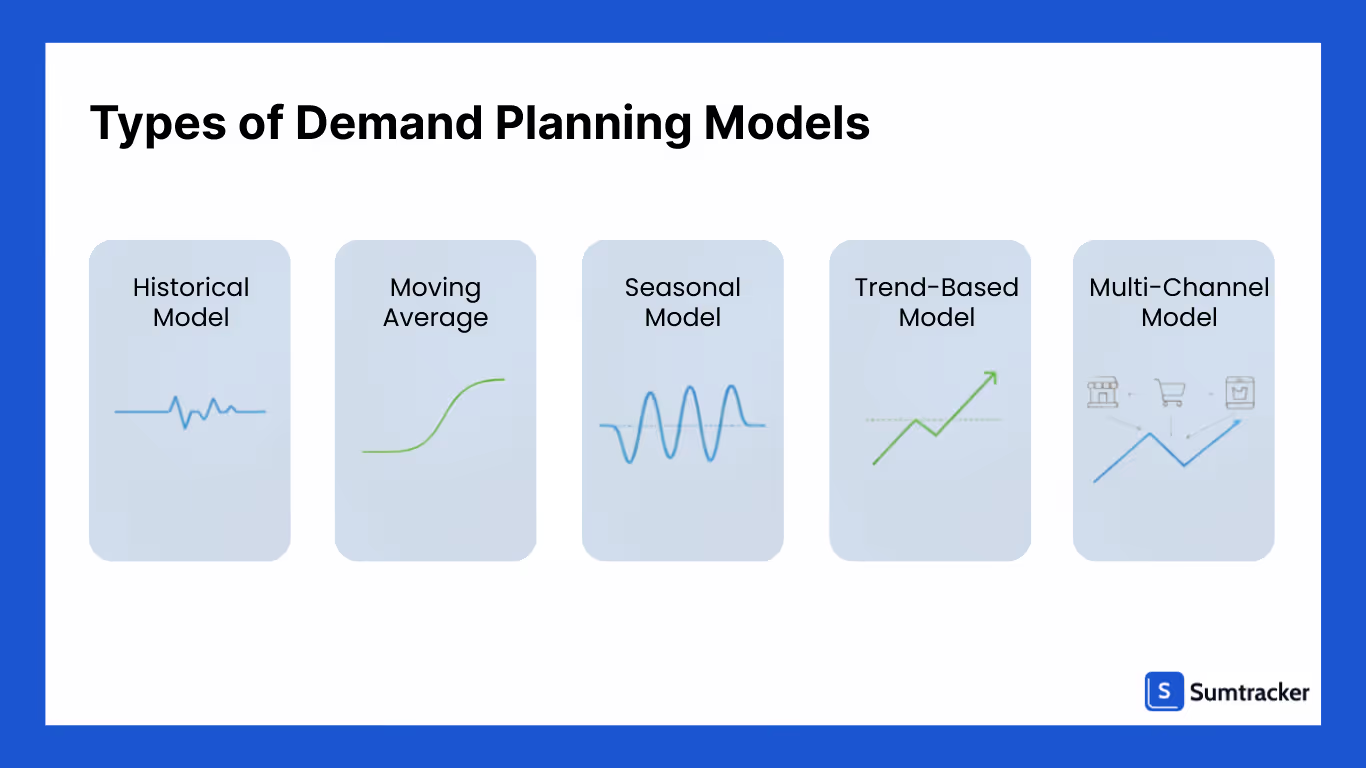
Here are the most commonly used demand planning models in retail:
Historical Sales Model
This model uses past sales data to estimate future demand. If a product has shown steady performance over time, historical averages can provide a reliable baseline.
Best suited for:
- Stable, repeat-demand products
- SKUs with consistent monthly sales
Moving Average Model
The moving average smooths short-term fluctuations by averaging sales over a specific time period (e.g., last 30, 60, or 90 days).
Best suited for:
- Products with mild volatility
- Brands that want to reduce the impact of temporary spikes
Seasonal Demand Model
This model adjusts forecasts based on recurring seasonal patterns such as holiday peaks, summer slowdowns, or festive surges.
Best suited for:
- Fashion, gifting, electronics, and seasonal categories
- Businesses with clear yearly demand cycles
Trend-Based Model
Trend forecasting identifies upward or downward sales momentum over time. It accounts for growth or decline instead of assuming sales remain flat.
Best suited for:
- Fast-growing brands
- New product lines gaining traction
Multi-Channel Aggregated Model
For brands selling across multiple platforms, this model consolidates total demand across all channels before planning inventory.
Best suited for:
- Shopify + Amazon sellers
- Brands managing centralized inventory for multiple sales sources
How to Build an Effective Demand Planning Process
Demand planning works best when it’s structured and repeatable and not something you do only when stock runs low. A good process reduces guesswork and creates consistency in how you make purchasing decisions.

Here’s a practical framework eCommerce brands can follow:
1. Start with Clean, Reliable Data
Your forecast is only as good as your data. Review historical sales and remove distortions such as:
- Stockout periods
- One-time bulk orders
- Heavy discount campaigns
This helps you understand true demand instead of temporary spikes or gaps.
2. Identify Demand Patterns
Look beyond total sales numbers. Analyze:
- Seasonality trends
- Growth or decline patterns
- Channel-specific performance
- Fast vs. slow-moving SKUs
Understanding patterns gives context to your planning.
3. Incorporate Business Inputs
Demand doesn’t exist in isolation. Factor in:
- Upcoming promotions or ad campaigns
- Product launches
- Pricing changes
- Marketplace expansion
- Supplier lead times
These inputs prevent planning based only on past data.
4. Calculate Reorder Points and Safety Stock
Determine:
- Average daily or weekly sales
- Lead time demand
- Buffer stock for unexpected spikes
This step converts your forecast into actionable purchasing decisions.
5. Review and Adjust Regularly
Demand planning isn’t static. Review forecasts monthly (or bi-weekly for fast-moving brands). Compare forecast vs. actual sales and refine assumptions.
Common Demand Planning Mistakes eCommerce Brands Make
Even brands that track sales closely can get demand planning wrong. The issue usually isn’t lack of effort, it’s relying on incomplete data or reactive decision-making.
Here are the most common mistakes:
Planning Based Only on Recent Sales
Looking at last month’s numbers alone ignores seasonality, trends, and long-term patterns. Short-term spikes or dips can distort purchasing decisions.
Ignoring Supplier Lead Times
Forecasting demand without factoring in how long suppliers take to deliver often results in stock arriving too late. Lead time should always shape reorder timing.
Not Accounting for Promotions and Marketing
Ad campaigns, influencer pushes, or discount events can significantly increase demand. If marketing and inventory planning aren’t aligned, stockouts become inevitable.
Treating All SKUs the Same
Fast-moving products, seasonal items, and slow sellers should not follow the same replenishment strategy. A one-size-fits-all approach reduces forecast accuracy.
Managing Channels Separately
Planning inventory independently for each sales channel creates imbalances. Total demand across all channels should drive purchasing decisions.
Overcomplicating the Process Too Early
Advanced forecasting models won’t fix messy data or unclear processes. Many brands try to jump into complex methods before mastering basic historical analysis.
Best Practices to Improve Demand Planning Accuracy
Improving demand planning accuracy isn’t about building complex models overnight. It’s about refining your process, tightening assumptions, and reviewing performance consistently. Small adjustments often lead to meaningful improvements over time.
Here are practical best practices eCommerce brands can follow:
Use At Least 12 Months of Historical Data
A full year of data helps capture seasonality and recurring patterns. Shorter timeframes often distort trends.
Segment Your SKUs
Not all products behave the same. Separate:
- Fast-moving vs. slow-moving
- Seasonal vs. evergreen
- High-margin vs. low-margin
Different segments may require different planning logic.
Incorporate Lead Times into Every Forecast
Forecasting demand without accounting for supplier timelines creates gaps. Always calculate lead time demand before setting reorder points.
Align Marketing and Inventory Planning
Promotions, ad campaigns, influencer launches, and discount events should feed directly into your demand plan. Inventory and marketing teams must stay coordinated.
Review Forecast vs. Actual Regularly
Track forecast accuracy monthly. Compare projected sales to actual performance and adjust assumptions accordingly. Continuous refinement improves precision over time.
How Inventory Management Software Supports Demand Planning
As your product catalog and sales channels grow, manual demand planning becomes harder to manage.
This is where inventory management software like Sumtracker plays a critical role not by replacing your strategy, but by strengthening it with accurate data and automation.

Here’s how Sumtracker supports effective demand planning:
- Centralizes Multi-Channel Sales Data
Consolidates sales from Shopify and other channels into one unified dashboard, ensuring forecasts are based on total demand — not fragmented channel data. - Provides Data-Backed Restock Recommendations
Analyzes historical sales and stock trends to recommend when and how much to reorder, reducing guesswork in purchase decisions. - Accounts for Supplier Lead Times
Incorporates lead times into replenishment planning so inventory arrives before stockouts occur. - Improves Forecast Visibility
Offers clear reporting on sales velocity, stock coverage, and inventory performance, making demand patterns easier to interpret. - Prevents Stock Imbalances
Keeps inventory synced and updated across connected stores, giving planners accurate real-time stock visibility. - Reduces Manual Spreadsheet Work
Automates calculations that would otherwise require complex formulas and constant updates. - Enables Continuous Improvement
With actionable reports and performance tracking, brands can compare projected needs against actual sales and refine planning decisions over time.
Conclusion: From Reactive Ordering to Predictable Growth
Demand planning isn’t about getting forecasts perfectly right. It’s about making better inventory decisions with fewer surprises.
When you combine historical sales data, seasonality, lead times, and marketing inputs into a structured process, inventory stops being a daily fire to manage.
As your business scales, spreadsheets and manual calculations often fall short.
That’s where a system like Sumtracker helps by centralizing multi-channel data, generating data-backed restock recommendations, and factoring in lead times automatically.
If you want inventory decisions to support growth instead of slow it down, it may be time to move from reactive planning to a structured, software-supported approach.
See how Sumtracker can help you plan demand with more clarity and confidence.
FAQs
1. What is demand planning in eCommerce?
Demand planning is the process of estimating future product demand and using that insight to plan purchasing and inventory levels. It helps businesses order the right quantity at the right time.
2. How is demand planning different from demand forecasting?
Forecasting predicts future sales. Demand planning uses those predictions to make operational decisions such as reorder quantities, safety stock levels, and inventory allocation.
3. How often should demand planning be reviewed?
Most eCommerce brands review demand plans monthly. Faster-growing businesses may review them more frequently to adjust for sales spikes or campaign-driven changes.
4. What are the biggest risks of poor demand planning?
Poor demand planning can lead to stockouts, excess inventory, cash flow issues, and missed growth opportunities. Over time, it reduces profitability and operational stability.
5. Can inventory management software help with demand planning?
Yes. Inventory management software centralizes sales data, factors in lead times, and generates restock recommendations, making demand planning more accurate and efficient.
Conclusion

Bhoomi writes about inventory management and multichannel selling at Sumtracker. Her focus is on solving real operational problems for Shopify, Amazon, and marketplace sellers through well-researched content. She covers everything from multi-location inventory syncing and stock error troubleshooting to replenishment planning and platform comparisons, turning complex eCommerce operations into clear, actionable guidance.
LinkedInRelated Articles
Tool and strategies modern teams need to help their companies grow.

Ready to Simplify Your Inventory Management?
Join hundreds of e-commerce merchants who rely on Sumtracker to save time, eliminate errors, and grow their business.