.svg)
.avif)
Inventory Planning for Multi-Channel Sellers: What Actually Works


Growth feels great until your best-selling SKU goes out of stock in one channel while sitting idle in another.
Revenue increases, visibility expands, and suddenly you’re on Amazon, Shopify, Etsy, maybe even wholesale.
But behind the scenes, inventory planning becomes a balancing act.
Multi-channel selling doesn’t just increase sales opportunities, it multiplies planning complexity. The brands that stay profitable aren’t the ones with the biggest catalogs.
They’re the ones with a system.
In this guide, we’ll break down what actually works when planning inventory across multiple sales channels without overcomplicating it.
.avif)
Why Inventory Planning Becomes Complex in Multi-Channel Selling
Inventory planning becomes harder the moment you stop selling in just one place.
When you sell only on Shopify, forecasting demand is relatively straightforward. But once you add Amazon, Etsy, wholesale, retail, or even a second Shopify store, things change:
- Demand becomes fragmented across channels
- Sales velocity differs per platform
- Promotions are not aligned
- Fulfillment timelines vary
- Stock is shared but consumed unevenly
The key issue?
You’re no longer planning for one demand stream, you’re planning for multiple demand engines pulling from the same stock pool.
Without a unified approach, it becomes reactive instead of strategic.
The Biggest Planning Risks When Selling on Multiple Channels
When you expand into multiple sales channels, risks build quietly in the background until inventory problems start hurting revenue.
Here are the biggest planning risks multi-channel sellers face:
.avif)
1. Forecasting Each Channel in Isolation
Planning separately for Amazon, Shopify, and other marketplaces creates blind spots. Since all channels pull from the same inventory pool, isolated forecasts often misrepresent true demand. The result is either overstocking or unexpected stockouts.
2. Shared Stock, Uneven Consumption
Different channels move inventory at different speeds. A sudden surge on one platform can quietly drain stock allocated for another, creating imbalance. Without unified visibility, it’s difficult to see total consumption in time.
3. Lead Time Blind Spots
Suppliers operate on fixed timelines, but channel demand can shift weekly. If lead times aren’t factored properly into forecasting, even small demand changes can cause prolonged stockouts or excess inventory.
4. Cash Flow Compression
To “play it safe,” sellers often over-order inventory across SKUs. This ties up working capital in slow-moving products and reduces flexibility to restock fast movers when demand spikes.
5. Promotional Misalignment
Each channel runs its own campaigns and seasonal pushes. If inventory planning doesn’t account for these promotional spikes, stock can deplete faster than expected, hurting rankings and revenue.
Planning Inventory at the SKU Level Across All Platforms
Multi-channel inventory planning only works when it happens at the SKU level not at the category or overall product level.
Why?
Because each SKU behaves differently:
- Different margin
- Different velocity
- Different seasonality
- Different channel preference
A SKU that sells 70% on Amazon and 30% on Shopify should not be planned the same way as one that is DTC-dominant.
When you plan at the SKU level, you gain precision.
You can calculate:
- SKU-level sales velocity across all channels
- SKU-specific lead times
- Individual reorder points
- Appropriate safety stock based on volatility
This prevents fast-moving variants from going out of stock while slow-moving ones accumulate excess inventory.
It also protects your cash flow by ensuring capital is allocated toward high-performing SKUs rather than spread evenly across the catalog.
The Core Principles That Actually Work for Multi-Channel Inventory Planning
Multi-channel inventory planning doesn’t require complicated formulas. It requires discipline and structure. The brands that stay in control follow a few core principles consistently.
1. Plan from a Single Source of Truth
All sales data must flow into one centralized view. When decisions are made from fragmented reports across platforms, forecasting becomes inconsistent and unreliable.
2. Forecast Total Demand, Not Channel Demand
Inventory is shared, so demand must be unified. Planning based on combined sales across all channels prevents double-counting and reduces stockout risk.
3. Align Replenishment with Lead Time Reality
Reordering should be based on supplier lead time plus a demand buffer not gut feeling. Accurate lead time planning protects against volatility.
4. Use Conservative, Data-Driven Safety Stock
Safety stock should absorb variability, not mask poor forecasting. It must be calculated based on actual demand fluctuations and service level goals.
5. Review and Adjust Frequently
Multi-channel demand changes quickly. Forecasts should be reviewed weekly or bi-weekly to stay aligned with sales velocity shifts.
Planning for Different Channel Behaviors (Amazon vs Shopify vs Marketplaces)
Not all sales channels behave the same and treating them the same is where planning starts to break down.
Each platform has its own demand rhythm, customer expectations, and volatility patterns. Understanding those differences allows you to plan smarter instead of simply increasing buffer stock everywhere.
.avif)
Amazon
On Amazon, demand can spike quickly. Ranking shifts, Buy Box changes, or algorithm boosts can dramatically increase daily sales velocity. Stockouts don’t just pause revenue, they can hurt listing performance and ranking momentum.
Planning for Amazon typically requires:
- Higher service levels
- Tighter monitoring of velocity changes
- Extra buffer for ranking-sensitive SKUs
Shopify
On Shopify, demand is often driven by marketing activity. Paid ads, email campaigns, influencer collaborations, and product launches create planned spikes.
This makes demand more controllable but also more variable if campaigns outperform expectations.
Planning for DTC usually means:
- Aligning inventory with marketing calendars
- Forecasting around campaign schedules
- Adjusting projections based on ad spend
Other Marketplaces (Etsy, eBay, etc.)
Marketplaces like Etsy or eBay often show steadier, niche-driven demand. However, seasonality and trend shifts can strongly influence sales cycles.
Planning here often involves:
- Identifying seasonal peaks
- Monitoring trend-based product demand
- Maintaining moderate buffer without overstocking
Key Metrics That Drive Better Multi-Channel Inventory Planning
Multi-channel inventory planning improves dramatically when you stop looking only at revenue and start tracking the right operational metrics.
Sales numbers tell you what happened. Planning metrics tell you what’s about to happen.
Here are the key ones that truly make a difference:
1. Sales Velocity (Per SKU, Across All Channels)
Sales velocity shows how quickly a SKU is selling per day or per week across combined channels. This is the foundation of accurate forecasting because it reflects real consumption speed, not just total sales.
When velocity increases unexpectedly on one platform, you’ll spot it early before it becomes a stockout problem.
2. Days of Inventory Remaining
This metric tells you how long current stock will last based on average sales velocity. Instead of guessing when to reorder, you can see the runway clearly.
For multi-channel sellers, this should always reflect combined demand, not individual platform sales.
3. Lead Time Accuracy
Knowing your supplier’s stated lead time isn’t enough. You need to track actual lead time performance.
If deliveries fluctuate between 25–40 days, your planning must account for that variability. Even small delays can disrupt replenishment across multiple channels.
4. Stockout Frequency
Tracking how often a SKU goes out of stock reveals planning weaknesses. Frequent stockouts may signal underestimated demand, poor reorder timing, or insufficient safety stock.
In multi-channel environments, even short stockouts can impact marketplace rankings and customer trust.
5. Inventory Turnover
Inventory turnover shows how efficiently you’re converting stock into sales. Low turnover often means overstocking, while extremely high turnover may signal stock risk.
Balanced turnover keeps cash flow healthy while maintaining availability.
6. Forecast vs. Actual Variance
This metric measures how accurate your forecasts are compared to real sales. If variance is consistently high, your planning assumptions need refinement.
Multi-channel forecasting becomes stronger when you review and adjust based on real performance, not static projections.
Tools That Enable Accurate Multi-Channel Planning
Multi-channel inventory planning becomes difficult not because the math is complicated but because the data is scattered.
When sales live in different dashboards, stock is spread across locations, and purchase planning happens in spreadsheets, decisions become delayed and inconsistent. That’s where a dedicated planning tool makes the difference.
.avif)
For multi-channel sellers, Sumtracker is built specifically to solve this fragmentation.
1. Unified Demand Across All Channels
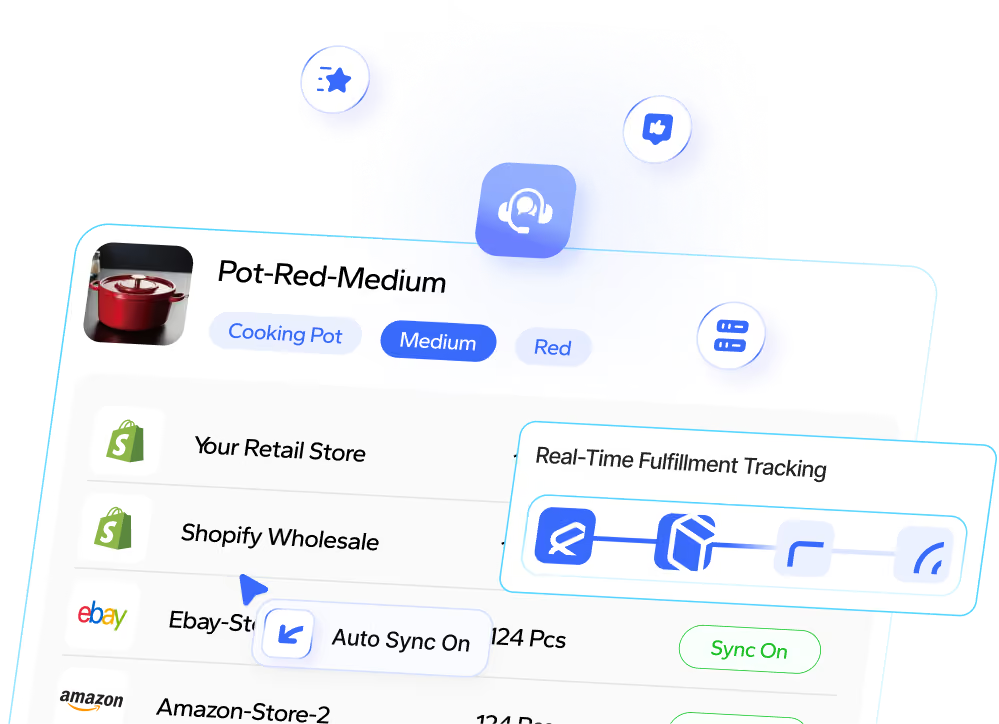
Sumtracker aggregates sales from Shopify, Amazon, Etsy, eBay, and other channels into one centralized view.
Instead of forecasting per platform, you can plan based on total SKU-level demand, thereby improving replenishment accuracy.
You’re no longer guessing how much Amazon might sell. You’re planning based on what all channels are collectively consuming.
2. SKU-Level Replenishment Planning
Multi-channel planning only works at the SKU level. Sumtracker calculates:
- Sales velocity
- Days of inventory remaining
- Reorder points
- Suggested reorder quantities
This ensures fast-moving SKUs are prioritized while slow movers don’t drain cash unnecessarily.
3. Smart Reorder Recommendations
Instead of reactive ordering, Sumtracker recommends when and how much to reorder based on:
- Combined sales trends
- Supplier lead times
- Safety stock settings
This transforms replenishment from guesswork into a structured, repeatable process.
4. Multi-Location Visibility
If you operate across warehouses or 3PLs, inventory visibility becomes even more critical. Sumtracker provides a centralized stock overview so planning decisions reflect total available inventory not just one location’s numbers.
5. Real-Time Inventory Sync to Support Planning
Accurate planning requires accurate data. With real-time synchronization across sales channels, Sumtracker ensures that inventory levels reflect actual consumption. This prevents overselling and protects forecast reliability.
Conclusion
Multi-channel selling increases revenue potential, but it also increases planning complexity. When inventory is shared across platforms, forecasting must be unified, SKU-level, and aligned with real lead times.
What actually works is simple: plan from combined demand, monitor key metrics, and replenish proactively instead of reactively.
If you're scaling across channels, using a centralized system like Sumtracker can help you automate replenishment, track real-time inventory, and stay in control as you grow.
FAQs
1. What is multi-channel inventory planning?
Multi-channel inventory planning is the process of forecasting demand and managing replenishment across multiple sales platforms (like Amazon, Shopify, Etsy, etc.) using a unified approach instead of planning separately for each channel.
2. Why does inventory planning become harder with multiple sales channels?
Because multiple platforms pull from the same stock pool but behave differently. Demand volatility, promotions, and fulfillment timelines vary by channel, making forecasting and replenishment more complex.
3. Should I forecast inventory separately for each channel?
No. Best practice is to forecast total combined demand across all channels and then adjust for channel-specific volatility. Planning separately often leads to overstocking or unexpected stockouts.
4. What metrics matter most for multi-channel inventory planning?
Key metrics include sales velocity per SKU, days of inventory remaining, lead time accuracy, stockout frequency, inventory turnover, and forecast variance. These provide early signals for smarter replenishment decisions.
5. How can software improve multi-channel inventory planning?
Inventory planning software centralizes sales data, tracks SKU-level performance, automates reorder calculations, and provides real-time inventory visibility. This reduces guesswork and makes replenishment predictable instead of reactive.
Conclusion

Bhoomi writes about inventory management and multichannel selling at Sumtracker. Her focus is on solving real operational problems for Shopify, Amazon, and marketplace sellers through well-researched content. She covers everything from multi-location inventory syncing and stock error troubleshooting to replenishment planning and platform comparisons, turning complex eCommerce operations into clear, actionable guidance.
LinkedInRelated Articles
Tool and strategies modern teams need to help their companies grow.


.avif)
Ready to Simplify Your Inventory Management?
Join hundreds of e-commerce merchants who rely on Sumtracker to save time, eliminate errors, and grow their business.