.svg)
.avif)
Safety Stock in Inventory Management: What It Is and What It Depends On


If you’ve ever run out of a fast-moving product right when customers wanted it most, you already understand the pain that safety stock is meant to solve.
Inventory planning rarely goes exactly as forecasted. Orders spike unexpectedly, suppliers delay shipments, and demand doesn’t always behave the way spreadsheets predict.
That’s where safety stock comes in, not as extra inventory for comfort, but as a calculated cushion that protects your business from uncertainty.
In this guide, we’ll break down what safety stock actually is, why it matters, what it depends on, and how to set the right amount without tying up unnecessary cash.
What Is Safety Stock in Inventory Management?
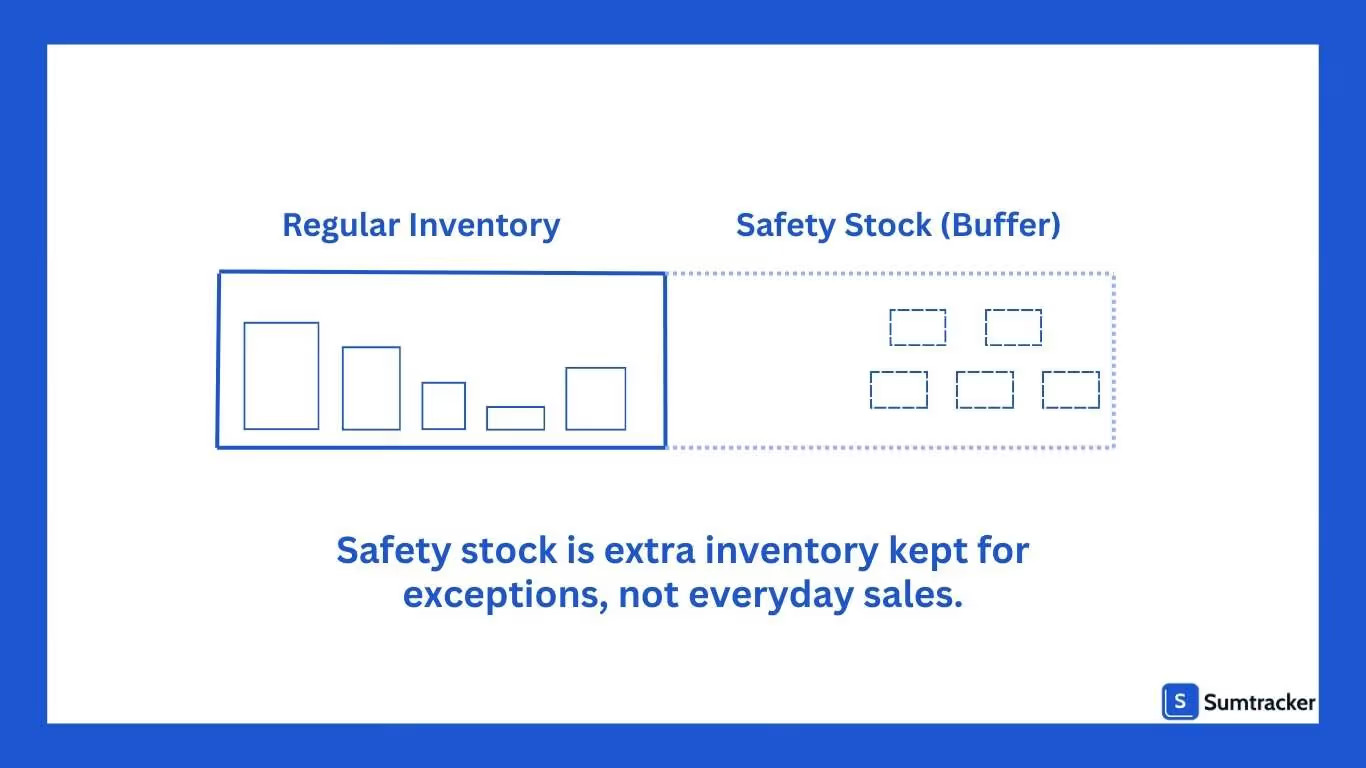
Safety stock is the extra inventory you keep on hand to protect against uncertainty, uncertain demand, supplier delays, or forecasting errors.
It exists to ensure you can continue fulfilling orders even when:
- Demand is higher than expected
- Suppliers deliver late
- Lead times fluctuate
Importantly, safety stock is not inventory you expect to sell under normal conditions. It’s there for the exceptions, not the average day.
Think of it as insurance for your inventory operations.
Why Safety Stock Is Important for Inventory Planning
Safety stock is important because inventory planning rarely plays out exactly as forecasted. Demand doesn’t always follow historical patterns, suppliers don’t always deliver on time, and small delays can quickly turn into stockouts.
Without safety stock, even minor disruptions can interrupt order fulfillment. With it, businesses can continue operating smoothly despite short-term uncertainty.
Safety stock helps inventory planning by:
- Preventing stockouts when demand is higher than expected
- Protecting revenue during supplier delays or shipping disruptions
- Maintaining consistent service levels, even when lead times fluctuate
- Reducing reactive decisions, such as emergency reorders or expedited shipping
Beyond day-to-day operations, safety stock also plays a strategic role. It allows businesses to plan replenishment cycles more confidently instead of constantly adjusting orders due to unexpected gaps.
How Safety Stock Is Different from Buffer Stock and Cycle Stock
Safety stock, buffer stock, and cycle stock are often used interchangeably, but they serve different purposes in inventory planning. Understanding the distinction helps avoid overstocking while still staying protected against uncertainty.
Cycle stock is the inventory you expect to sell during a normal replenishment cycle. It’s based on average demand and regular ordering patterns, and it makes up the bulk of your inventory. This is the stock that moves consistently as part of everyday operations.
Buffer stock is a broader, less precise term. It generally refers to any extra inventory held to reduce risk, but it isn’t always calculated using data or formulas. Many businesses use “buffer stock” informally to describe additional inventory kept “just in case.”
Safety stock, on the other hand, is a specific and calculated quantity of inventory. It’s designed to protect against known uncertainties like demand variability, supplier delays, or fluctuating lead times.
Here’s how they differ in practice:
- Cycle stock supports planned, everyday sales
- Buffer stock is a general risk cushion, often based on experience or intuition
- Safety stock is a data-driven buffer meant specifically for uncertainty
Example:
If you reorder 1,000 units every month based on average sales, then those 1,000 units are your cycle stock. If you keep an additional 200 units because your supplier is sometimes late, those 200 units are safety stock.
Calling all of it “buffer stock” may be common, but it hides the real purpose of each inventory layer.
When Should You Keep Safety Stock (and When You Shouldn’t)?
Safety stock is most valuable when uncertainty is part of your day-to-day operations. If demand or supply conditions are unpredictable, safety stock acts as a cushion that keeps order fulfillment running smoothly even when things don’t go as planned.

You should keep safety stock if:
- Demand fluctuates frequently, with sales often exceeding forecasts
- Supplier lead times are inconsistent or prone to delays
- Stockouts directly impact revenue or customer trust
- You sell across multiple channels or locations, increasing complexity
- Replenishment takes time, making quick restocks difficult
In these situations, safety stock helps absorb variability without forcing constant firefighting or emergency purchases.
However, safety stock isn’t always necessary and in some cases, it can do more harm than good.
You may not need much safety stock if:
- Demand is highly predictable and stable
- Suppliers are reliable and deliver quickly
- Products are made-to-order or easily restocked
- Holding costs are high, such as with perishable or bulky items
Importantly, keeping safety stock doesn’t mean playing it safe at all costs. Holding unnecessary inventory ties up cash, increases storage expenses, and can hide deeper issues like poor forecasting or supplier inefficiencies.
Key Factors That Safety Stock Depends On
Two businesses selling similar products can require very different safety stock levels depending on how predictable their operations are.
Here are the key factors that safety stock depends on:
Demand Variability
If sales fluctuate significantly from day to day or week to week, safety stock needs to be higher. The more unpredictable customer demand is, the more extra inventory you need to absorb sudden spikes without running out of stock.
Lead Time Variability
When suppliers don’t deliver in a consistent timeframe, safety stock compensates for those delays. A supplier that sometimes takes 7 days and other times takes 14 days increases the risk of stockouts, making safety stock essential.
Service Level Targets
Service level reflects how often you want products to be available without stockouts. A business aiming for near-perfect availability will need more safety stock than one that can tolerate occasional delays or backorders.
Forecast Accuracy
Inaccurate demand forecasts increase uncertainty. Poor forecasting often leads businesses to hold more safety stock—not because they want to, but because they don’t trust the numbers driving replenishment decisions.
Supplier Reliability
Reliable suppliers reduce the need for safety stock. Frequent delays, partial shipments, or inconsistent order fulfillment push businesses to keep extra inventory as a protective measure.
Seasonality and Promotions
Sales events, holidays, and promotions can temporarily increase demand beyond normal patterns. Safety stock needs to be adjusted during these periods to prevent sudden stockouts.
Safety Stock Formula Explained with a Simple Example
One of the easiest ways to understand safety stock is to look at a simple, widely used formula. While more advanced statistical methods exist, this approach works well for many businesses, especially when getting started with structured inventory planning.
A common safety stock formula is:
Safety Stock = (Maximum Daily Usage × Maximum Lead Time) − (Average Daily Usage × Average Lead Time)
This formula calculates the extra inventory needed to cover the worst-case scenario compared to normal operating conditions.
Simple Example
Let’s say you sell a product with the following patterns:
- Average daily sales: 20 units
- Maximum daily sales: 35 units
- Average supplier lead time: 10 days
- Maximum supplier lead time: 14 days
Using the formula:
Safety Stock = (35 × 14) − (20 × 10)
Safety Stock = 490 − 200
Safety Stock = 290 units
This means you should keep 290 units as safety stock, in addition to your regular cycle stock, to handle demand spikes or supplier delays.
Common Mistakes Businesses Make with Safety Stock
Even though safety stock is meant to reduce risk, it’s often misused in ways that create new inventory problems.
Below are some of the most common mistakes businesses make, along with why they cause issues.

Treating All Products the Same
One of the biggest mistakes is applying a single safety stock rule across all SKUs. Products behave differently based on demand patterns, margins, and replenishment speed. Using the same safety stock level for fast movers and slow sellers usually leads to overstocking some items and stockouts in others.
Setting Safety Stock Once and Never Revisiting It
Safety stock is not a “set and forget” number. Demand changes, suppliers improve or decline, and seasonality shifts over time. Businesses that don’t regularly review safety stock often end up holding outdated buffer levels that no longer reflect reality.
Relying on Gut Feeling Instead of Data
While experience matters, safety stock based purely on intuition often results in inaccurate inventory decisions. Without using historical sales data and lead time trends, businesses risk either tying up excess capital or leaving themselves vulnerable to stockouts.
Using Safety Stock to Hide Bigger Problems
Some businesses increase safety stock to compensate for poor forecasting, unreliable suppliers, or inefficient replenishment workflows. This may reduce short-term stockouts, but it increases carrying costs and masks the real issues that need fixing.
Ignoring Seasonality and Sales Events
Failing to adjust safety stock during promotions, holidays, or peak seasons is another common mistake. Temporary demand spikes require temporary adjustments, using year-round safety stock levels during high-volume periods often leads to avoidable stockouts.
How Inventory Software Helps Optimize Safety Stock
As product catalogs, sales channels, and suppliers grow, managing safety stock manually becomes increasingly unreliable. Inventory software helps turn safety stock from a fixed buffer into a dynamic, data-driven part of inventory planning.
Inventory software continuously tracks sales velocity, stock movement, and supplier lead times. Instead of relying on static assumptions, safety stock levels can be adjusted based on how demand and supply actually behave over time.
With inventory software, businesses can:
- Identify SKUs with high demand or lead time variability
- Adjust reorder points automatically as sales patterns change
- Account for supplier delays without overstocking
- Reduce excess inventory while maintaining service levels
This is where Sumtracker plays a practical role.
It helps eCommerce and multi-channel businesses maintain accurate, real-time inventory data across sales channels and locations, making safety stock decisions far more reliable.
Conclusion
Safety stock isn’t about stocking more inventory, it’s about stocking smarter.
When used correctly, it protects your business from uncertainty without tying up unnecessary cash or space.
The right safety stock level depends on how predictable your demand is, how reliable your suppliers are, and how much risk your business can tolerate.
What matters most is treating safety stock as a calculated, reviewable part of inventory planning, not a one-time guess or a permanent cushion.
As your business grows, adds channels, or changes suppliers, safety stock should evolve with it.
Tools like Sumtracker help make that process easier by grounding safety stock decisions in real-time data instead of assumptions.
Done right, safety stock gives you confidence, confidence to fulfill orders, protect revenue, and scale without constantly firefighting inventory issues.
FAQs
What is the main purpose of safety stock?
Safety stock exists to prevent stockouts caused by unexpected demand spikes, supplier delays, or forecasting inaccuracies.
Is safety stock the same for every product?
No. Safety stock should be set at the SKU level since each product has different demand patterns, margins, and supply risks.
How often should safety stock levels be reviewed?
Safety stock should be reviewed regularly, especially after changes in demand, suppliers, seasonality, or sales channels.
Can holding too much safety stock be harmful?
Yes. Excess safety stock increases carrying costs, ties up cash, and can hide deeper issues like poor forecasting or unreliable suppliers.
How does inventory software help manage safety stock?
Inventory software uses real-time sales and lead-time data to adjust reorder points and keep safety stock aligned with actual business conditions.
Conclusion

Bhoomi writes about inventory management and multichannel selling at Sumtracker. Her focus is on solving real operational problems for Shopify, Amazon, and marketplace sellers through well-researched content. She covers everything from multi-location inventory syncing and stock error troubleshooting to replenishment planning and platform comparisons, turning complex eCommerce operations into clear, actionable guidance.
LinkedInRelated Articles
Tool and strategies modern teams need to help their companies grow.

.avif)
.avif)
Ready to Simplify Your Inventory Management?
Join hundreds of e-commerce merchants who rely on Sumtracker to save time, eliminate errors, and grow their business.