.svg)
![9 Best Order Management Systems for Shopify [Expert's Tested] - Updated 2026](https://cdn.prod.website-files.com/67907f49647e48895e5dc266/6ab14cc22365aa7145849842_Growth%20Unlocked%20with%20Sumtracker-30.png)
9 Best Order Management Systems for Shopify [Expert's Tested] - Updated 2026


Are you finding it harder to keep up with Shopify orders as your store grows?
When you have only a few orders coming in, it’s easy to open Shopify, check what needs to ship, and get it done.
But as orders pile up, things can get messy. Add multiple sales channels, warehouses, or fulfillment partners to the mix, and keeping track of every order can quickly turn into a lot of manual work.
That’s where an order management system can come in handy. It gives you one place to track orders and can help with routing, fulfillment, shipping, and returns.
There are plenty of OMS options out there, but they don’t all work the same way.
So, I reviewed 9 Order management systems to see what each one does well, what I liked, and where each tool may not be the best fit.
What Is a Shopify Order Management System?
A Shopify order management system (OMS) is a tool that helps you keep track of orders from the moment a customer places them until they’re fulfilled, shipped, delivered, or returned.
It brings your orders into one place and can help you handle tasks like order routing, fulfillment, shipping, returns, and refunds.
If you’re selling through multiple channels or using more than one warehouse, an OMS can also help you keep those orders organized without jumping between different platforms.
Think of it as the layer that connects your sales channels, orders, inventory, warehouses, and fulfillment processes.
For example, when a customer places an order, an OMS can help determine where the order should be fulfilled, send it to the right warehouse or 3PL, update its status as it moves through fulfillment, and keep the customer-facing information up to date.
Shopify already includes basic order management features, so you may not need a separate OMS if your operations are simple.
A dedicated system becomes more useful when you're dealing with high order volumes, multiple sales channels, several fulfillment locations, or more complicated order workflows.
Quick Comparison of the Best Shopify Order Management Systems
- Best for Multichannel Orders — Linnworks: Centralizes orders from multiple sales channels and automates routing and fulfillment workflows.
- Best for Retail Operations — Brightpearl: Connects order management with inventory, purchasing, warehouse, accounting, and other retail operations.
- Best for Inventory + Order Management — Cin7: Combines order processing with inventory and warehouse management for growing multichannel businesses.
- Best for Order Automation — Order Desk: Lets merchants create customizable rules to automate complex order processing and fulfillment workflows.
- Best for Shipping & Fulfillment — ShipStation: Simplifies high-volume order processing with shipping automation, carrier integrations, labels, and tracking.
How I Evaluated These Order Management Systems
I didn't evaluate these platforms simply by counting how many features they offer. I looked at how useful those features are when managing Shopify orders on a day-to-day basis.
I scored each platform across nine categories, with a total possible score of 100 points.
I gave the highest weight to order management because an OMS needs to make the actual order lifecycle easier to manage.
Routing, fulfillment, and multichannel support also received significant weight because these are the areas where Shopify merchants typically encounter more complexity as they scale.
For my testing, I focused on how easy it was to understand the order workflow, find and manage orders, automate repetitive tasks, route orders for fulfillment, and handle exceptions such as returns or partial fulfillment.
9 Best Shopify Order Management Systems at a Glance
1. Linnworks — Best for Multichannel Order Management
My rating: 94/100
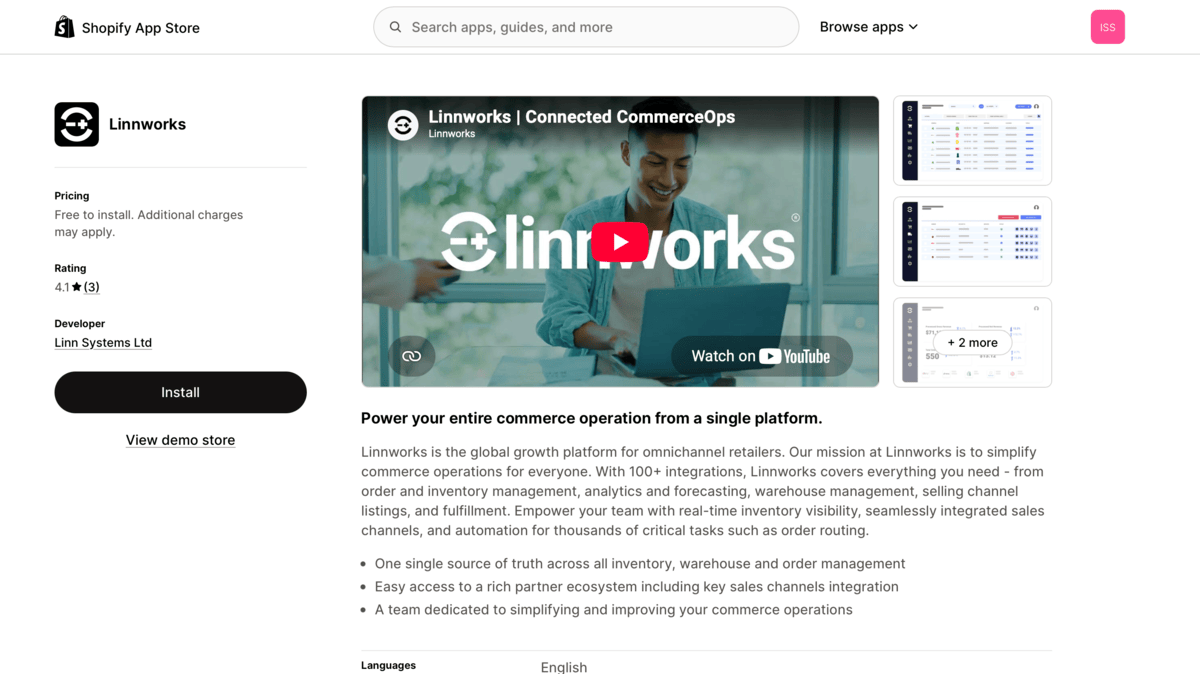
Linnworks is designed for merchants managing orders, inventory, listings, warehouses, and shipping across multiple ecommerce channels.
It connects Shopify with marketplaces such as Amazon, eBay, Walmart, and other channels, giving merchants a centralized view of their operations.
Its order management system can automatically download orders from different channels and apply rules for routing and fulfillment. Linnworks currently supports more than 100 channel integrations.
Key features
- Centralized multichannel order management
- Automated order routing
- Rules Engine for order workflows
- Warehouse management
- Shipping and carrier integrations
Pros
- Strong multichannel capabilities
- Extensive integrations
- Powerful order-routing automation
Cons
- Can be more complex than smaller Shopify merchants need
- Pricing isn't publicly listed.
- Implementation can require significant setup.
My testing result
What stood out to me most about Linnworks was how much of the repetitive work around multichannel orders can be automated. Instead of treating every order the same way, the platform lets merchants create rules for how orders should be processed and where they should be fulfilled.
I particularly liked the focus on order routing. For a merchant selling through Shopify alongside marketplaces, the ability to apply rules based on different order conditions removes much of the manual decision-making from the fulfillment process.
The platform does have a learning curve. There are many settings and workflows to understand, so I wouldn't recommend installing and using it without configuration.
Pricing
Custom pricing. Linnworks states that pricing depends on the order volume and features required.
2. Brightpearl — Best for Retail Operations
My Rating: 92/100
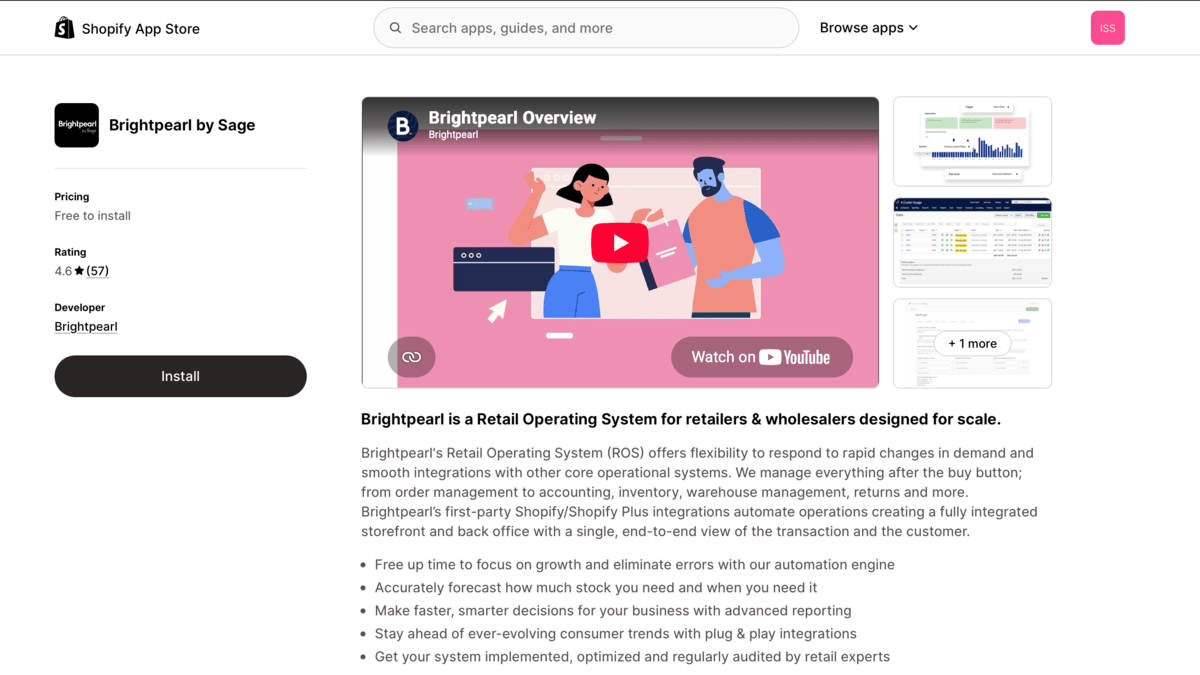
Brightpearl is more than an OMS. It is a retail operations platform that combines order management with inventory, purchasing, warehouse management, accounting, reporting, and other back-office functions.
Its Shopify integration can manage orders, inventory, prices, and shipments across multiple Shopify stores, while automatically reserving inventory when orders are created.
Key features
- Multichannel order management
- Order routing and splitting
- Warehouse management
- Purchasing and inventory planning
- Reporting and analytics
Pros
- Broad retail operations functionality
- Strong order and inventory integration
- Good for complex retail businesses
Cons
- More functionality than a smaller merchant may need
- Requires implementation
- Can involve a longer setup process
My Testing Result
The biggest thing that stood out to me about Brightpearl was that it doesn't treat order management as a standalone function. Orders are closely connected to inventory, purchasing, fulfillment, accounting, and other parts of the retail operation.
I liked this approach because it means an order doesn't simply move from "new" to "fulfilled." The system can connect the order to the operational processes that need to happen around it.
The trade-off is complexity. Brightpearl makes more sense when you're looking for a broader retail operations platform rather than simply a tool for managing Shopify orders.
For a growing retailer with multiple channels and a more complicated back office, I found this broader approach particularly useful.
Pricing
Custom pricing. Brightpearl provides tailored pricing based on the business and implementation requirements.
3. Cin7 — Best for Inventory and Order Management
My Rating: 89/100
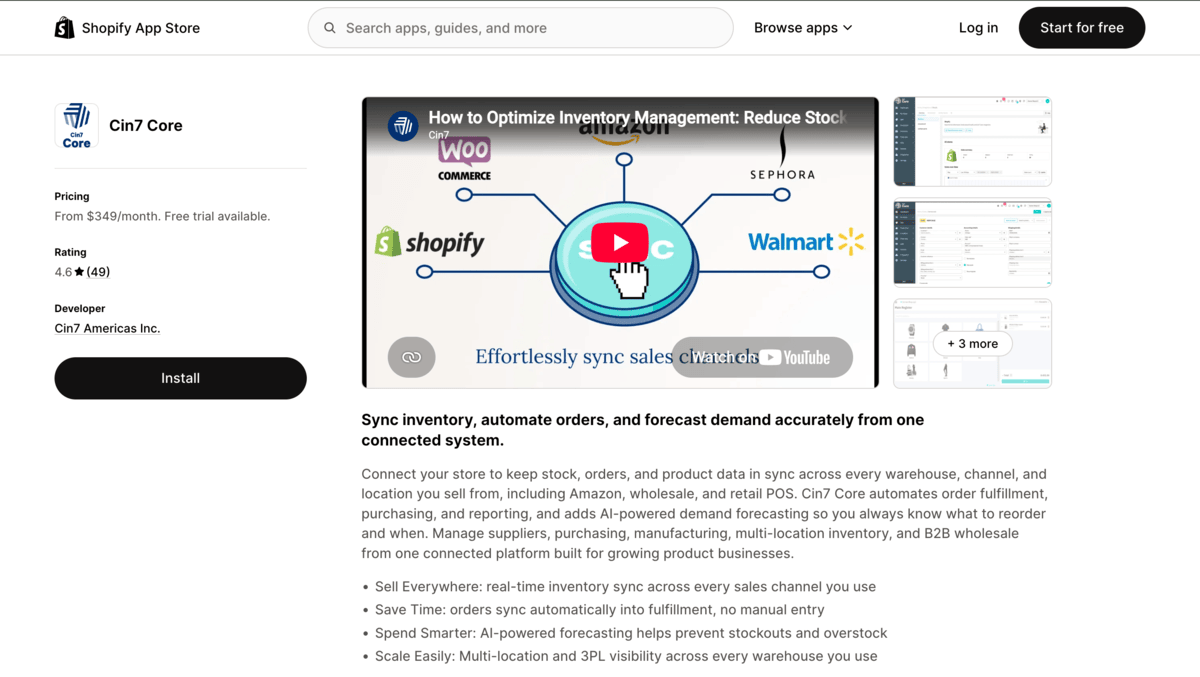
Cin7 combines order management with inventory and warehouse management, making it particularly relevant for growing brands that need visibility beyond their Shopify store.
Its order management functionality provides visibility across sales channels, while its warehouse tools support picking, packing, barcode scanning, and multiple warehouse locations.
Key features
- Multichannel order management
- Sales order management
- Warehouse management
- EDI and 3PL connections
- Returns management
Pros
- Extensive warehouse functionality
- Good multichannel visibility
- Supports B2B operations
Cons
- Higher price point
- More complex than basic OMS software
- Some capabilities are add-ons.
My Testing Result
What I liked about Cin7 was the close relationship between order management and inventory. The inventory availability, warehouse operations, purchasing, and fulfillment are all part of the same workflow.
The warehouse functionality also stood out. Features such as barcode scanning and warehouse workflows make the platform more relevant for businesses that physically handle a significant volume of inventory.
I found Cin7 less appealing for a merchant that only needs a simple Shopify order dashboard. Its value becomes clearer when orders are part of a larger inventory and supply chain operation.
If your business is growing beyond Shopify and needs order management tied closely to inventory and warehouse processes, Cin7 is worth considering.
Pricing
Cin7's current Core plans start at $349/month for Standard, with Pro at $599/month and Advanced at $1,199/month.
4. Order Desk — Best for Order Workflow Automation
My Rating: 87/100
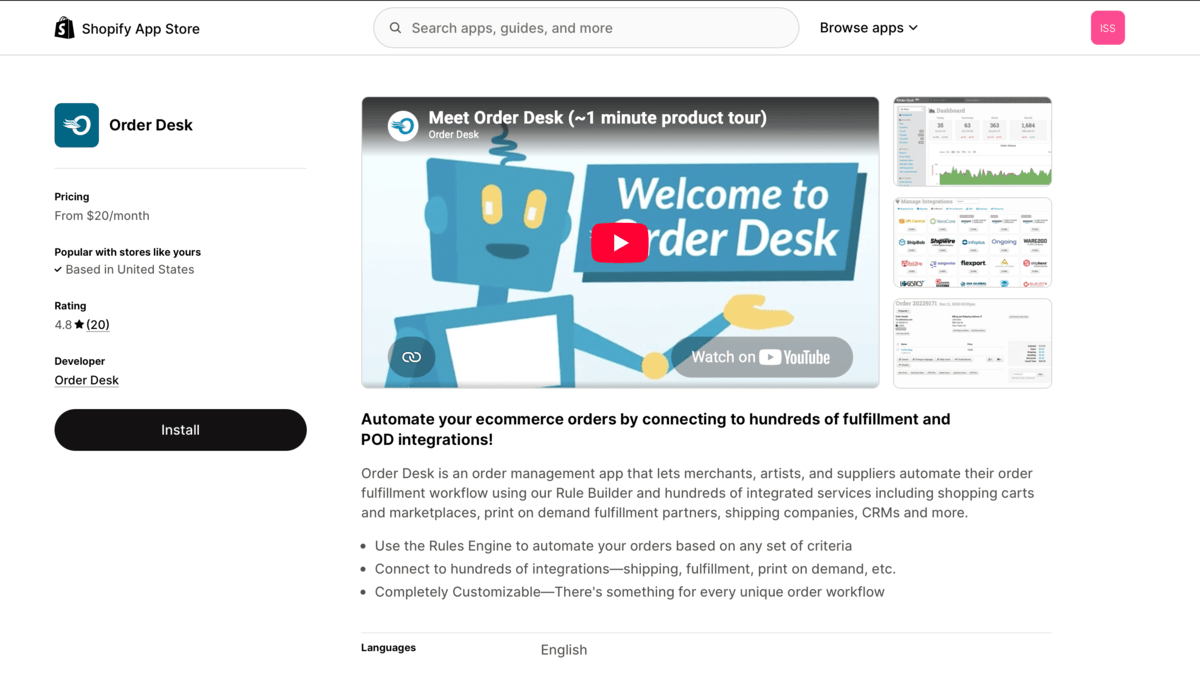
Order Desk takes a different approach from traditional all-in-one ecommerce platforms. Its main strength is connecting order sources with fulfillment services and using customizable rules to automate what happens to each order.
It supports hundreds of integrations and lets merchants build rules that can split orders, add information, filter orders, and send them to the appropriate fulfillment service.
Key features
- Automated order processing
- Custom order workflows
- Shipping integrations
- Fulfillment integrations
- Order folders and filtering
Pros
- Excellent automation capabilities
- Large integration ecosystem
- Useful for unusual fulfillment workflows
Cons
- Pricing includes per-order fees.
- Requires some configuration
- Interface can feel less intuitive for complex workflows.
My Testing Result
For me, the Rules Engine stood out most in Order Desk. Instead of forcing merchants into a fixed workflow, it gives them a lot of control over what happens when specific conditions are met.
I liked the ability to think about order processing as a series of rules. For example, an order can be checked against specific conditions and then automatically sent to the appropriate fulfillment service or have certain information added to it.
This flexibility is also the reason I wouldn't call Order Desk the easiest option for everyone. The more customized your workflow becomes, the more time you'll likely spend setting up and maintaining those rules.
For merchants with unusual fulfillment requirements or multiple systems that need to communicate with each other, I found this flexibility to be one of Order Desk's biggest strengths.
Pricing
- Starter: $20/month + $0.25/order
- Pro: $60/month + $0.10/order
- Plus: $125/month + $0.05/order
5. Veeqo — Best for Multichannel Fulfillment
My Rating: 84/100
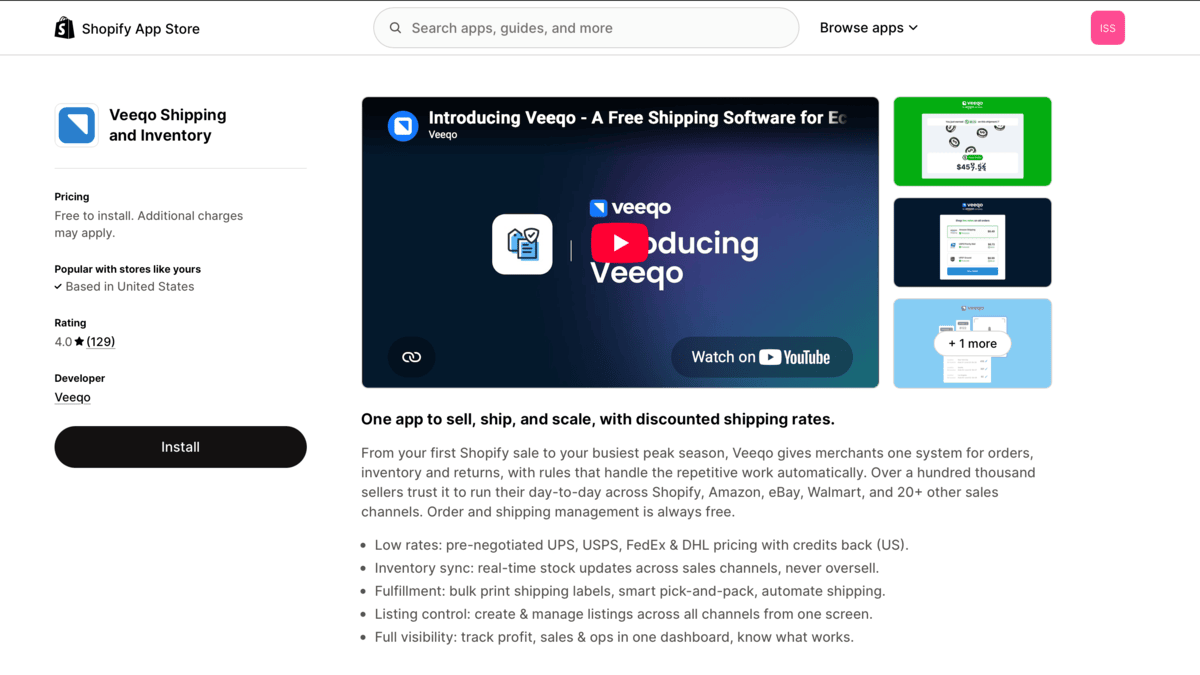
Veeqo combines order management, shipping, inventory, and fulfillment in one platform. It supports Shopify along with Amazon, eBay, Walmart, WooCommerce, and other sales channels.
One of its biggest advantages is that its core shipping functionality is free, while merchants can pay for additional inventory, listing, picking, and high-volume functionality.
Key features
- Multichannel order management
- Shipping label creation
- Multichannel listings
- Returns & Order tracking
- Shipping analytics
Pros
- Supports multiple sales channels
- Easy access to shipping workflows
- Unlimited users and SKUs on plans
Cons
- Advanced capabilities require paid plans.
- Pricing varies with order volume.
- More focused on fulfillment and shipping than broad ERP functionality
My Testing Result
What stood out to me about Veeqo was how heavily it focuses on the practical fulfillment side of order management. Rather than stopping at showing orders in a dashboard, the platform connects orders to picking, packing, shipping, and tracking.
I also liked the fact that merchants can start with its shipping functionality without immediately committing to a large enterprise platform. That makes it more approachable for smaller and mid-sized businesses.
The platform becomes more useful as the operation grows and needs features such as inventory management, digital picking, and multichannel workflows.
I'd consider Veeqo particularly useful for a Shopify merchant whose main challenge isn't simply receiving orders but processing and shipping a growing number of them efficiently.
Pricing
- Shipping: Free
- Inventory: From $19/month
- High Volume: From $350/month
Pricing for paid plans depends on monthly order volume.
6. ShipStation — Best for Shipping and Fulfillment
My Rating: 82/100
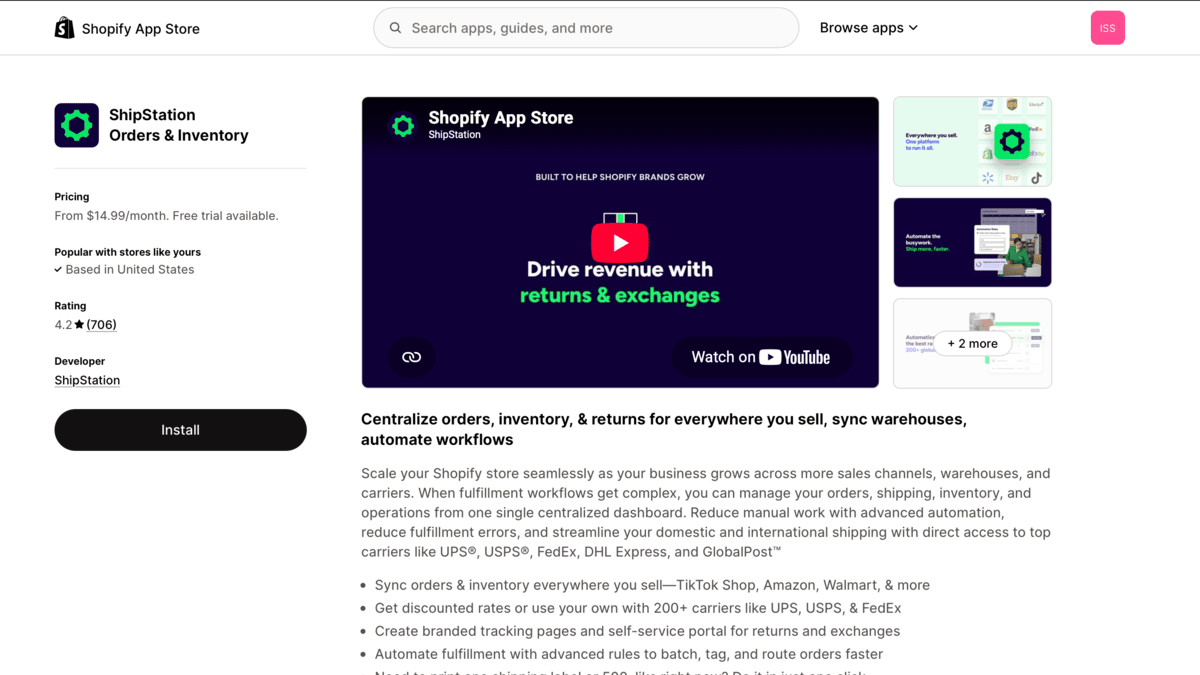
ShipStation is primarily known as a shipping and fulfillment platform, but its functionality extends into order management.
It brings orders from connected stores and marketplaces into one place and provides tools for automation, order splitting, shipping, returns, and warehouse workflows.
For Shopify merchants whose main challenge is processing and shipping a growing number of orders, ShipStation can be a practical option.
Key features
- Centralized order management
- Order splitting and combining
- Shipping automation
- Returns and exchanges
- Inventory management on higher plans
Pros
- Strong shipping capabilities
- Order automation
- Supports order splitting and combining
Cons
- More shipping-focused than a full OMS
- Advanced inventory capabilities require higher plans.
- Pricing increases with plan level and volume.
My Testing Result
The strongest part of ShipStation for me was the connection between order management and shipping.
Once an order enters the system, many of the actions needed to get it shipped can be handled from the same workflow.
I liked the shipping automation in particular because it reduces the amount of repetitive work involved in choosing carriers, creating labels, and processing large batches of orders.
However, I see ShipStation as a shipping- and fulfillment-focused order management solution rather than a complete retail operations platform.
Merchants looking for deep purchasing, inventory planning, or ERP functionality will likely need additional software.
For Shopify merchants whose biggest operational problem is getting a growing number of orders processed and shipped efficiently, ShipStation makes a lot of sense.
Pricing
Current Shopify App Store pricing starts at $29.99/month for the Standard plan. Higher plans include Premium at $349.99/month, with pricing also varying by geography and monthly order volume.
7. SKULabs: Best for Order & Warehouse Management
My Rating: 85/100
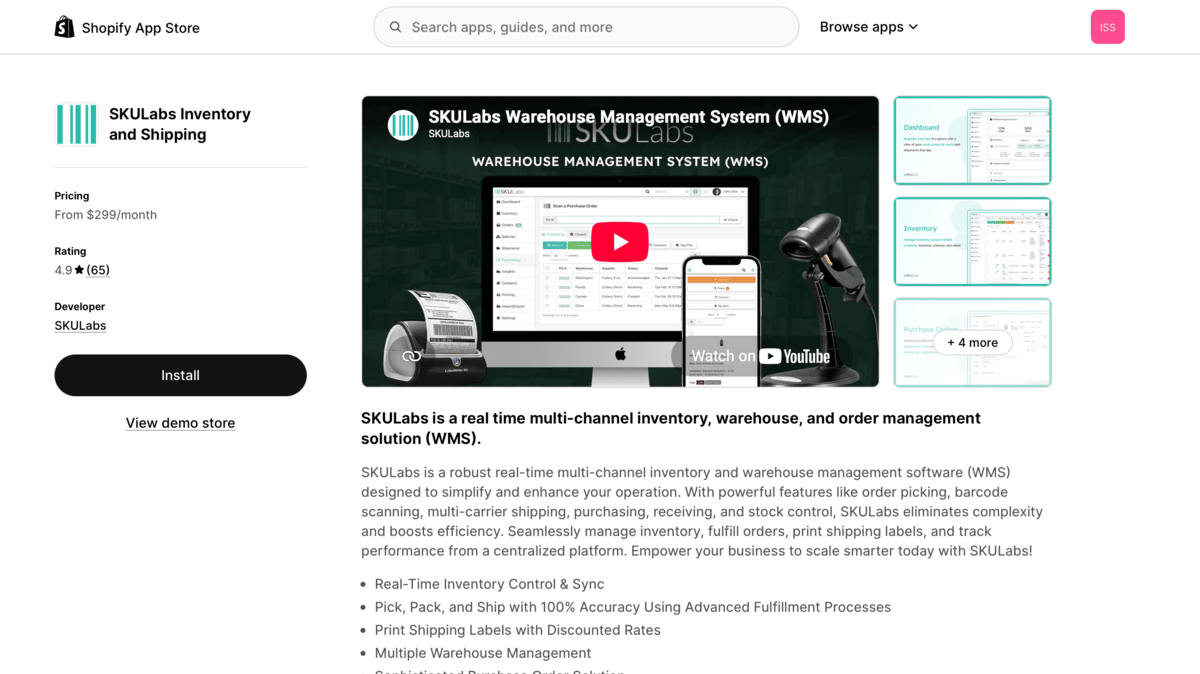
SKULabs combines order management with inventory and warehouse management, making it suitable for Shopify merchants with more complex fulfillment operations.
It brings orders from Shopify and other sales channels into one platform and connects them with inventory, picking, shipping, and warehouse workflows.
Key Features
- Multichannel order management
- Inventory synchronization
- Multi-warehouse management
- Barcode-based picking and fulfillment
- Shipping and returns management
Pros
- Combines order, inventory, and warehouse management
- Strong multichannel and multi-warehouse support
- Useful picking and fulfillment workflows
Cons
- Relatively high starting price
- Can be complex for smaller Shopify stores
- May offer more functionality than simple stores need
My Testing Result
What stood out about SKULabs is how closely its order management connects with inventory and warehouse operations.
Instead of managing orders separately, merchants can connect order processing with inventory, picking, shipping, and fulfillment workflows.
The multi-warehouse and barcode picking capabilities are particularly useful for businesses handling higher order volumes or fulfilling orders from multiple locations.
The main trade-off is complexity. If you only need basic Shopify order processing, SKULabs may be more than you need. But for merchants managing multiple channels, warehouses, and fulfillment workflows, the broader system can be useful.
Pricing
SKULabs starts at $299/month, with higher plans offering increased order volumes, users, stores, warehouses, and additional capabilities.
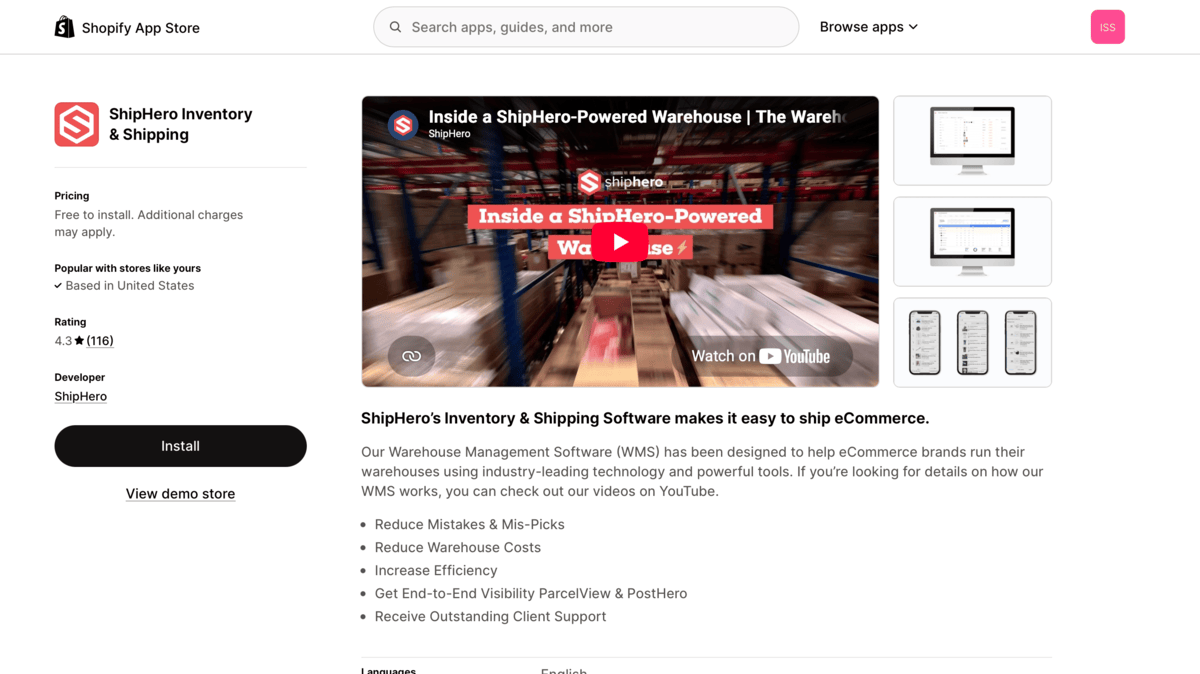
8. ShipHero — Best for Order Management and Warehouse Fulfillment
My Rating: 88/100
ShipHero combines order management with warehouse fulfillment, making it particularly relevant for Shopify brands that operate their own warehouse or work with fulfillment partners.
Its Shopify integration synchronizes orders, inventory, and product data, while its automation rules can control shipping methods, packaging, partial shipments, and other fulfillment actions.
Key features
- Shopify order synchronization
- Order & returns management
- Warehouse management
- Fulfillment automation
- Shipping management
Pros
- Strong warehouse functionality
- Good Shopify integration
- Fulfillment automation
Cons
- More warehouse-focused than a lightweight OMS
- Can require implementation and configuration
- Pricing isn't straightforward for all use cases.
My rating
4.5/5
My Testing Result
The biggest thing that stood out to me about ShipHero was how closely the order workflow is connected to what happens inside the warehouse.
The platform doesn't just help you organize incoming orders; it gives warehouse teams tools for actually processing those orders.
I particularly liked the emphasis on mobile picking and fulfillment workflows. For a business shipping hundreds or thousands of orders, reducing the gap between the order-management system and the warehouse team can make a meaningful difference.
I also found ShipHero more compelling for businesses operating their own warehouse or working closely with fulfillment operations than for a small Shopify store with straightforward shipping.
If warehouse fulfillment is a major part of your operation, ShipHero's combination of order management and warehouse functionality makes it worth considering.
Pricing
Custom pricing. ShipHero generally directs businesses toward a demo and quote based on their fulfillment and operational requirements.
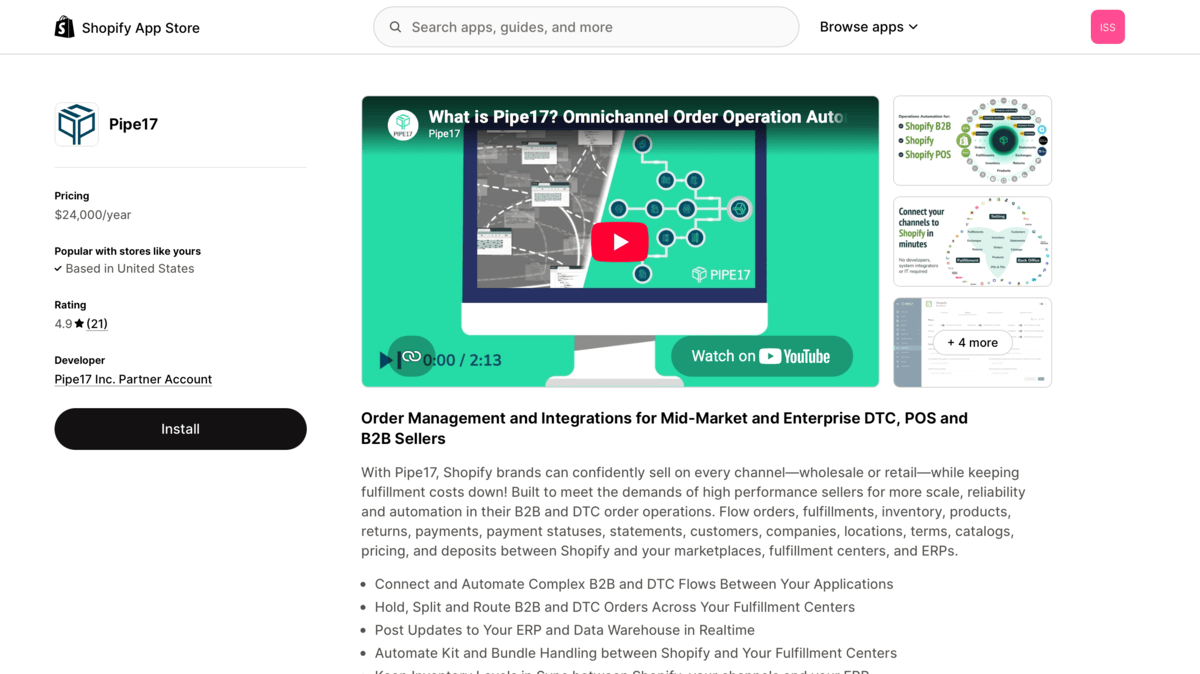
9. Pipe17 — Best for Complex Shopify Order Operations
My Rating: 92/100
Pipe17 is an order management platform built to connect Shopify with the other systems involved in ecommerce operations, including marketplaces, 3PLs, warehouses, and ERPs.
It centralizes order flows and gives merchants tools to route orders, manage fulfillment, synchronize inventory, and handle returns. This makes it particularly relevant for Shopify brands that have outgrown a simple Shopify-only order workflow.
Key Features
- Omnichannel order management
- Order holds and splitting
- Returns management
- SKU and product mapping
- Exception monitoring
Pros
- Powerful order-routing capabilities
- Connects Shopify with 3PLs, WMSs, and ERPs
- Supports complex fulfillment workflows
Cons
- More suited to complex operations than small Shopify stores
- Custom pricing makes it difficult to compare costs
- May be more functionality than a single-store merchant needs
My Testing Result
What stood out to me about Pipe17 was that it focuses on what happens after an order is placed, rather than simply giving you another place to view your orders.
I especially liked the routing capabilities. When a business has multiple warehouses or fulfillment partners, deciding where an order should go can become manual. It automates that decision based on the rules and information available to the business.
I also liked how it connects Shopify with the wider ecommerce stack.
Orders can move between Shopify, 3PLs, warehouses, ERPs, and other systems, while fulfillment and inventory information can flow back into Shopify. This makes it much more useful for a growing brand with several operational systems.
The downside is that this level of functionality may be unnecessary if you have only one Shopify store, one warehouse, and a straightforward fulfillment process.
Pricing
Custom pricing. Pipe17's pricing depends on factors such as order volume, connections, flows, and sub-accounts.
Shopify Order Management vs. Inventory Management
Order management and inventory management overlap, but they solve different problems.
For example, an OMS answers:
“What should happen to this order?”
An inventory management system answers:
“How much stock do I have, where is it, and when should I reorder?”
For example, an OMS can route a Shopify order to the right warehouse or fulfillment partner. An inventory management system ensures available stock is accurate across your sales channels and locations.
The two systems often work together. If you're looking beyond order processing and also need better inventory visibility, replenishment, and stock control, an inventory management platform like Sumtracker can complement your Shopify setup.
For smaller stores with straightforward operations, Shopify may handle both areas reasonably well.
As your order volume, sales channels, and inventory complexity grow, using dedicated tools for each function can give you more control.
How to Choose the Right Shopify Order Management System
The right OMS depends less on the number of features and more on the complexity of your operation.
1. Consider your order volume
A small Shopify store processing a few hundred orders per month doesn't necessarily need an enterprise OMS.
2. Look at your sales channels
If you sell only through Shopify, native Shopify tools may cover many basic workflows. If you sell through Shopify, Amazon, eBay, Walmart, and other channels, centralized order management becomes more valuable.
3. Consider your fulfillment setup
If you fulfill everything yourself, look for warehouse and picking functionality. If you use several 3PLs, prioritize order routing and 3PL integrations.
4. Check automation capabilities
Look for rules that can automatically route orders, assign shipping methods, split orders, and handle exceptions.
5. Consider returns
If your business has a high return rate, make sure returns, exchanges, refunds, and restocking are supported.
6. Think about scalability
The system should be able to handle additional channels, warehouses, SKUs, and order volume without requiring a complete technology change.
7. Calculate the actual cost
Don't compare only the advertised monthly subscription. Check whether the platform charges per order, per user, per integration, or for implementation and onboarding.
Conclusion
The right Shopify order management system depends on your order volume, sales channels, fulfillment setup, and automation needs.
For multichannel operations, Linnworks and Pipe17 are strong options, while Brightpearl and Cin7 combine order management with broader inventory and warehouse operations.
Order Desk, Veeqo, and ShipStation are better suited to specific workflow, fulfillment, and shipping needs.
Before choosing a platform, make sure it fits your current Shopify setup and can scale with your business.
Shopify Order Management FAQs
What is a Shopify order management system?
A Shopify order management system helps you manage orders throughout their lifecycle, from processing and routing to fulfillment, shipping, returns, and refunds. It can also bring orders from multiple sales channels into one place.
Does Shopify have built-in order management?
Yes. Shopify has built-in tools for viewing, processing, editing, fulfilling, tracking, and managing returns for orders. For stores with more complex workflows, multiple sales channels, or several fulfillment locations, a dedicated OMS can provide additional automation and control.
When should I use a Shopify order management system?
You may want an OMS when managing orders manually starts taking too much time or becomes difficult to keep track of. Multiple sales channels, warehouses, fulfillment partners, high order volumes, and complicated order-routing requirements are common signs that you may benefit from one.
What features should I look for in a Shopify order management system?
Look for features such as centralized order management, order routing, automation, fulfillment and shipping tools, multichannel support, inventory and warehouse visibility, returns management, and integrations with your existing ecommerce and logistics tools.
Can a Shopify order management system manage orders from multiple sales channels?
Yes. Many Shopify-compatible OMS platforms can collect orders from Shopify and other channels such as Amazon, eBay, Walmart, and other marketplaces. This allows you to manage orders from different channels through a more centralized workflow instead of processing each channel separately.
Conclusion

Bhoomi writes about inventory management and multichannel selling at Sumtracker. Her focus is on solving real operational problems for Shopify, Amazon, and marketplace sellers through well-researched content. She covers everything from multi-location inventory syncing and stock error troubleshooting to replenishment planning and platform comparisons, turning complex eCommerce operations into clear, actionable guidance.
LinkedInRelated Articles
Tool and strategies modern teams need to help their companies grow.
.avif)
.avif)
Ready to Simplify Your Inventory Management?
Join hundreds of e-commerce merchants who rely on Sumtracker to save time, eliminate errors, and grow their business.