.svg)
.avif)
Sales Velocity in Inventory Management: Definition, Formula & Examples


If you’ve ever wondered why some products fly off the shelf while others sit untouched, sales velocity is usually the answer.
In simple terms, sales velocity tells you how fast a product sells over a given period of time.
For inventory-driven businesses, this metric is gold. It helps you understand demand, avoid stockouts, reduce excess inventory, and make smarter decisions about what to reorder and when.
Instead of relying on gut feeling or static reports, sales velocity gives you a real-world view of how your inventory actually moves.
What Is Sales Velocity in Inventory Management?
Sales velocity measures the rate at which inventory sells, typically units sold per day, week, or month. It focuses on speed, not just volume.
For example, selling 300 units in 30 days is very different from selling 300 units in 7 days. Both look the same in total sales, but their sales velocity tells two very different stories about demand.
In inventory management, sales velocity is used to:
- Identify fast- and slow-moving products
- Understand buying patterns
- Align stock levels with real demand
Think of it as a pulse check on your products.
.avif)
Why Sales Velocity Matters for Inventory Planning
Sales velocity turns raw sales data into actionable insights. Without it, inventory planning often becomes reactive, reordering too late or overstocking just to be safe.
Here’s why it matters:
- Prevents stockouts by showing how quickly items sell
- Reduces dead stock by flagging slow-moving SKUs early
- Improves cash flow by avoiding unnecessary inventory spend
- Supports smarter forecasting, especially during seasonality or promotions
When you know how fast products move, inventory decisions become proactive instead of firefighting.
How Sales Velocity Is Calculated (Simple Formula)
Sales velocity is one of the easiest inventory metrics to calculate and that’s part of what makes it so powerful.
At its core, it answers a simple question: how many units of a product do you sell in a given time period?
The Simple Sales Velocity Formula
Sales Velocity = Units Sold ÷ Time Period
For example:
- If you sold 90 units in 30 days
- Your sales velocity is 3 units per day
That’s it. No complex math or advanced formulas needed.
.avif)
Choosing the Right Time Period
The time period you use matters. A shorter window (like 7 or 14 days) reflects recent demand, while a longer window (30 or 60 days) smooths out short-term fluctuations.
- Short time frames are useful for fast-moving products or promotions
- Longer time frames work better for steady, predictable items
The key is to stay consistent so comparisons remain meaningful.
Where to Apply Sales Velocity
Sales velocity can be calculated at different levels, such as:
- Per product or variant
- Per sales channel (Shopify, Amazon, etc.)
- Per warehouse or location
This helps businesses see not just what sells fast, but where it sells fast.
Key Factors That Influence Sales Velocity
Sales velocity doesn’t exist in isolation. It’s shaped by a mix of demand, operations, and external conditions.
Understanding why a product’s sales velocity is high or low is just as important as tracking the number itself. Here are the key factors that influence how fast your products move.
Demand and Seasonality
Customer demand is the biggest driver of sales velocity. Seasonal products naturally sell faster during specific periods and slow down outside those windows. Holiday spikes, weather changes, or industry trends can all dramatically shift velocity in a short time.
Pricing and Promotions
Discounts, bundles, and limited-time offers often lead to temporary spikes in sales velocity. On the flip side, price increases or loss of competitive pricing can slow sales down quickly. This is why it’s important not to treat promotional velocity as “normal” demand.
Stock Availability
A product can only sell if it’s in stock. Low inventory or frequent stockouts can artificially reduce sales velocity, even if demand is strong. This often leads businesses to underestimate how fast a product could be selling.
Sales Channels and Visibility
The same product may have very different sales velocity across channels. A top seller on your website might move slowly on a marketplace—or vice versa—depending on traffic, competition, and listing visibility.
Marketing and Product Exposure
Ads, email campaigns, influencer mentions, and featured placements directly impact how quickly products sell. A sudden increase in marketing effort often leads to a short-term boost in sales velocity.
Customer Behavior and Product Fit
Changes in customer preferences, reviews, or perceived value can influence velocity over time. Products with strong reviews and clear product-market fit tend to maintain more stable and predictable sales velocity.
Fulfillment and Delivery Speed
Faster shipping and reliable fulfillment can positively affect conversion rates, which in turn improves sales velocity. Delays, shipping issues, or poor delivery experiences can slow demand, even for otherwise popular products.
How Sales Velocity Impacts Reordering and Stock Levels
Sales velocity plays a direct role in deciding when to reorder and how much to buy.
.avif)
High sales velocity:
- Requires frequent reordering
- Needs higher safety stock
- Often signals bestsellers worth prioritizing
Low sales velocity:
- Calls for smaller reorders or none at all
- May need pricing or marketing adjustments
- Can indicate products to phase out
When paired with lead time, sales velocity becomes one of the strongest inputs for accurate replenishment planning.
Common Sales Velocity Mistakes Inventory Teams Make
Sales velocity is a powerful metric, but when it’s misunderstood or used incorrectly, it can lead to poor inventory decisions. Many inventory issues don’t come from bad data, they come from how sales velocity is interpreted.
Here are the most common mistakes teams make.
Treating Sales Velocity as a Static Number
Sales velocity changes constantly. Relying on a single historical value and assuming it will stay the same ignores seasonality, trends, and demand shifts. Velocity should be reviewed regularly, not set once and forgotten.
Ignoring Stockouts and Low Inventory Periods
If a product was out of stock during your measurement window, its sales velocity will look lower than actual demand. Teams that don’t account for this often under-reorder fast-selling products.
Using Inconsistent Time Frames
Comparing a 7-day velocity for one product with a 30-day velocity for another leads to misleading conclusions. Inconsistent time periods make velocity data unreliable and hard to act on.
Overreacting to Short-Term Spikes
Promotions, flash sales, or viral moments can temporarily inflate sales velocity. Treating these spikes as long-term demand often results in overstock once demand normalizes.
Applying the Same Velocity Rules to Every Product
Not all products behave the same way. Seasonal items, evergreen products, and new launches should each be evaluated differently. Using a one-size-fits-all approach to sales velocity can distort reordering decisions.
Looking at Velocity Without Lead Time
Sales velocity alone doesn’t tell the full story. Without factoring in supplier lead times, teams may reorder too late, even if velocity data looks accurate.
Focusing Only on Averages
Averages can hide volatility. A product with uneven daily sales may look stable on paper but still require higher safety stock. Ignoring variability can lead to unexpected stockouts.
How Inventory Software Helps Track and Improve Sales Velocity
Tracking sales velocity manually might work when you have a handful of products and one sales channel but it quickly breaks down as your catalog, locations, and marketplaces grow.
.avif)
This is where Sumtracker makes a real difference by turning sales velocity into something you can actually act on.
Real-Time Sales Velocity Across Channels
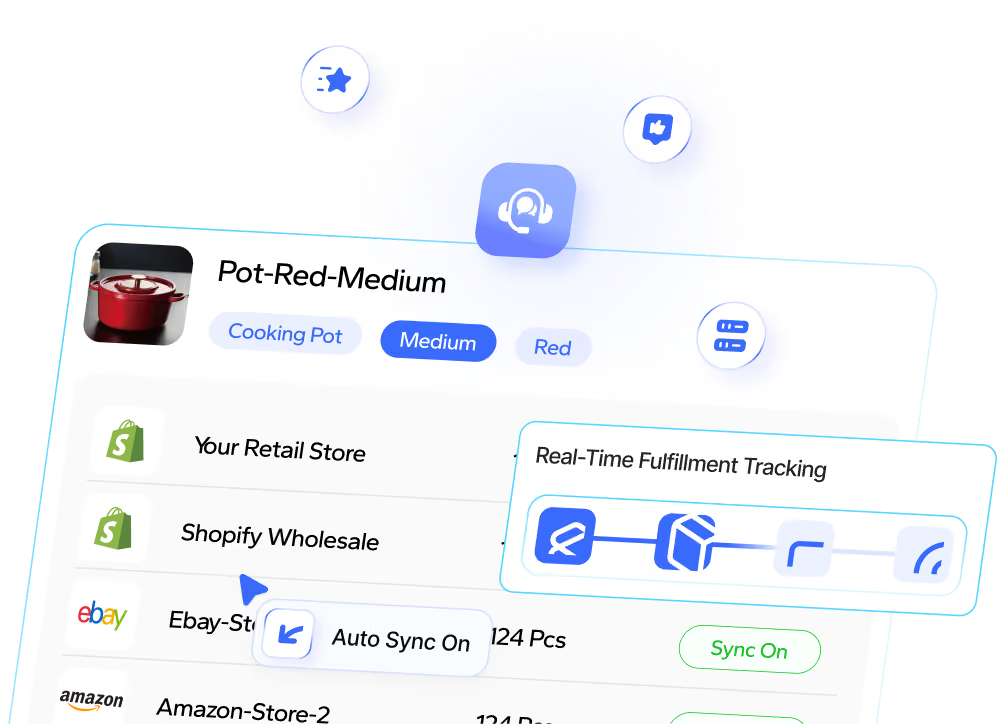
Sumtracker automatically tracks how fast each SKU is selling across all connected channels, whether that’s Shopify, Amazon, Etsy, eBay, or multiple Shopify stores. Instead of pulling reports from different platforms, you get a single, accurate view of sales velocity, updated in real time.
SKU-Level and Variant-Level Clarity
Not all products move at the same speed and neither do their variants. Sumtracker calculates sales velocity at a granular level, helping you identify:
- True bestsellers
- Slow-moving variants hiding inside popular products
- Channel-specific demand differences
This level of clarity is hard to achieve with spreadsheets or native platform reports.
Sales Velocity Connected to Stock Levels
Sales velocity in Sumtracker isn’t just a number, it’s directly tied to your available stock. You can immediately see:
- How many days of inventory you have left based on current velocity
- Which products are at risk of stocking out
- Which SKUs are overstocked relative to how fast they sell
This connection helps teams move from monitoring velocity to using it.
Smarter Reordering and Restocking Decisions
By combining sales velocity with lead time and historical trends, Sumtracker helps you make more confident replenishment decisions. Instead of reordering based on rough averages, you’re restocking based on how products actually sell right now.
Multi-Location and Multi-Warehouse Accuracy
If you sell from multiple locations, sales velocity can look misleading without proper context. Sumtracker tracks velocity per location, so stock transfers and replenishment decisions are based on local demand, not assumptions.
Fewer Manual Errors, Better Forecast Inputs
Because Sumtracker automatically calculates and updates sales velocity, teams avoid common mistakes like:
- Using outdated time periods
- Missing stockout-adjusted demand
- Manually reconciling channel data
Conclusion
Sales velocity is one of those deceptively simple metrics that can completely change how you manage inventory.
By focusing on how fast products sell, not just how much they sell, businesses gain a clearer picture of real demand.
It helps prevent stockouts, reduce excess inventory, improve cash flow, and make reordering decisions with confidence.
When used consistently and combined with factors like lead time, seasonality, and stock availability sales velocity turns inventory planning from reactive guesswork into a data-driven process.
And with the right inventory software in place, tracking and acting on sales velocity becomes far easier, more accurate, and far more impactful.
FAQS
What is a good sales velocity?
A good sales velocity depends on your business, product type, and lead time. The right velocity is one that meets demand without causing stockouts or excess inventory.
How often should sales velocity be reviewed?
Fast-moving products should be reviewed weekly, while slower or stable products can be reviewed monthly to keep inventory planning accurate.
Is sales velocity the same as inventory turnover?
No. Sales velocity measures how fast products sell over a short period, while inventory turnover looks at how often inventory is sold and replaced over time.
How does sales velocity help prevent stockouts?
By showing how quickly inventory is selling, sales velocity helps estimate how long stock will last and when reorders should be placed.
Can inventory software track sales velocity automatically?
Yes. Inventory software like Sumtracker can automatically calculate sales velocity across products, channels, and locations, reducing manual work and improving accuracy.
Conclusion

Bhoomi writes about inventory management and multichannel selling at Sumtracker. Her focus is on solving real operational problems for Shopify, Amazon, and marketplace sellers through well-researched content. She covers everything from multi-location inventory syncing and stock error troubleshooting to replenishment planning and platform comparisons, turning complex eCommerce operations into clear, actionable guidance.
LinkedInRelated Articles
Tool and strategies modern teams need to help their companies grow.

.avif)

Ready to Simplify Your Inventory Management?
Join hundreds of e-commerce merchants who rely on Sumtracker to save time, eliminate errors, and grow their business.