.svg)
Why Many Shopify Brands Outgrow Stocky and What They Use Instead


Note: Stocky is being phased out by Shopify, but the challenges discussed below apply to any inventory setup used during early growth stages.
The moment your Shopify sales start accelerating, inventory stops being a simple checklist and starts becoming a risk.
What once worked fine in the early days tools like Stocky can quickly feel limiting as order volume, SKUs, and operational complexity grow.
That’s when many Shopify brands realize they’ve outgrown their inventory setup and begin looking for systems that offer real-time accuracy, better planning, and the confidence to scale without constant firefighting.
Why Many Shopify Brands Eventually Outgrow Stocky
Stocky is a solid starting point for Shopify merchants, especially when inventory is simple and order volume is predictable.
But as brands grow, inventory quickly becomes more dynamic and far less forgiving.
At this stage, inventory management is no longer about tracking what you have, it’s about confidently planning what comes next.
This is where many Shopify brands begin to feel friction with Stocky. What once felt sufficient starts to feel limiting as day-to-day operations become more complex.

Common reasons brands outgrow Stocky include:
- Inventory updates that aren’t truly real-time as order volume increases
- Limited visibility when selling across multiple channels or locations
- Basic forecasting that doesn’t adapt well to changing sales velocity or seasonality
- Manual workarounds (spreadsheets, double-checks) to validate inventory data
- Less confidence in reorder decisions as the business scales
What Stocky Does Well for Early-Stage Shopify Stores
Stocky is well suited for Shopify stores that are still in their early growth phase. When product catalogs are small and fulfillment is straightforward, Stocky keeps things simple without overwhelming merchants with complexity.
For founders or small teams managing inventory themselves, this ease of use is often the biggest advantage.
At this stage, Stocky helps merchants stay organized and build basic inventory discipline without needing advanced systems.
Stocky works well for early-stage stores because it offers:
- Simple purchase order creation and tracking
- Basic stock level visibility directly within Shopify
- Straightforward supplier management
- Low setup effort with minimal learning curve
- A native Shopify experience that feels familiar to new sellers
Signs It’s Time to Move On From Stocky
Shopify brands start noticing small but recurring inventory issues that become harder to ignore as the business grows. What once felt manageable becomes daily friction for ops and planning teams.
Inventory numbers don’t match reality
Stock levels shown in the system start differing from what’s actually available, leading to constant double-checking.
Stockouts become more frequent
Fast-moving products sell out unexpectedly, even when reorders were planned.
Overstocking increases
Slow-moving items pile up because forecasting doesn’t reflect real demand patterns.
Manual work increases
Teams rely more on spreadsheets and exports to validate or adjust inventory data.
Multi-location inventory feels messy
Tracking stock across warehouses or fulfillment locations becomes harder to manage.
Reordering feels reactive
Planning shifts from proactive decision-making to fixing problems after they happen.
Why Sumtracker Is the Most Common Tool Brands Switch to After Stocky
Sumtracker is often the natural next step for Shopify brands that have outgrown basic inventory tools like Stocky.
The switch usually isn’t about adding complexity, it’s about gaining confidence. Growing teams need inventory data they can trust, updated in real time, and tied directly to how the business actually sells.
What makes Sumtracker stand out is that it’s built for scale from day one, without feeling like a heavy ERP. Brands get a clear, centralized view of inventory across stores, locations, and sales channels, while still keeping workflows simple and fast.

Shopify brands commonly switch to Sumtracker because it offers:
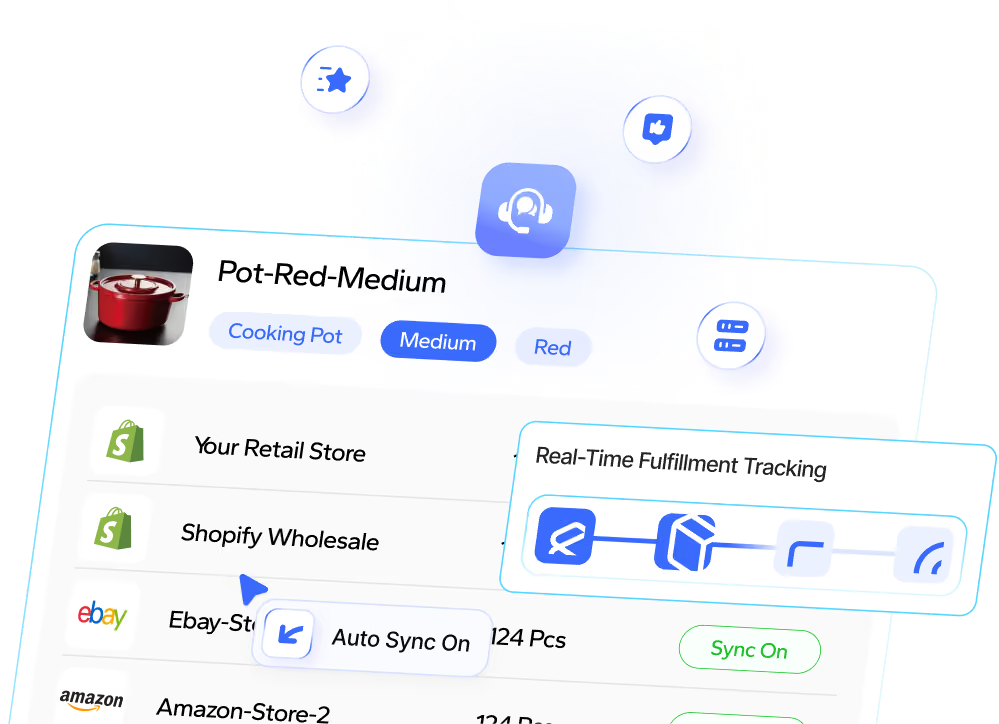
- Accurate real-time inventory sync as sales, returns, and adjustments happen
- Accurate stock visibility across multiple stores and locations
- Sales-based restocking insights instead of static reorder rules
- Reliable forecasting that reflects actual sales velocity and trends
- Clean, easy-to-use dashboards that reduce manual checks and spreadsheets
Conclusion
Outgrowing Stocky isn’t a failure, it’s a sign your Shopify brand is doing something right.
As sales accelerate and operations become more complex, inventory accuracy, speed, and planning stop being “nice to have” and become essential.
At that point, relying on basic tools often leads to firefighting instead of forward planning.
That’s why many growing Shopify brands make the switch to Sumtracker. It gives teams real-time visibility, reliable forecasting, and confidence in every restocking decision. Instead of constantly fixing inventory issues, brands can finally stay ahead of them.
If Stocky is starting to feel limiting, it’s probably time to upgrade your inventory stack.
Try Sumtracker and see what accurate, real-time inventory planning actually feels like.
FAQs
Is Stocky enough for growing Shopify brands?
Stocky works well for early-stage stores, but many growing brands outgrow it as order volume, SKUs, locations, or sales channels increase. Limitations around real-time sync and forecasting often become noticeable at scale.
When should I consider switching from Stocky?
If you’re experiencing frequent stockouts, inventory mismatches, overstocking, or relying heavily on spreadsheets, it’s a strong signal that Stocky no longer fits your needs.
What makes Sumtracker different from Stocky?
Sumtracker focuses on real-time inventory syncing, sales-based restocking insights, and accurate forecasting across stores and locations, features that are critical once a business starts scaling.
Is Sumtracker suitable for non-technical teams?
Yes. Sumtracker is designed to be simple and intuitive, making it easy for ops, planning, and founder-led teams to use without complex setup or training.
Will switching tools disrupt my operations?
Most brands transition smoothly by moving once inventory complexity demands it. The long-term gain of accurate data, fewer surprises, and better planning far outweighs the short-term switch effort.
Conclusion

Bhoomi writes about inventory management and multichannel selling at Sumtracker. Her focus is on solving real operational problems for Shopify, Amazon, and marketplace sellers through well-researched content. She covers everything from multi-location inventory syncing and stock error troubleshooting to replenishment planning and platform comparisons, turning complex eCommerce operations into clear, actionable guidance.
LinkedInRelated Articles
Tool and strategies modern teams need to help their companies grow.
![10 Best Inventory Management Software for Shopify [Expert's Tested] - Updated 2026](https://cdn.prod.website-files.com/67907f49647e48895e5dc266/699ef477d7260e2a544f9607_Growth%20Unlocked%20with%20Sumtracker%20-%202026-02-25T183855.057.avif)
.avif)
Ready to Simplify Your Inventory Management?
Join hundreds of e-commerce merchants who rely on Sumtracker to save time, eliminate errors, and grow their business.