.svg)
Stocky vs Sumtracker: Which Inventory Tool Is Better for Shopify Stores?


Inventory issues on Shopify usually don’t start big, they start with small mismatches, delayed stock updates, or reorders that arrive too late.
As these problems compound, many merchants begin reassessing the tools they rely on for inventory management.
Stocky and Sumtracker are two commonly used inventory tools for Shopify, but they approach inventory control very differently.
This blog compares how each tool works, where their capabilities differ, and which types of Shopify operations each one is better suited for.

What Is Sumtracker and How Does It Work for Shopify?
Sumtracker is an inventory management and planning tool designed to help Shopify merchants and multi-channel sellers maintain real-time inventory accuracy, automate stock workflows, and streamline purchasing and demand planning.
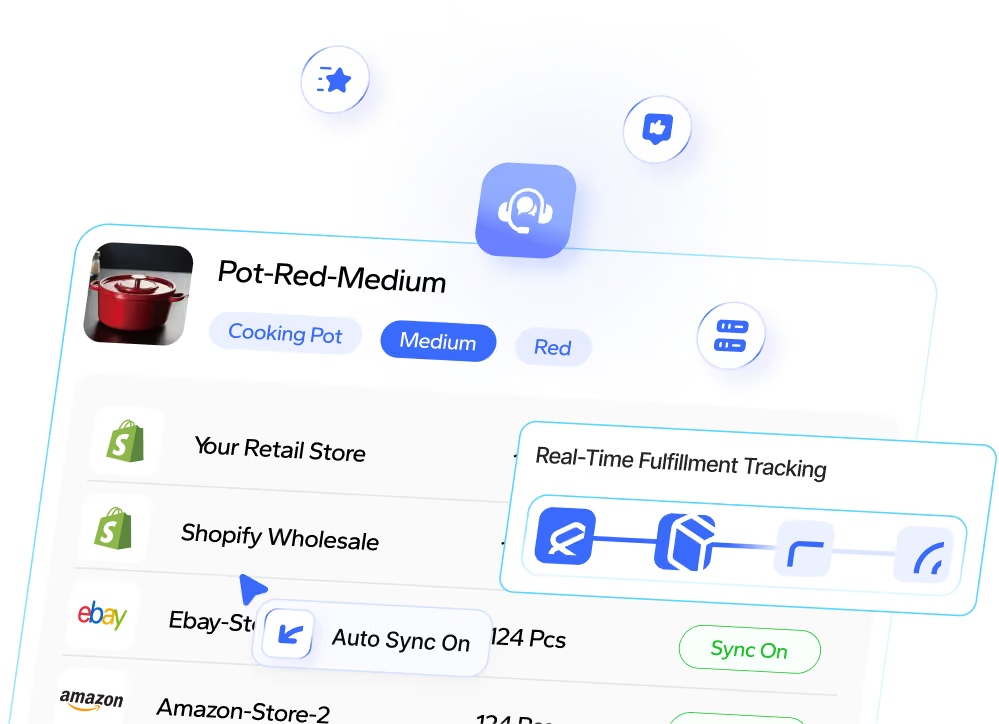
Unlike basic in-admin tools, Sumtracker works across Shopify and external sales channels like marketplaces and POS systems, giving merchants a centralized view of stock levels everywhere.
Sumtracker offers features like purchase order management with supplier tracking, smart restocking recommendations, and inventory forecasting that account for sales velocity and seasonality.
Merchants appreciate that Sumtracker supports not just a single Shopify store but also multi-location and multi-channel setups, which helps fast-growing brands avoid overselling, reduce stockouts, and scale operations without manual spreadsheet headaches.
Key features of Sumtracker:
- Real-time inventory sync across Shopify and other sales channels
- Centralized dashboard with stock levels, orders, and alerts
- Purchase order creation, supplier management, and receiving
- Smart restocking & demand forecasting
- Multi-location / multi-store inventory support
- Automated low-stock alerts & customizable reorder points
Common strengths merchants highlight:
- More accurate real-time stock updates compared to native tools
- Better suited for multi-channel operations
- Strong reporting and analytics for inventory planning
- Easy to scale as business grows
What Is Stocky and How Does It Work for Shopify?
Stocky is a native inventory management app built by Shopify to help merchants handle core inventory tasks directly from the Shopify admin.
It’s mainly used for creating purchase orders, tracking suppliers, and getting basic restocking suggestions based on past sales data.
Stocky is designed strictly for Shopify-only workflows. It doesn’t support real-time inventory syncing across external marketplaces or advanced multi-store setups, which can become limiting as brands expand beyond a single Shopify store.
Many merchants have also pointed out that its forecasting can feel too simplistic for growing businesses with complex sales patterns.
Key features of Stocky:
- Purchase order creation and receiving
- Supplier and vendor management
- Basic demand forecasting using Shopify sales history
- Inventory tracking within Shopify and Shopify POS
- Native integration inside Shopify Admin
Common limitations merchants mention:
- Forecasting accuracy feels too basic for dynamic or seasonal demand
- No real-time inventory sync with channels outside Shopify
- Lacks advanced reporting and analytics tools
- Not built for multi-store or multi-marketplace setups
- Some users find the interface limited compared to dedicated inventory tools
Stocky vs Sumtracker: Core Inventory Management Features Compared
When choosing the right inventory tool for your Shopify store, it's essential to understand how each platform handles core inventory functions.
Here’s a feature-by-feature comparison of Stocky and Sumtracker to help you see where each shines and where they fall short.

Stocky vs Sumtracker Pricing Overview

How to interpret this
- Stocky can appear “free” at first, but it’s tightly coupled with Shopify and lacks capabilities many growing stores eventually need.
- Sumtracker is a paid tool, but pricing is transparent and aligned with features like real-time sync, forecasting, bundles, and high-volume order handling.
Why Shopify Merchants Choose Sumtracker Over Stocky
As Shopify merchants grow, inventory requirements often move beyond basic, Shopify-only workflows.
Sumtracker is commonly used when maintaining inventory accuracy, planning restocks, and managing more complex operations become essential to daily business operations.
Real-Time Inventory Accuracy
Sumtracker is used by Shopify merchants who need inventory to update instantly as orders, returns, or adjustments occur. This reduces stock mismatches that can happen with delayed or Shopify-only updates.
Support for Multi-Channel & Complex Setups
Merchants use Sumtracker when inventory needs to stay consistent across multiple sales channels, stores, or locations. It is also used for managing bundles, kits, and SKUs that require component-level tracking.
Planning, Restocking & Forecasting
Sumtracker is adopted for sales-driven restocking and demand forecasting. Merchants rely on it to calculate reorder quantities, monitor low stock, and plan purchases based on actual sales velocity rather than static thresholds.
Handling Higher Order Volumes
For stores processing higher daily order volumes, Sumtracker helps maintain accurate stock updates without manual intervention, reducing the risk of overselling during peak periods.
Inventory Visibility & Reporting
Merchants use Sumtracker to get clearer visibility into stock levels, movements, and inventory performance through structured reports that support daily operational decisions.
Final Verdict: Stocky or Sumtracker?
Selecting the right inventory tool for your Shopify store depends on how complex your operations are and what you need inventory software to actually handle.
Stocky is a straightforward option integrated into the Shopify admin. It works well for merchants with single-store, Shopify-only setups who need basic purchase order creation and simple restocking suggestions based on past sales.
In contrast, Sumtracker is built for broader inventory challenges. It provides real-time stock sync across channels and locations, demand forecasting, bundle and high-volume order handling, and deeper reporting, making it better suited for merchants with multi-channel sales, complex SKUs, and higher operational demands.
FAQs
1. Is Stocky included with Shopify, and does it cost extra?
Stocky is included with Shopify and does not have separate pricing, but its functionality is limited to Shopify-native workflows.
2. Can Sumtracker sync inventory in real time across multiple sales channels?
Yes, Sumtracker provides real-time inventory synchronization across Shopify and additional channels, stores, and locations.
3. Does Stocky support advanced demand forecasting?
No, Stocky offers basic restock suggestions based on past Shopify sales, but does not provide advanced demand forecasting.
4. Can Sumtracker handle bundles and high-volume order updates accurately?
Yes, Sumtracker supports bundle/kit tracking and is designed to maintain accurate stock levels even during high daily order volumes.
5. When should a Shopify merchant consider switching from Stocky to Sumtracker?
Merchants often consider Sumtracker when they need multi-channel sync, real-time accuracy, deeper inventory planning, or support for complex product setups beyond what Stocky provides.
Conclusion

Bhoomi writes about inventory management and multichannel selling at Sumtracker. Her focus is on solving real operational problems for Shopify, Amazon, and marketplace sellers through well-researched content. She covers everything from multi-location inventory syncing and stock error troubleshooting to replenishment planning and platform comparisons, turning complex eCommerce operations into clear, actionable guidance.
LinkedInRelated Articles
Tool and strategies modern teams need to help their companies grow.
.avif)
.avif)
Ready to Simplify Your Inventory Management?
Join hundreds of e-commerce merchants who rely on Sumtracker to save time, eliminate errors, and grow their business.