.svg)

Top 8 Inventory Control Software for Shopify Sellers (2026 Guide)


If your inventory feels “mostly accurate,” it’s probably already costing you money.
Not through big failures, but small, repeated gaps overselling, delayed syncs, and late reorders that quietly eat into your margins.
As Shopify stores scale across channels and locations, these issues only get harder to manage.
That’s why inventory control in 2026 is less about tracking stock and more about having a system you can actually trust.
In this guide, we’ll cover the top inventory control software Shopify sellers are using to stay accurate and scale smoothly.
Why Shopify Sellers Need Better Inventory Control in 2026
Inventory used to be simple just one store, one warehouse, and a manageable number of SKUs. That’s no longer the case.
In 2026, most Shopify sellers are operating across multiple sales channels, locations, and fulfillment setups.
You might be selling on Shopify, Amazon, and retail at the same time, while managing stock across your own warehouse and a 3PL.
The more moving parts you add, the easier it is for inventory to fall out of sync.
And when it does, the impact shows up quickly:
- Orders get cancelled due to overselling
- Stockouts lead to missed revenue
- Excess inventory ties up cash
- Reporting becomes unreliable
The bigger issue isn’t just the errors, it’s the lack of visibility and control behind them.
What Makes a Great Inventory Control System for Shopify Stores
Not all inventory tools solve the same problem. Some focus on tracking stock, others on planning but a great system does both reliably and in real time.
At a minimum, it should give you complete visibility and control over your inventory without adding complexity to your workflow.
Here’s what actually matters:
- Real-time inventory sync
Your stock should update instantly across Shopify and every other sales channel no delays, no mismatches.
- Accurate multi-location tracking
Whether you’re using a warehouse, retail store, or 3PL, you should always know exactly where your inventory is.
- Seamless order and inventory updates
Every sale, return, or adjustment should reflect immediately in your stock levels.
- Purchase orders and restocking workflows
A good system helps you reorder on time, not after you’ve already stocked out.
- Clear, actionable insights
You shouldn’t have to dig through reports, your system should highlight what needs attention.
- Ease of use
Powerful doesn’t mean complicated. The best tools are easy to set up and manage daily.
Here are the top 8 inventory control software for Shopify in 2026:
Sumtracker
Sumtracker is built for Shopify sellers who’ve outgrown basic inventory tracking and need complete control over their stock in real time. Instead of managing inventory separately across Shopify, marketplaces, and warehouses, it brings everything into one place, so your numbers stay consistent everywhere.
What makes it stand out is its focus on speed, accuracy, and simplicity. Every sale, return, or stock update reflects instantly across all connected channels, reducing overselling and giving you a single source of truth for your inventory
%20(1).avif)
Key Features
- Real-time two-way inventory sync across Shopify, Amazon, Etsy, eBay, and more (updates instantly with every sale or adjustment)
- SKU-level tracking with full inventory visibility (physical, available, incoming, committed stock)
- Automated purchase orders & replenishment insights based on sales trends and stock levels
- Bundle & component-level inventory tracking (auto-deducts stock for kits and combos)
- Multi-location & stock transfer management across warehouses and stores
- Inventory logs, alerts & reporting including low stock alerts, COGS, and inventory valuation
Best For
Shopify sellers managing multi-channel sales, multiple locations, and high SKU complexity
Limitations
- Not a full ERP (limited accounting depth)
Inventory Planner
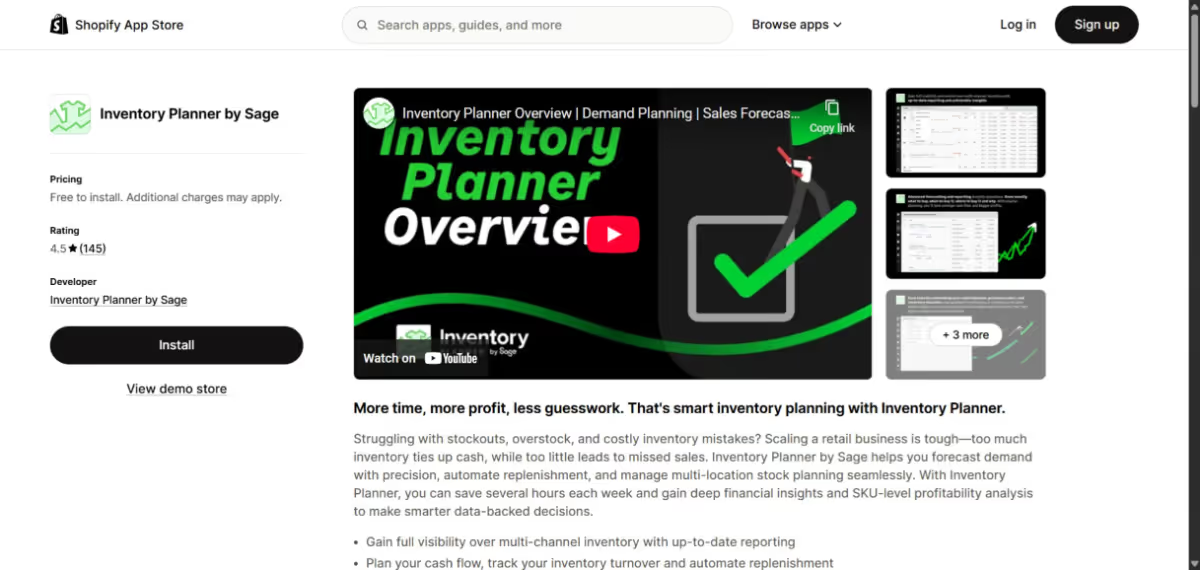
Inventory Planner focuses heavily on forecasting and replenishment planning. It helps brands predict demand and optimize purchasing decisions using historical sales data.
Key Features
- Demand forecasting and replenishment planning
- Purchase planning and supplier management
- Advanced reporting and analytics
- Seasonal trend analysis
Best For
Brands that want to optimize purchasing and avoid stockouts or overstocking
Limitations
- Less focused on real-time inventory sync
- Can feel complex for smaller teams
Cogsy
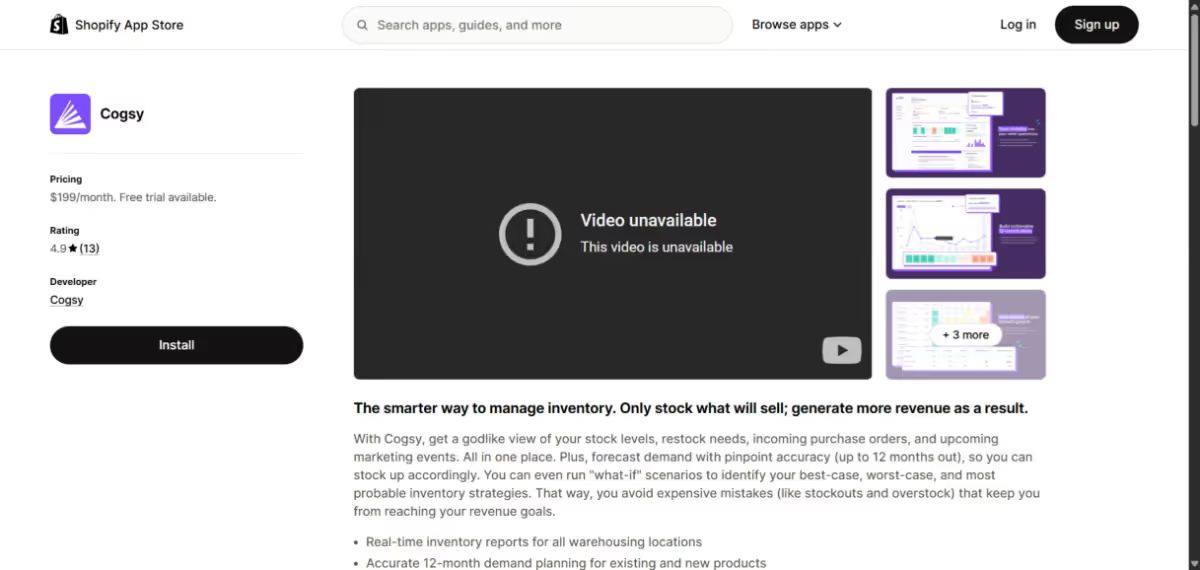
Cogsy combines inventory planning with financial insights, helping brands understand how inventory decisions impact cash flow and profitability.
Key Features
- Inventory and financial forecasting
- Scenario planning for growth
- Profitability insights
- Demand planning tools
Best For
DTC brands focused on profitability and financial planning
Limitations
- Not designed for operational inventory control or syncing
- Requires financial data setup for full value
Katana Cloud Inventory
Katana is ideal for brands that manufacture their own products and need visibility into raw materials and production workflows.

Key Features
- Manufacturing and production planning
- Bill of materials (BOM) management
- Real-time inventory tracking
- Shop floor control
Best For
Shopify brands with in-house manufacturing
Limitations
- Overkill for non-manufacturing businesses
- Higher pricing compared to simpler tools
SKULabs
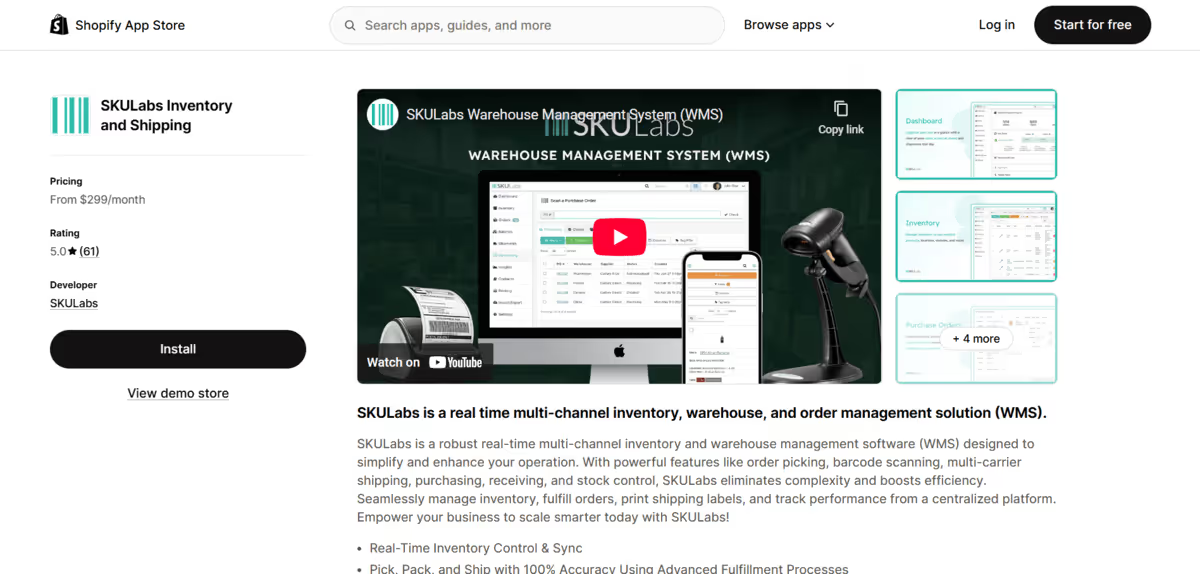
SKULabs focuses on improving warehouse efficiency and order fulfillment accuracy, making it a strong choice for brands handling large volumes.
Key Features
- Barcode scanning and picking workflows
- Order and shipping management
- Multi-channel inventory sync
- Warehouse management tools
Best For
High-volume sellers with warehouse operations
Limitations
- Interface can feel dated
- Not strong in forecasting or planning
Syncio
Syncio is designed for Shopify merchants managing multiple stores or dropshipping setups, allowing inventory to stay aligned across storefronts.
.avif)
Key Features
- Real-time inventory sync between Shopify stores
- Product and order syncing
- Automated inventory updates
- Simple setup
Best For
Brands running multiple Shopify stores or partner stores
Limitations
- Limited advanced inventory management features
- Not suitable for complex operations
Cin7 Core
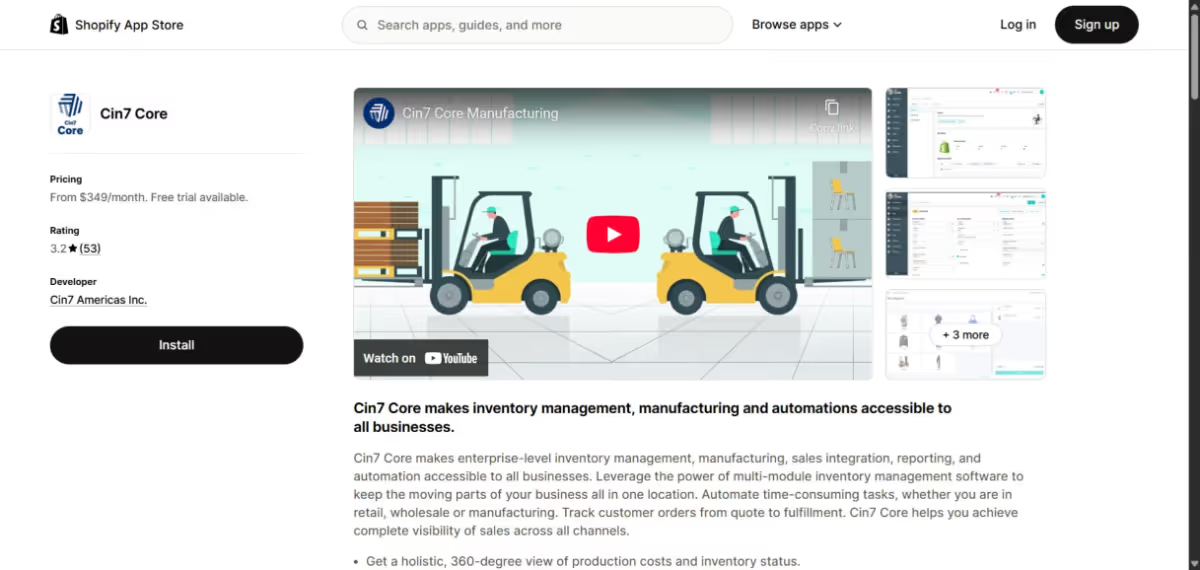
Cin7 Core (formerly DEAR Systems) is a powerful system offering deep inventory, accounting, and operational control.
Key Features
- Inventory and order management
- Accounting and reporting integrations
- Purchase and supplier management
- Automation workflows
Best For
Established businesses with complex operations
Limitations
- Steep learning curve
- Can be expensive for smaller brands
Monocle
Monocle is a newer player focused on AI-driven inventory planning and insights, helping brands make smarter stocking decisions.
.avif)
Key Features
- AI-based demand forecasting
- Inventory optimization insights
- Automated recommendations
- Data-driven decision support
Best For
Forward-thinking brands exploring AI-driven inventory planning
Limitations
- Still evolving as a product
- Limited track record compared to established tools
Final Verdict: Which Inventory Control Software Should You Choose?
There’s no one-size-fits-all solution, it depends on where your business is today.
- If you need reliable, real-time inventory control across channels → Sumtracker
- If your focus is forecasting and planning → Inventory Planner or Cogsy
- If you run manufacturing operations → Katana
- If your priority is warehouse efficiency → SKULabs
For most Shopify sellers, the biggest win comes from getting accurate, real-time inventory visibility first and then layering forecasting on top.
Because at the end of the day, you can’t grow your business if you don’t fully trust your inventory.
FAQs
What is inventory control software for Shopify?
Inventory control software helps Shopify sellers track, manage, and sync stock levels across products, locations, and sales channels in real time, reducing errors like overselling or stockouts.
Does Shopify have built-in inventory control?
Yes, Shopify offers basic inventory tracking, but it has limitations when it comes to multi-channel syncing, advanced reporting, and managing inventory across multiple locations or warehouses.
Why do Shopify sellers need inventory control software?
As businesses grow, managing inventory manually or through Shopify alone becomes unreliable. Dedicated software ensures accurate stock levels, better visibility, and smoother operations across channels.
Can inventory control software sync stock across multiple channels?
Yes, most modern tools sync inventory across platforms like Shopify, Amazon, Etsy, and eBay in real time, ensuring your stock levels stay consistent everywhere.
Which inventory control software is best for Shopify sellers?
The best software depends on your needs. For real-time sync and operational control, tools like Sumtracker work well, while others focus more on forecasting or warehouse management.
Conclusion

Bhoomi writes about inventory management and multichannel selling at Sumtracker. Her focus is on solving real operational problems for Shopify, Amazon, and marketplace sellers through well-researched content. She covers everything from multi-location inventory syncing and stock error troubleshooting to replenishment planning and platform comparisons, turning complex eCommerce operations into clear, actionable guidance.
LinkedInRelated Articles
Tool and strategies modern teams need to help their companies grow.


Ready to Simplify Your Inventory Management?
Join hundreds of e-commerce merchants who rely on Sumtracker to save time, eliminate errors, and grow their business.
