.svg)
.avif)
Seasonal Inventory Planning: Avoid Stockouts Without Guesswork


If you’ve ever stared at your inventory dashboard wondering “Are we about to stock out… or massively overbuy?” you’re not alone.
Seasonal demand has a way of sneaking up on even experienced sellers.
One month sales are steady, the next they spike overnight thanks to holidays, promotions, or shifting buyer behavior.
The challenge isn’t knowing that seasonality exists, it’s planning for it without relying on gut instinct.
This guide breaks down how to approach seasonal inventory replenishment logically, using data, not guesswork, so you can stay in stock without tying up cash unnecessarily.
.avif)
What Counts as “Seasonal Demand” in eCommerce?
In inventory planning, seasonal demand isn’t defined by holidays or weather alone. It’s defined by repeatable demand shifts that materially change replenishment decisions order timing, quantities, and buffer stock.
The question isn’t “Is this seasonal?”
It’s “Does this pattern force me to reorder differently?”
Seasonal Demand That Actually Impacts Inventory Planning
Volume-based seasonality
Demand increases enough to change reorder quantities.
- Sales velocity accelerates for specific SKUs
- Normal reorder points become too late
- Smaller, frequent reorders stop working
Timing-based seasonality
Demand peaks within a narrow, unforgiving window.
- Late replenishment means missed revenue, not delayed sales
- Lead times become more critical than averages
- Safety stock needs to be higher before the season starts
SKU-level seasonality (not category-wide)
Only certain products or variants drive the spike.
- Size, color, or bundle-specific demand changes
- Long-tail SKUs behave differently than top sellers
- Treating all SKUs equally causes overstock
This distinction is what separates reactive stocking from intentional seasonal planning.
How to Identify Seasonal Trends in Your Sales Data
Identifying seasonality isn’t about spotting obvious spikes, it’s about isolating repeatable patterns that change replenishment behavior. The goal is to separate signal from noise so inventory decisions stay proactive, not reactive.
.avif)
Start With the Right Time Frame (This Matters More Than You Think)
Daily or weekly views hide seasonality. Switch to:
- Monthly or 4-week periods for long-term patterns
- Year-over-year comparisons for repeatability
If the same SKU shows elevated demand during similar windows across multiple years, you’re likely looking at true seasonality, not a one-off surge.
Look for Velocity Changes, Not Just Sales Volume
Raw sales numbers can be misleading. What actually impacts inventory planning is how fast inventory moves.
Pay attention to:
- Units sold per day during peak vs non-peak periods
- How quickly stock depletes once the season starts
- Whether reorder points trigger earlier than usual
Seasonality shows up when sales velocity increases enough to force earlier or larger reorders.
Analyze at the SKU Level (Not Just Categories)
Most inventory mistakes happen when seasonality is analyzed too broadly.
Instead of asking: “Does this category spike in Q4?”
Ask: “Which SKUs or variants behave differently during this period?”
Often:
- Only top sellers drive seasonal spikes
- Certain sizes, colors, or bundles accelerate disproportionately
- Long-tail SKUs remain flat
Seasonal planning only works when decisions are made at the SKU level.
Validate Patterns Across Channels
Seasonality can appear unevenly across sales channels.
- Marketplaces may spike earlier than DTC
- Promotions can amplify seasonal demand on one channel but not another
- Fulfillment constraints can distort channel-level signals
If total inventory is shared, channel-specific seasonality still matters because it affects how fast stock is consumed overall.
Confirm It’s Repeatable Before You Plan Around It
Before labeling anything “seasonal,” verify:
- The pattern appears in at least two historical cycles
- The demand shift is large enough to impact reorder timing
- Missing the window would result in lost sales, not delayed sales
If those conditions aren’t met, treat it as variability not seasonality.
Using Historical Sales Data to Forecast Seasonal Demand
Historical sales data should help you plan ahead of seasonal demand not justify decisions after the season is over. The key is using it to understand how demand behaves under pressure, not just how much you sold.
Key ways to use historical data effectively:
- Isolate past seasonal windows (specific weeks or months), not full-year averages
- Compare the same periods year over year to validate repeat patterns
What to prioritize when forecasting:
- Sales velocity during peak periods, not total seasonal volume
- How quickly inventory depleted once demand accelerated
- Whether reorder points triggered earlier than normal
Before finalizing a forecast, adjust for what’s changed:
- Business growth since the last season
- New channels, increased promotions, or higher traffic
- Improvements in fulfillment or fewer stockouts
Finally, align forecasts with reality:
- Work backward from peak demand using supplier and shipping lead times
- Plan within a demand range, not a single fixed number
Seasonal forecasting works best when historical data is treated as a guide not a guarantee.
Common Seasonal Inventory Mistakes (and How to Avoid Them)
Seasonal inventory issues usually aren’t caused by bad forecasts, they come from repeatable planning mistakes. Knowing what to watch for is often enough to avoid them.
Mistake 1: Planning with Annual Averages
Why it happens: Annual sales data feels “safe” and familiar.
Why it fails: Averages flatten seasonal spikes and delay reordering.
How to avoid it: Isolate seasonal weeks or months and plan specifically for those windows.
Mistake 2: Treating All SKUs the Same
Why it happens: It’s easier to apply one rule across a catalog.
Why it fails: Only certain SKUs or variants usually drive seasonal demand.
How to avoid it: Plan at the SKU level and increase buffer stock only where velocity truly changes.
Mistake 3: Reordering Too Late in the Season
Why it happens: Teams wait for demand confirmation before reordering.
Why it fails: Lead times make late replenishment ineffective.
How to avoid it: Place orders before demand accelerates, not after inventory starts dropping.
Mistake 4: Ignoring Lead-Time Variability
Why it happens: Planning is based on “average” supplier timelines.
Why it fails: Peak seasons strain suppliers, shipping, and warehouses.
How to avoid it: Build buffers for delays and plan using worst-case lead times.
Mistake 5: Not Reviewing What Went Wrong
Why it happens: Teams move on once the season ends.
Why it fails: The same mistakes repeat year after year.
How to avoid it: Review forecast accuracy, reorder timing, and SKU performance after every season.
Seasonal Inventory Replenishment Checklist
Use this checklist to plan inventory before, during, and after a seasonal demand period. It’s designed to keep replenishment proactive, not reactive.
1. Pre-Season Planning
- Identify SKUs with consistent seasonal demand patterns
- Review year-over-year performance for the same seasonal window
- Adjust demand expectations for business growth and promotions
- Confirm supplier lead times and reorder cut-off dates
- Build buffer stock ahead of demand acceleration
2. In-Season Monitoring
- Track sales velocity instead of just stock levels
- Watch high-risk SKUs more frequently
- Reorder early when demand exceeds forecast
- Prioritize replenishment for top-moving SKUs only
3. Post-Season Review
- Compare forecasted vs actual demand
- Identify causes of stockouts or overstock
- Review reorder timing and lead-time assumptions
- Document learnings for the next seasonal cycle
Tools That Reduce Guesswork in Seasonal Replenishment
Seasonal replenishment breaks down when decisions rely on static spreadsheets and delayed reports. What reduces guesswork isn’t more data, it’s timely, connected inventory intelligence.
This is where Sumtracker fits naturally into seasonal planning workflows.
.avif)
Instead of planning in hindsight, Sumtracker helps teams plan ahead by connecting demand signals, inventory movement, and replenishment logic in one place.
What actually reduces guesswork during peak seasons:
- Real-time inventory sync across channels
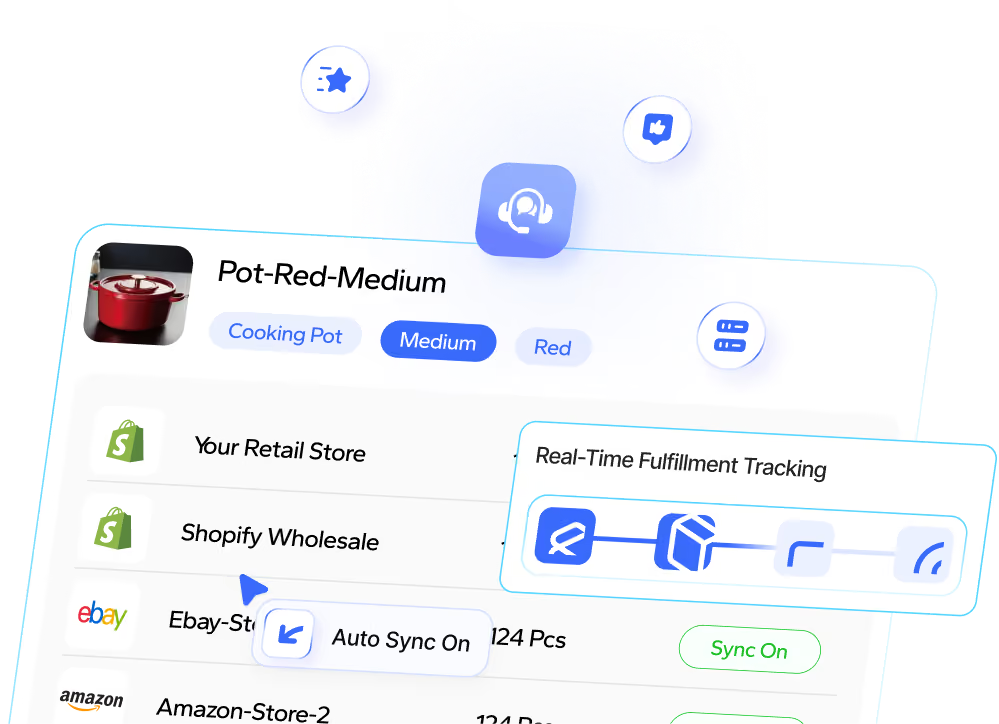
Seasonal demand often accelerates unevenly across storefronts and marketplaces. Sumtracker keeps inventory levels accurate everywhere, so replenishment decisions are based on true stock position, not partial data.
- Sales velocity–driven insights
Rather than relying on averages, Sumtracker surfaces how fast SKUs are actually moving. This makes it easier to spot early seasonal acceleration and reorder before stockouts happen.
- SKU-level visibility (not category assumptions)
Seasonal demand rarely impacts every product equally. Sumtracker lets teams focus on the SKUs and variants that truly spike, avoiding unnecessary overstock elsewhere.
- Lead time–aware replenishment planning
Seasonal forecasting only works if ordering deadlines are clear. By combining historical movement with supplier timelines, Sumtracker helps teams pull orders forward instead of reacting late.
- Clear reporting during high-pressure periods
During peak seasons, teams don’t have time to stitch together reports. Sumtracker centralizes inventory health, low-stock risk, and replenishment status so decisions stay fast and confident.
Conclusion
Seasonal inventory replenishment doesn’t fail because demand is unpredictable, it fails because planning is reactive. When teams rely on averages, intuition, or last-minute reorders, even predictable seasonal spikes turn into stockouts or excess inventory.
The most resilient brands approach seasonality as a process, not a one-time forecast. They identify repeatable patterns, plan around sales velocity and lead times, monitor performance during the season, and review outcomes afterward.
Tools like Sumtracker don’t eliminate seasonality but they remove the guesswork that makes it expensive.
When inventory decisions are based on real demand signals instead of gut instinct, seasonal peaks become opportunities, not stress tests.
Frequently Asked Questions (FAQs)
1. How far in advance should I plan seasonal inventory replenishment?
Seasonal inventory planning should start at least one full supplier lead-time cycle before demand rises. For most eCommerce brands, this means planning two to four months ahead to account for production, shipping, and fulfillment delays.
2. How do I know if a demand spike is seasonal or just a one-time surge?
A demand spike is seasonal if it repeats during similar time periods across multiple years and meaningfully changes sales velocity or reorder timing. One-off promotions or viral spikes without repeat patterns shouldn’t drive seasonal replenishment plans.
3. Should I increase inventory for all products during peak seasons?
No. Seasonal demand usually affects specific SKUs or variants rather than entire catalogs. Increasing inventory across all products often creates overstock. Seasonal planning works best when stock increases are limited to proven high-velocity SKUs.
4. What’s worse during peak seasons: overstock or stockouts?
Stockouts are typically more damaging during peak seasons because lost sales can’t be recovered once demand windows close. Overstock usually impacts cash flow temporarily and can be corrected post-season through discounts or extended sell-through.
5. Can inventory software really improve seasonal replenishment accuracy?
Yes. Inventory software improves seasonal replenishment by tracking real-time sales velocity, highlighting early demand shifts, accounting for lead times, and giving SKU-level visibility across channels reducing reliance on intuition and delayed manual reporting.
Conclusion

Bhoomi writes about inventory management and multichannel selling at Sumtracker. Her focus is on solving real operational problems for Shopify, Amazon, and marketplace sellers through well-researched content. She covers everything from multi-location inventory syncing and stock error troubleshooting to replenishment planning and platform comparisons, turning complex eCommerce operations into clear, actionable guidance.
LinkedInRelated Articles
Tool and strategies modern teams need to help their companies grow.


Ready to Simplify Your Inventory Management?
Join hundreds of e-commerce merchants who rely on Sumtracker to save time, eliminate errors, and grow their business.