.svg)
.avif)
How to Reliably Sync Bundle Inventory Across Sales Channels


If you sell bundles or kits, you’ve probably had at least one “wait… how did this go out of stock?” moment.
Everything looks fine in your main store, orders keep coming in, and suddenly one channel oversells while another shows inventory you don’t actually have.
That’s not bad inventory management on your part, it’s a structural problem.
Bundles and kits don’t behave like regular SKUs, especially when you’re selling across platforms like Shopify, Amazon, and other marketplaces.
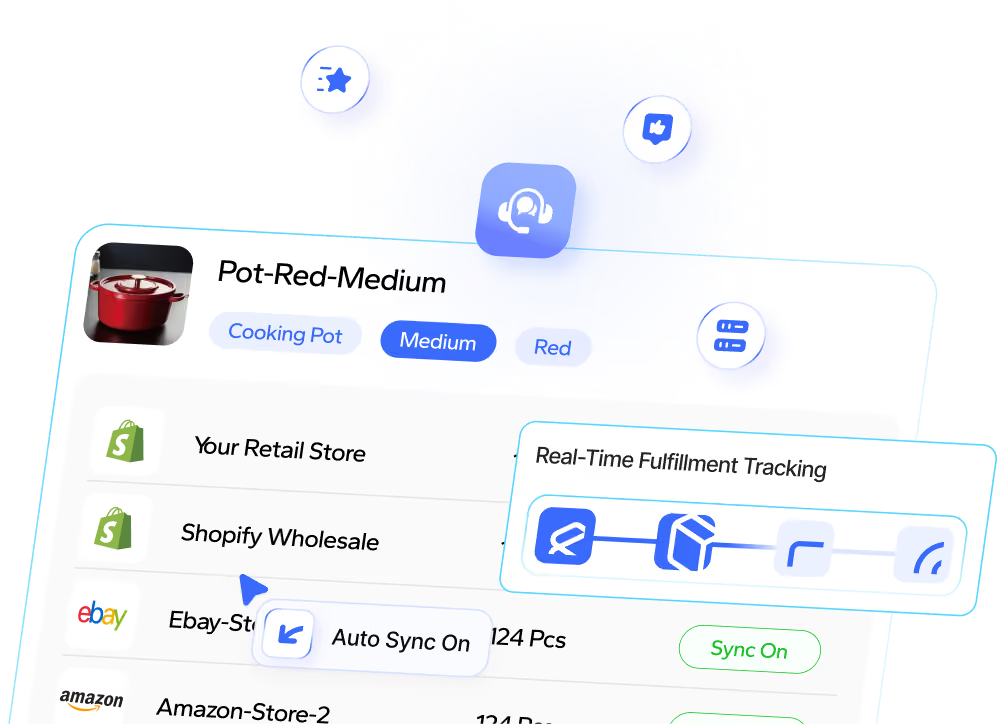
The most reliable way to keep things accurate isn’t by tracking the bundle itself, but by syncing inventory at the component level, in real time, across every channel you sell on.
Let’s break down why this matters and what actually works.
Why Bundles and Kits Are Hard to Sync Across Channels
Bundles and kits may look like a single product to shoppers, but from an inventory perspective, they’re made up of multiple moving parts.
When those parts are sold across different channels, keeping inventory accurate becomes much harder than it seems.
Here’s why bundle and kit inventory commonly falls out of sync:
- Different channels handle bundles differently
Some platforms treat bundles as standalone SKUs, others as virtual groupings, and many marketplaces don’t natively support bundles at all. This inconsistency makes it difficult to apply one clear inventory rule across channels.
- Bundles pull stock from multiple SKUs at once
Every bundle sale consumes inventory from several products. If even one component isn’t tracked correctly, the bundle may continue selling despite missing stock behind the scenes.
- Shared SKUs create hidden dependencies
The same product is often sold individually and included in multiple bundles or kits. Without visibility into these relationships, inventory gets deducted in one place but remains unchanged elsewhere.
- Inventory updates aren’t always real time
Most native syncing systems rely on delayed updates. While small delays might be harmless for single SKUs, they quickly lead to overselling when multiple components are involved.
- More channels and volume amplify small errors
As you add sales channels or increase order volume, minor inventory mismatches multiply. What starts as a small sync issue can quickly turn into frequent stockouts and manual fixes.
.avif)
How Inventory Sync Breaks for Bundles in Shopify, Amazon, and Other Marketplaces
Inventory sync for bundles usually doesn’t break all at once, it slowly drifts out of sync as orders come in from different places.
On Shopify, bundles are often created as virtual products made up of multiple SKUs. When a bundle sells, Shopify may reduce the bundle’s available quantity, but it doesn’t always communicate those component-level deductions cleanly to external marketplaces.
Marketplaces like Amazon, eBay, and Etsy operate differently. Each expects a clear inventory number for every listed SKU. They don’t automatically know that a bundle sale elsewhere should reduce the availability of individual components in their own system.
Here’s where things start to go wrong:
- A bundle sells on Shopify, but component SKUs on Amazon remain available
- The same SKU is shared across multiple bundles and single-product listings
- Sync delays cause inventory updates to lag behind real sales
Over time, each channel ends up working with slightly different inventory data. What looks like a small mismatch on day one turns into overselling, canceled orders, or emergency stock adjustments as volume increases.
Managing Bundle Inventory Across Multiple Locations
Managing bundles becomes noticeably more complicated once inventory is spread across multiple warehouses, retail stores, or fulfillment centers. Even when total stock looks sufficient, a bundle can’t be fulfilled unless all of its components are available in the same location.
.avif)
Here are the most common challenges merchants run into:
- Stock is available globally, but not locally
Inventory systems may show enough stock overall, but individual bundle components are split across locations, making the bundle impossible to fulfill from any single one.
- Bundles get routed to the wrong location
Some systems automatically assign orders to a default location without checking whether all bundle items are actually available there.
- Incorrect inventory deductions across warehouses
When bundles sell, inventory may be deducted from the wrong location, creating phantom stock in one place and shortages in another.
- Transfers aren’t reflected in bundle availability
Moving stock between locations doesn’t always update bundle availability in real time, causing bundles to appear purchasable even when components are mid-transfer.
- Multi-location logic isn’t applied at the component level
Most systems track bundles as a single unit, instead of checking each component SKU per location before allowing a sale.
Handling Mixed Bundles (Shared SKUs Across Multiple Kits)
Mixed bundles where the same SKU appears in multiple kits and is also sold individually are one of the fastest ways for inventory to spiral out of control.
On the surface, everything may look fine, but behind the scenes, stock is being consumed from multiple directions at once.
1. One SKU, Multiple Sales Paths
In mixed bundle setups, a single SKU can be:
- Sold on its own
- Included in multiple different bundles
- Sold across multiple channels simultaneously
If inventory isn’t deducted from a single source of truth, each sales path starts operating independently, leading to inflated availability.
2. Bundle-Level Tracking Creates False Availability
When systems track bundle quantities instead of components, they fail to see how often a shared SKU is actually being used. One bundle sale may reduce availability in one place, while other bundles continue selling as if nothing changed.
Result:
- Bundles remain purchasable even when a shared component is nearly out of stock
- Stockouts happen suddenly and without warning
3. Sync Conflicts Multiply Across Channels
The more channels you sell on, the worse this problem becomes. A SKU used in multiple kits might sell on one marketplace while another channel still shows it as available for bundles.
Without cross-channel component syncing:
- Inventory updates lag
- Channels drift out of alignment
- Manual corrections become frequent
4. Why Shared SKUs Require Component-Level Control
Mixed bundles only work reliably when every sale whether bundle or individual, pulls inventory from the same underlying SKU count. This ensures that:
- Every sale reflects real stock levels
- All bundles react instantly to component shortages
- No channel oversells shared inventory
Why Native Channel Syncing Fails for Bundle Inventory
Native inventory syncing tools are built for simple SKUs, not for products made up of multiple components. Once bundles or kits enter the picture, these systems start to fall apart.
.avif)
1. Bundles Are Treated as Standalone Products
Most native systems track the bundle SKU itself, not the individual items inside it. When a bundle sells, only the bundle quantity is reduced, leaving component SKUs unchanged across other channels.
What this causes:
- Components still show as available elsewhere
- Shared SKUs get oversold
- Inventory accuracy slowly drifts
2. No Component-Level Inventory Awareness
Native syncing doesn’t understand relationships between SKUs. It can’t tell that the same product is being used:
- In multiple bundles
- As a standalone product
- Across multiple channels
Without component-level logic, each channel works in isolation, creating conflicting inventory numbers.
3. Delayed Inventory Updates
Most native sync mechanisms rely on periodic updates, not real-time changes. Even short delays are enough to cause issues when:
- Sales volume increases
- Multiple channels are active
- Bundles sell frequently
By the time inventory updates, the damage is already done.
4. Limited Support for Multi-Location Bundles
Native tools often deduct inventory from a default location without checking whether:
- All bundle components exist at that location
- Stock is split across warehouses
This leads to fulfillments failing despite inventory appearing available.
5. Designed for Simplicity, Not Scale
Native syncing is intentionally lightweight. It works well for small catalogs and single-channel stores but it wasn’t designed to handle:
- Complex bundles and kits
- Shared inventory logic
- Multi-channel, multi-location operations
The Most Reliable Way to Sync Bundle Inventory Across Channels
When bundles and kits are involved, reliability comes down to one thing: tracking inventory at the component level, not the bundle level.
This is exactly where Sumtracker is designed to work differently from native channel syncing.
.avif)
Instead of treating bundles as separate products with their own stock counts, Sumtracker treats them as recipes made up of real SKUs and every sale updates those SKUs instantly across all connected channels.
How Sumtracker Keeps Bundle Inventory Accurate:
- Component-level inventory tracking
Every bundle is linked to its underlying SKUs. When a bundle sells, inventory is deducted from each component, not from an artificial bundle quantity.
- Real-time sync across channels
Whether a bundle sells on Shopify or a component sells individually on another marketplace, Sumtracker updates inventory everywhere immediately. No delays, no guesswork.
- Shared SKU intelligence
If the same SKU is used in multiple kits or sold on its own, Sumtracker always pulls from a single source of truth. This prevents inflated availability and unexpected stockouts.
- Multi-location aware bundle logic
Inventory is checked and deducted at the location level, ensuring bundles are only sold when all components are available in the same warehouse or fulfillment center.
- One inventory system, not multiple guesses
Instead of each channel maintaining its own version of inventory, Sumtracker centralizes stock data and pushes accurate numbers outward to every sales channel.
Conclusion
Bundles and kits don’t fail because they’re complex products they fail because most inventory systems weren’t built to understand how components behave across channels, locations, and sales paths.
As soon as you sell the same SKUs in multiple bundles, across multiple marketplaces, or from multiple warehouses, small sync gaps turn into real operational problems.
The only approach that holds up at scale is component-level, real-time inventory syncing.
By treating bundles as structured combinations of real SKUs and keeping those SKUs in sync everywhere, you eliminate guesswork, prevent overselling, and regain confidence in your inventory numbers.
That’s why solutions like Sumtracker focus on components as the true source of truth.
FAQs
1. What’s the biggest mistake merchants make with bundle inventory?
Tracking inventory at the bundle SKU level instead of the component level. This hides shared-SKU usage and leads to overselling when the same items are used across multiple bundles or sold individually.
2. Can Shopify natively handle bundle inventory across multiple channels?
Shopify can manage basic bundles within the store, but it doesn’t reliably sync component-level deductions across external marketplaces like Amazon or eBay. This is where inventory drift usually starts.
3. Why do bundles oversell even when inventory looks correct?
Because inventory may look correct at a global or bundle level, while one or more components are actually out of stock at the location fulfilling the order or already consumed by another channel.
4. How should inventory work for bundles across multiple locations?
A bundle should only be sellable when all components are available in the same location. Inventory must be checked and deducted at the component + location level, not just overall stock.
Conclusion

Bhoomi writes about inventory management and multichannel selling at Sumtracker. Her focus is on solving real operational problems for Shopify, Amazon, and marketplace sellers through well-researched content. She covers everything from multi-location inventory syncing and stock error troubleshooting to replenishment planning and platform comparisons, turning complex eCommerce operations into clear, actionable guidance.
LinkedInRelated Articles
Tool and strategies modern teams need to help their companies grow.

Ready to Simplify Your Inventory Management?
Join hundreds of e-commerce merchants who rely on Sumtracker to save time, eliminate errors, and grow their business.