.svg)

Top 8 Inventory Management Software with Forecasting Capabilities


Inventory problems don’t usually explode, they creep up.
A product sells faster than expected, a shipment arrives late, demand spikes at the wrong time.
Without forecasting, you’re always reacting. With it, you’re planning ahead.
In this guide, we’ll look at eight inventory management tools that combine stock control with forecasting so you can make smarter purchasing decisions and stay ahead of demand, not behind it.
Why Forecasting Capabilities Matter in Inventory Management Software
Inventory management without forecasting is reactive.
You notice stock running low, rush to reorder, and hope it arrives on time.
Sometimes it works.
Sometimes you stock out and lose sales. Other times, you over-order and tie up cash in slow-moving products. Forecasting removes that uncertainty. It helps you plan inventory based on data.
When forecasting is built directly into your inventory management software, it analyzes historical sales trends, seasonality, growth patterns, supplier lead times, and even promotional impacts.
Instead of simply telling you what’s in stock today, the system predicts what you’re likely to sell tomorrow, next month, or next season. That shift from reactive to proactive planning is what makes forecasting such a powerful capability.
Here’s why it matters:
- Prevents stockouts and lost revenue
Keeps high-demand products available when customers are ready to buy. - Reduces overstock and excess holding costs
Helps you avoid tying up capital in slow-moving inventory. - Improves cash flow management
Enables smarter purchasing aligned with projected demand. - Supports smarter reorder decisions
Accounts for seasonality, sales velocity, and supplier lead times. - Improves operational planning
Aligns purchasing, warehousing, and marketing with expected sales volumes. - Enables scalable growth
Makes it easier to manage hundreds or thousands of SKUs without relying on spreadsheets.
What to Look for in Inventory Software with Built-In Forecasting
Choosing inventory software with forecasting shouldn’t feel overwhelming. The goal isn’t to find the most complex system, it’s to find one that gives you accurate predictions, clear purchasing guidance, and fits smoothly into your Shopify workflow. Here are the five most important things to focus on:
1. Accurate, Data-Driven Forecasting
The software should use historical sales data, seasonality, growth trends, and sales velocity to generate reliable predictions. Simple averages aren’t enough you want a tool that adapts as your demand patterns change.
2. Actionable Replenishment Recommendations
Forecasts are only useful if they lead to decisions. Look for systems that clearly tell you:
- What to reorder
- How much to order
- When to place the order
This eliminates guesswork and reduces manual calculations.
3. Lead Time & Safety Stock Integration
Your forecasting tool should factor in supplier lead times and recommend safety stock levels. This ensures you don’t stock out while waiting for inventory to arrive especially during peak seasons.
4. Seamless Shopify & Multi-Location Sync
Accurate forecasting depends on clean, real-time data. The software should sync directly with Shopify and, if needed, support multiple warehouses so forecasts are location-aware.
5. Clear, Easy-to-Understand Insights
Forecasting dashboards should be simple and actionable. Look for features like:
- Days of inventory cover
- Projected stockout alerts
- Overstock risk indicators
- Suggested purchase quantities
Sumtracker
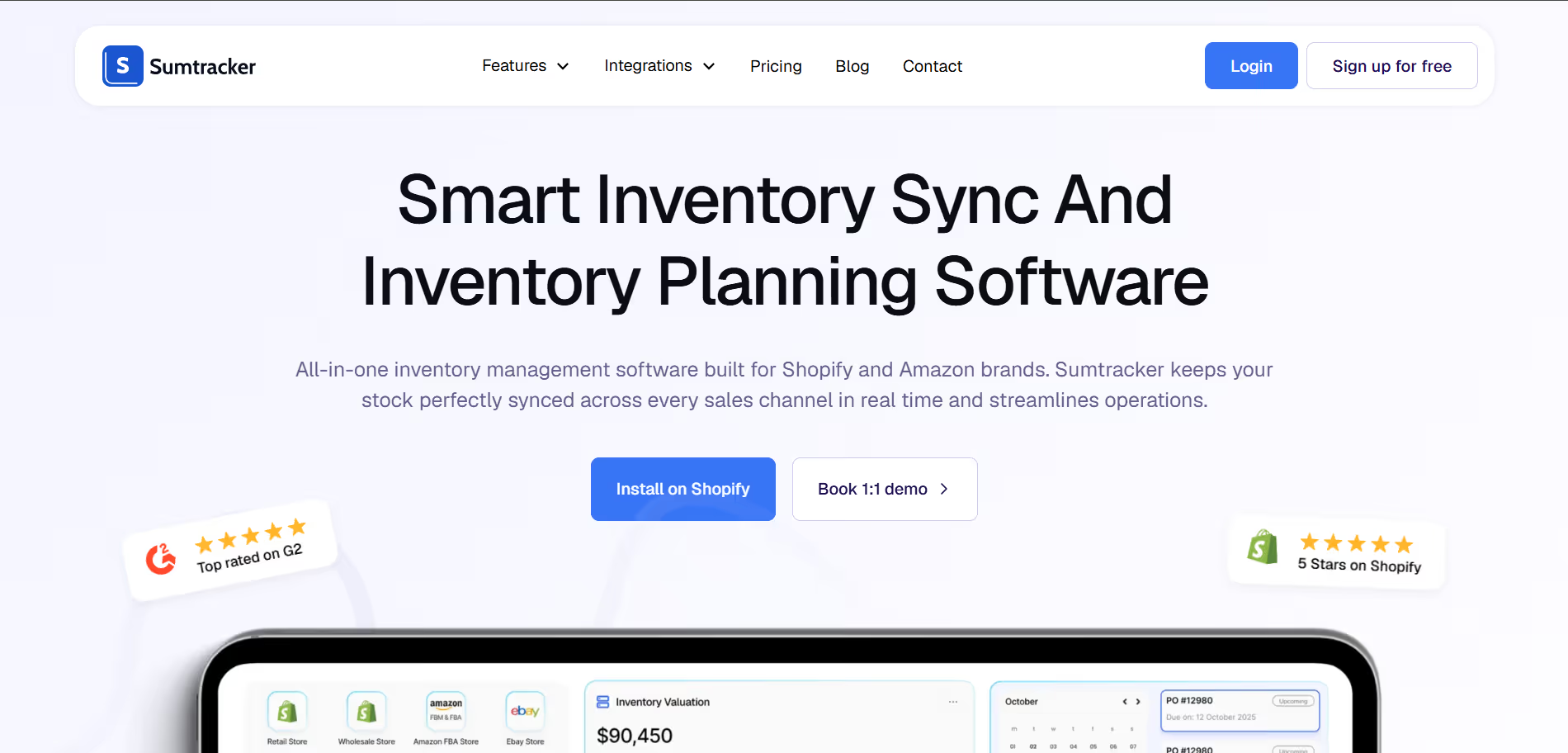
Sumtracker is a modern inventory management platform built for Shopify and multi-channel sellers that goes beyond simple stock tracking. At its core, it provides forecasting based on sales trends and seasonality, so you’re not just reacting to shortages but planning ahead with data you can trust.
Key Features
- Real-time inventory sync across Shopify and other channels
- Demand forecasting that predicts future stock needs
- Automated reorder points and purchase recommendations
- Centralized purchase order creation and supplier management
Best For
Small to mid-size eCommerce brands that sell on Shopify and marketplaces and want unified forecasting + inventory operations.
Limitations
- Forecasting models may not be as advanced as enterprise ERP-level systems
- Advanced analytics tools may require deeper configuration
Pricing
Plan starts with $59/month with a 14 days free trial.
StockTrim
StockTrim is a Shopify forecasting and inventory planning tool designed to help merchants stay ahead of demand by using statistical models to predict stock requirements. It automatically recommends order quantities and even generates purchase orders.

Key Features
- SKU-level demand forecasting
- Variant-specific forecasts (e.g., size, color)
- Automated purchase order creation
- Multi-location planning
Best For
Stores with high SKU counts wanting data-driven forecasts and PO automation.
Limitations
- Pricing can be on the higher side for high SKU counts
- Forecasting may be more limited if you have sparse historical data
Pricing
Plans start from around $199/month.
Inventory Planner by Sage
Inventory Planner is one of Shopify’s most established forecasting solutions, known for its robust forecasting engine that takes sales velocity, seasonality, and trends into account. It helps you plan inventry holistically.

Key Features
- Advanced demand forecasting and reporting
- Dynamic replenishment suggestions
- Multi-warehouse inventory planning
- Deep SKU analysis
Best For
Growing Shopify brands that need deep forecasting insights and reporting.
Limitations
- More complex setup than simpler apps
- Pricing is quote-based and can be mid-range to premium
Pricing
Custom based, billing varies based on usage and features.
Rewize
Rewize brings AI-powered forecasting and inventory planning to Shopify stores. It’s built to anticipate demand in multi-location scenarios and automate purchasing decisions.
Key Features
- AI-driven inventory forecasting
- SKU-level predictions
- Automated purchase order recommendations
- Multi-location stock planning
Best For
Merchants with complex stock needs across different regions or warehouses.
Limitations
- May require some familiarization if new to AI tools
- Can be overkill for very small catalogs
Pricing
Custom-based
Ordoro
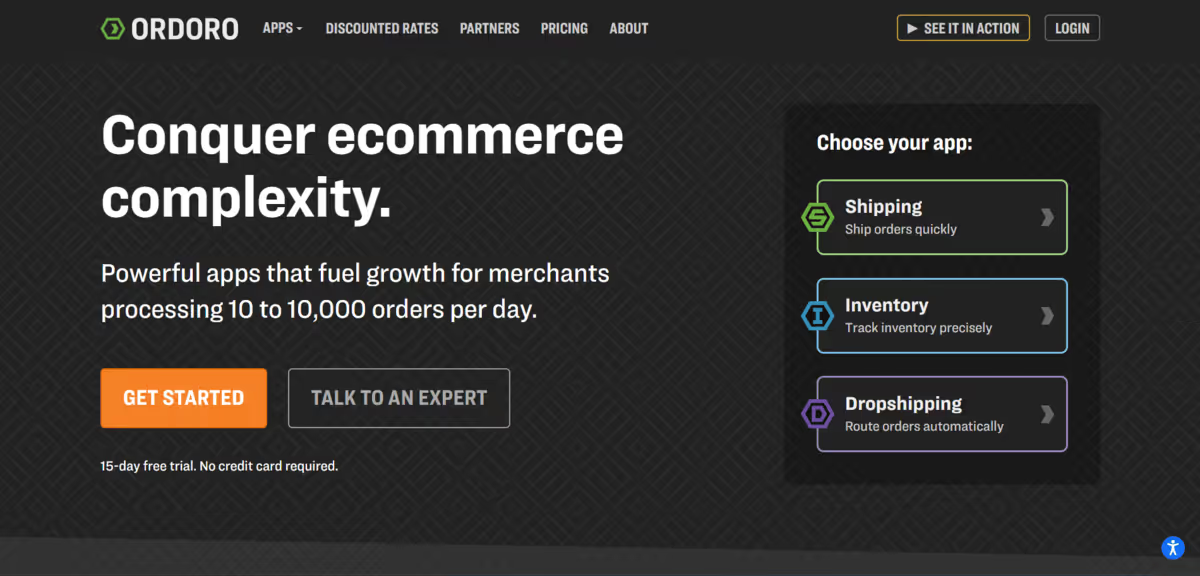
Ordoro is an inventory and order management platform for Shopify and multichannel sellers. It centralizes stock control and automates workflows while providing insights to support smarter replenishment planning.
Key Features
- Real-time inventory sync across channels
- Automated order and fulfillment workflows
- Shipping automation and supplier management
- Inventory reporting for restock planning
Best For
Small to mid-sized merchants managing multiple sales channels.
Limitations
- Forecasting is insight-driven, not deeply AI-based
- Costs increase with advanced automation needs
Pricing
Starts at approximately $349/month, with higher tiers for advanced features.
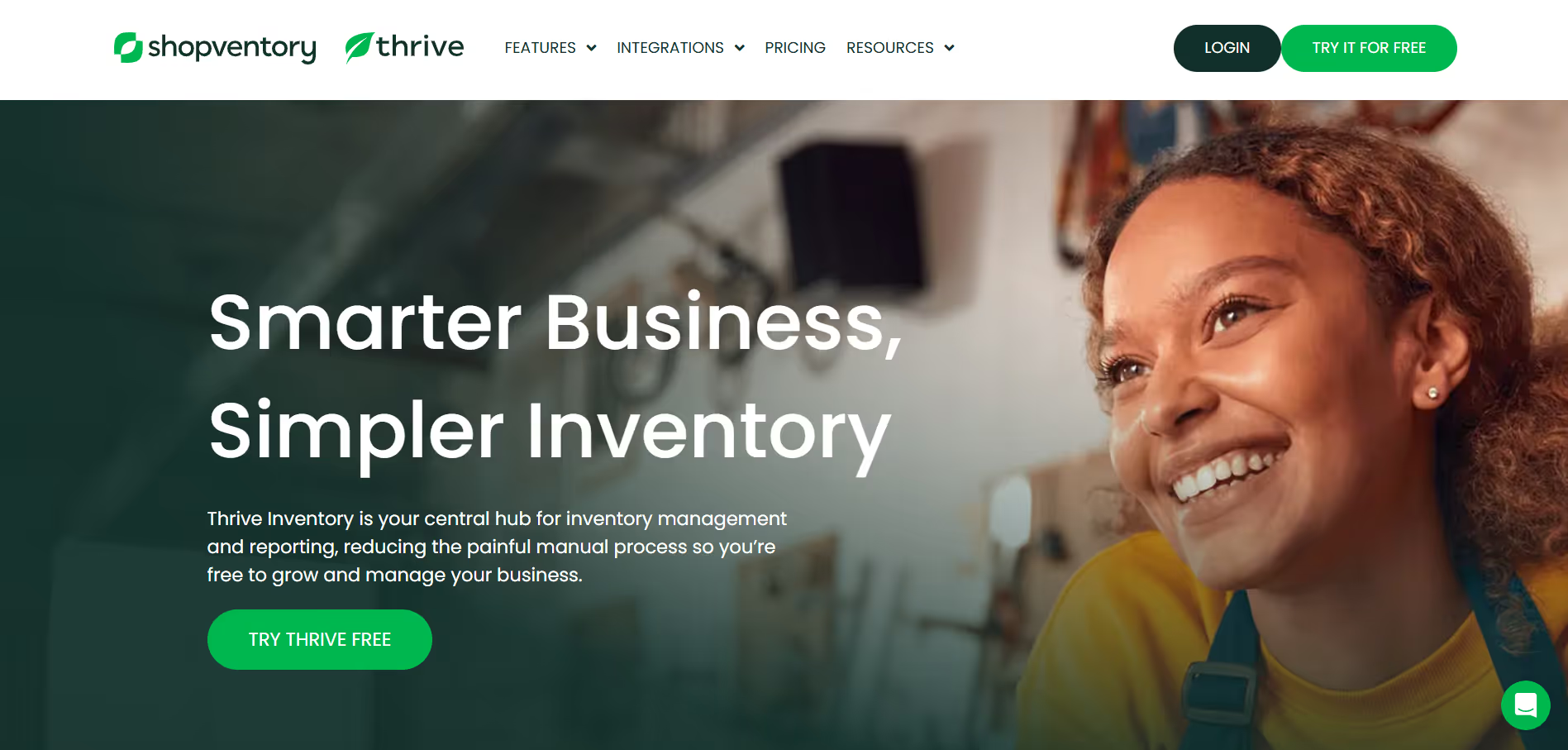
Thrive by Shopventory
Thrive by Shopventory is an advanced inventory management platform designed for retailers and eCommerce brands that need tight stock control with demand insights built in.
Key Features
- Real-time inventory syncing with Shopify and POS systems
- Demand forecasting and intelligent reorder points
- Custom low-stock alerts
- Multi-location and multi-channel tracking
- Advanced reporting and analytics
Best For
Retail-focused Shopify brands needing strong inventory oversight plus forecasting.
Limitations
- Pricing increases quickly with added locations and features
- Can feel complex for smaller stores
Pricing
Plans start around $59/month, increases depending on features and store size.
Assisty Inventory Management
Assisty is a Shopify-focused inventory management app that combines stock tracking with replenishment forecasting and performance analytics.

Key Features
- Inventory tracking with dynamic reorder suggestions
- Sales trend-based forecasting
- Low-stock and overstock alerts
- Multi-location inventory support
- Custom reporting dashboards
Best For
Growing Shopify stores that want forecasting integrated with daily inventory operations.
Limitations
- Advanced forecasting and PO features require higher plans
- Less suited for complex enterprise supply chains
Pricing
Plans start around $19/month and scale up for advanced features.
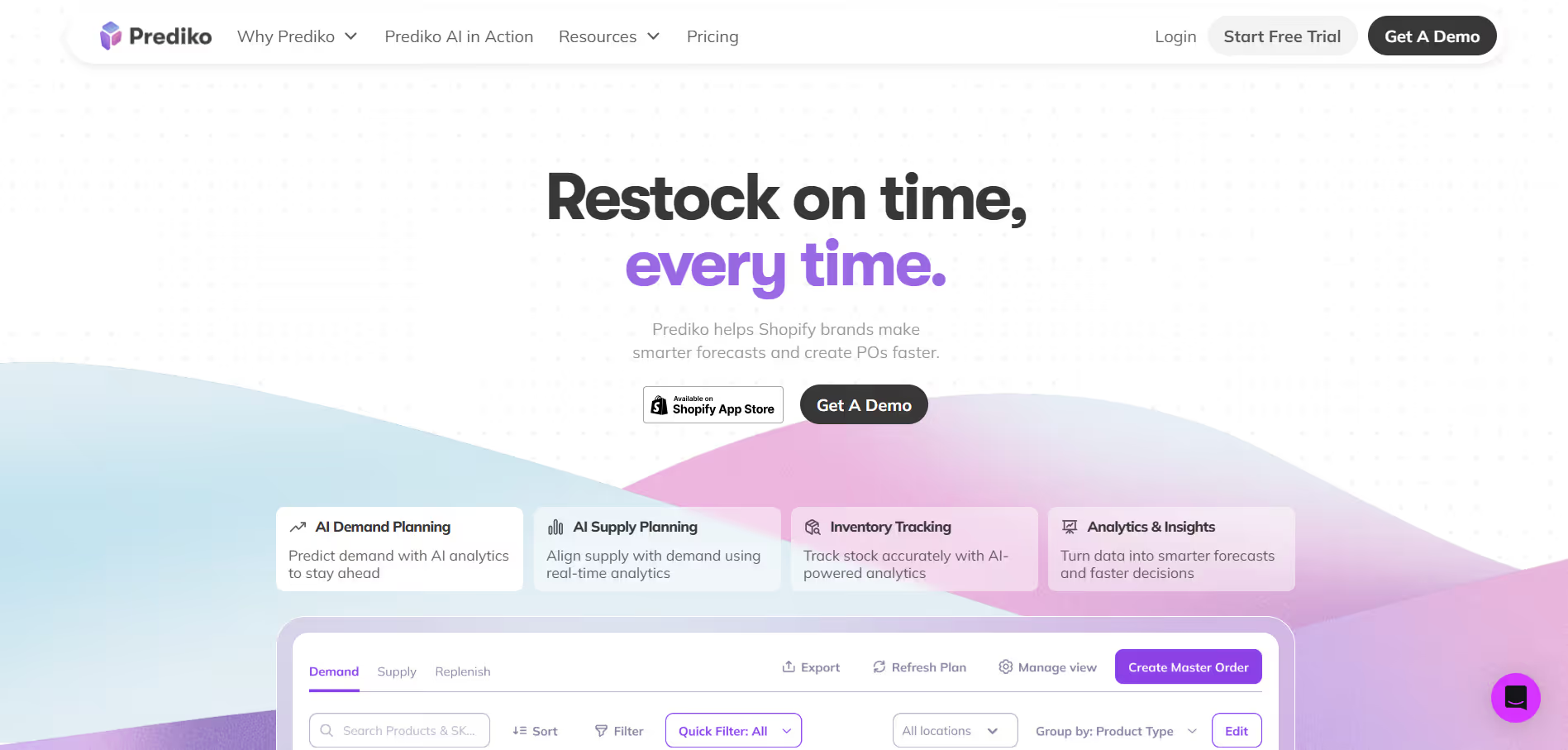
Prediko
Prediko is an AI-powered Shopify inventory planning and forecasting app that predicts demand across products and seasons, automates replenishment, and helps avoid stockouts or overstocks. It also includes multi-location syncing and advanced reporting.
Key Features
- AI demand forecasting and planning
- Smart purchase order generation and editing
- SKU health tracking and inventory insights
- Multi-location support and advanced reports
Best For
Growing D2C brands that want AI-guided planning with strong UI and reporting.
Limitations
- Pricing varies by business revenue tiers
- Learning advanced features may take some time
Pricing
Starts around $49/month.
Conclusion
The right tool for inventory management with forecasting feature helps you anticipate demand, optimize purchasing, protect cash flow, and reduce costly stock mistakes.
Whether you’re a scaling Shopify brand managing hundreds of SKUs or a growing store preparing for seasonal spikes, forecasting gives you clarity where guesswork used to exist.
Ultimately, the best solution depends on your catalog size, operational complexity, and budget.
Some tools offer lightweight forecasting with simple restock suggestions, while others provide deeper AI-driven demand planning and multi-location control.
The key is finding a system that aligns forecasting insights directly with your daily inventory operations so you can plan your inventory better.
Try Sumtracker for free!
Frequently Asked Questions (FAQs)
1. What is inventory forecasting software?
Inventory forecasting software predicts future product demand using historical sales data, seasonality, trends, and lead times. It helps businesses decide what to reorder, how much to buy, and when to restock.
2. How is forecasting different from basic reorder alerts?
Basic reorder alerts trigger when stock reaches a preset level. Forecasting, on the other hand, analyzes sales patterns and predicts future demand, making reorder decisions more accurate and data-driven.
3. Is inventory forecasting necessary for small Shopify stores?
Even small stores benefit from forecasting — especially during promotions or seasonal spikes. It reduces overstocking and prevents stockouts, which directly impact cash flow and customer experience.
4. Can forecasting software handle multiple warehouses?
Yes, many advanced inventory management tools support multi-location forecasting. They predict demand per warehouse and help allocate stock accordingly.
5. What factors improve forecasting accuracy?
Forecast accuracy improves with consistent historical sales data, accurate lead time inputs, seasonality tracking, and clean inventory synchronization across sales channels.
Conclusion

Bhoomi writes about inventory management and multichannel selling at Sumtracker. Her focus is on solving real operational problems for Shopify, Amazon, and marketplace sellers through well-researched content. She covers everything from multi-location inventory syncing and stock error troubleshooting to replenishment planning and platform comparisons, turning complex eCommerce operations into clear, actionable guidance.
LinkedInRelated Articles
Tool and strategies modern teams need to help their companies grow.

Ready to Simplify Your Inventory Management?
Join hundreds of e-commerce merchants who rely on Sumtracker to save time, eliminate errors, and grow their business.