.svg)

How to Manage Bundle Inventory Without Listing Components (Shopify Guide)


You sell a bundle… but what actually just got sold behind the scenes?
That’s the question most eCommerce brands don’t think about until inventory starts going off.
A few bundle orders in, and suddenly your stock numbers don’t match reality. You might still “have” bundles available, but one of the key components inside them is already out of stock.
The root of the problem isn’t bundles, it’s how they’re tracked.
Listing every component on your storefront isn’t practical, and honestly, it’s not how modern inventory systems are meant to work.
The smarter approach is to separate what customers see from what you manage internally.
By using hidden products to track bundle components, you can keep your storefront clean while maintaining accurate, real-time inventory behind the scenes and no clutter, no confusion, and no stock surprises.
What Are Hidden Products in Bundle Inventory Management?
Hidden products are items that exist in your inventory management system but are not visible or purchasable on your storefront. They’re used purely for internal tracking especially when you’re dealing with bundles made up of multiple components.
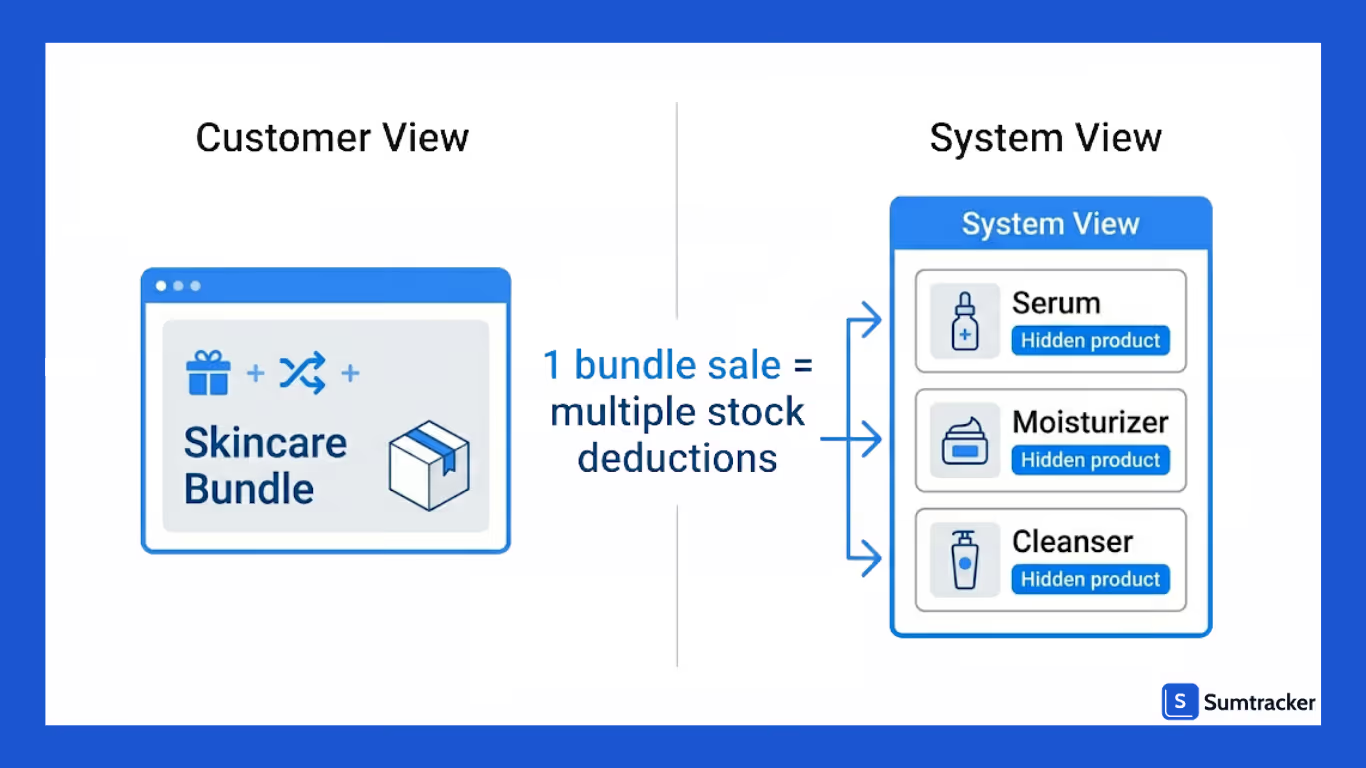
Instead of listing every individual item publicly, you create these components as “hidden” products and link them to your bundle. Customers only see and buy the bundle, but behind the scenes, each component is still being tracked accurately.
Think of it this way:
Your bundle is what you sell, but hidden products are what you actually manage.
This approach is especially useful when:
- Components aren’t meant to be sold individually
- You want to avoid cluttering your product catalog
- You need precise stock tracking for each item inside a bundle
Why You Don’t Need to List Every Bundle Component on Shopify
It might feel logical to list every item that goes into a bundle on your Shopify store but in practice, it creates more problems than it solves.
For starters, not every component is meant to be sold on its own. When you publish all of them, your storefront can quickly become cluttered with products that customers were never supposed to buy individually.
This can lead to confusion, dilute your product positioning, and make navigation harder.
More importantly, listing components publicly doesn’t actually fix inventory tracking. Shopify treats each product independently, so unless you have a system in place to connect bundle sales with component stock, your inventory can still go out of sync.
By keeping components hidden:
- You maintain a clean, focused storefront
- Customers only see what’s relevant to them
- You avoid accidental purchases of individual components
- Your backend stays organized without adding unnecessary complexity
How Hidden Products Work Behind the Scenes
On the surface, a customer buys a single bundle. But behind the scenes, your inventory system is doing a lot more work than it seems.
Each bundle is mapped to a set of hidden products, its individual components with predefined quantities. So when one bundle is sold, the system instantly breaks that bundle down and deducts stock from each of those hidden items.

For example, if a bundle includes:
- 2 units of Product A
- 1 unit of Product B
A single order of that bundle will automatically reduce:
- Product A by 2
- Product B by 1
This happens in real time, without any manual updates.
What makes this powerful is that your inventory stays accurate at the component level, not just at the bundle level.
So even if you’re selling the same component across multiple bundles (or even individually on another channel), your stock always reflects reality.
Setting Up Hidden Products for Bundle Components
Setting up hidden products might sound technical, but in practice, it’s just about organizing your inventory in a smarter way.
Start by breaking down your bundle into its individual components, the items that actually make up the product you’re selling. Each of these should be created as a separate product in your inventory system, even if you never plan to sell them individually.
Once created, keep these components hidden or unpublished on your Shopify store. This ensures they won’t appear in your catalog, search results, or collections, but are still fully trackable in the backend.
From there, map these hidden products to your bundle by defining how many units of each component are included. For example:
- Bundle X → 1 unit of Item A + 2 units of Item B
After this setup, your system knows exactly how to adjust inventory whenever the bundle is sold.
A few best practices to keep things clean and scalable:
- Use clear naming conventions (e.g., “Internal – Serum 50ml”)
- Maintain accurate stock levels for each component
- Keep bundle-to-component mappings consistent
- Regularly review components used across multiple bundles
Benefits of Using Hidden Products for Bundle Tracking
Once you start using hidden products for bundles, the difference is immediately noticeable not just in accuracy but in how manageable your entire inventory becomes.

Instead of trying to juggle bundle SKUs and component stock manually, you’re working with a system that reflects what’s actually happening behind the scenes.
Cleaner Storefront Without Sacrificing Control
One of the biggest advantages is how clean your storefront stays. Customers only see the final bundle and not the individual components that power it.
This keeps your catalog focused and easy to navigate, while you still maintain full control over every item in the backend. It’s the best of both worlds: simplicity for customers, structure for you.
Accurate Inventory at the Component Level
Hidden products ensure that every bundle sale reflects real stock movement. Instead of tracking just the bundle, your system updates each component inside it.
This means you always know exactly what’s available, what’s running low, and what needs restocking without relying on assumptions.
Better Visibility Into What’s Actually Selling
When multiple bundles share the same components, it can be hard to track which items are being consumed the fastest. Hidden products solve this by giving you clear visibility into component-level demand.
Over time, this helps you identify:
- High-usage items across bundles
- Slow-moving components
- Patterns that impact purchasing decisions
Reduced Risk of Overselling or Stockouts
Without proper tracking, it’s easy to oversell bundles even when one component is already out of stock. Hidden products prevent this by tying bundle availability directly to component inventory.
So if a key item runs out, your system reflects that immediately and avoid overselling and customer dissatisfaction.
Less Manual Work, Fewer Errors
Manually adjusting inventory for each component after every bundle sale is not scalable and it’s prone to mistakes.
With hidden products, everything is automated. The system handles deductions instantly, reducing the chances of human error and freeing up your time for more important tasks.
Built to Scale as You Add More Bundles
What works for 5 bundles often breaks at 50. Hidden products create a structured foundation that scales with your business.
You can:
- Add new bundles without reworking your inventory
- Reuse components across multiple bundles
- Maintain consistency as your catalog grows
How Sumtracker Helps Managing Bundles Across Channels Without Listing Components
Managing bundles becomes even more complex when you’re selling across multiple channels like Shopify, Amazon, or Etsy. Without a centralized system, it’s easy for inventory to fall out of sync.

This is where Sumtracker simplifies things.
With Sumtracker, you can:
- Create bundles while keeping individual components hidden from your storefront
- Automatically deduct component inventory whenever a bundle is sold
- Sync inventory in real-time across all your sales channels
- Track stock at both bundle and component levels in one place
So instead of juggling spreadsheets or manually updating stock, everything stays connected and accurate no matter where the sale happens.
Conclusion
Managing bundle inventory doesn’t have to mean cluttering your storefront or losing track of what’s actually in stock. As you’ve seen, the real shift is in how you think about inventory, separating what customers see from what you manage behind the scenes.
Hidden products give you that control. They let you keep your catalog clean, your inventory accurate, and your operations scalable without adding unnecessary complexity.
If you’re starting to feel the gaps in how your bundles are tracked, it’s usually a sign that your current setup isn’t built to handle growth.
That’s where Sumtracker comes in.
With real-time inventory sync, bundle mapping, and component-level tracking across channels, Sumtracker helps you stay in control without exposing every moving part to your customers.
Try Sumtracker free for 14 days!
FAQs
1. Can I manage bundles on Shopify without listing individual components?
Yes, you can. By using hidden products, you can track individual components internally while only displaying the bundle on your storefront.
2. What happens to inventory when a bundle is sold?
When a bundle is sold, the system deducts inventory from each component that makes up the bundle, based on predefined quantities.
3. Will hidden products affect my storefront or customer experience?
No. Hidden products are not visible to customers, so your storefront remains clean and focused only on what you want to sell.
4. Can the same component be used in multiple bundles?
Yes, and this is where hidden products are especially useful. A single component can be linked to multiple bundles, and inventory will update accurately across all of them.
5. Do I need an inventory management tool to handle this setup?
While it’s possible to set up basic bundles manually, maintaining accurate inventory across bundles especially across multiple channels, usually requires a dedicated system like Sumtracker to automate and sync everything in real time.
Conclusion

Bhoomi writes about inventory management and multichannel selling at Sumtracker. Her focus is on solving real operational problems for Shopify, Amazon, and marketplace sellers through well-researched content. She covers everything from multi-location inventory syncing and stock error troubleshooting to replenishment planning and platform comparisons, turning complex eCommerce operations into clear, actionable guidance.
LinkedInRelated Articles
Tool and strategies modern teams need to help their companies grow.


Ready to Simplify Your Inventory Management?
Join hundreds of e-commerce merchants who rely on Sumtracker to save time, eliminate errors, and grow their business.