.svg)
.avif)
How to Bulk Edit Inventory on Shopify: Complete Guide


Are you looking for a way to update inventory for multiple products at once in Shopify?
When you are managing hundreds of SKUs, it's tiring to update inventory one by one.
And a small stock error on your part can prove costly.
But there's an easy way out for you, which is bulk updates.
Shopify lets you bulk update inventory through its built-in bulk editor and CSV tools.
In this guide, I'll walk through both methods, explain when to use each, and cover common inventory situations like physical stock counts, seasonal adjustments, and multi-location updates.
.avif)
Why Bulk Edit Inventory on Shopify?
Bulk editing inventory helps you change inventory quantities for multiple products or variants at once without opening each product individually.
It's useful when you're:
- Receiving a large shipment
- Completing a physical inventory count
- Preparing for a seasonal sale
- Correcting inventory discrepancies
- Updating stock after a product launch
- Adjusting inventory across locations
The key is to make sure the quantities you're entering represent the actual inventory available for sale at the correct location and variant.
For example, if a product has Small, Medium, and Large variants, each variant may have a different quantity. Updating the product as a whole isn't enough; you need to make sure each variant reflects its actual stock.
Method 1: Using Shopify's Built-in Bulk Editor
For straightforward inventory changes, Shopify's native bulk editor is the easiest place to start.
.avif)
Bulk Editing Products and Variants
To bulk edit inventory:
- Go to Products → Inventory in your Shopify admin.
- Select the location you want to update.
- Select the products or variants you need to change.
- Click Bulk edit.
- Click Columns and add the relevant inventory fields.
- Enter the new quantities.
- Review the changes and click Save.
Pay close attention to the location you're editing. If your store has inventory in multiple warehouses or retail locations, each location can have its own stock quantity.
Variants also need individual attention. A T-shirt with Small, Medium, and Large variants might have 30, 12, and 4 units, respectively.
You shouldn't automatically apply the same adjustment to all three just because they belong to the same product.
Method 2: Using Shopify CSV for Bulk Inventory Updates
When you're working with a larger catalog, CSV is often more practical than editing rows manually.
A simple workflow is:
Export → Edit → Review → Import → Verify
Preparing and Importing Your CSV
Start by exporting your inventory data from Shopify rather than creating a CSV from scratch. This gives you the correct structure and makes it easier to avoid formatting problems.
When preparing the file:
- Keep SKU and variant identifiers unchanged.
- Edit only the inventory fields you need to change.
- Check that quantities are assigned to the correct location.
- Don't rename Shopify's column headers.
- Remove unnecessary formulas or formatting.
- Keep a copy of the original file before making changes.
Multi-location stores need extra care. A product might have stock in a warehouse, retail store, and third-party fulfillment location. Make sure you're changing the quantity for the intended location rather than accidentally replacing or adjusting stock elsewhere.
Don't treat the CSV like an ordinary spreadsheet. It's an import file that can make changes to your live Shopify inventory.
Handling Common Shopify Inventory Adjustments
Bulk editing is particularly useful for recurring inventory tasks, not just one-off updates.
Reconciling Physical Counts
Imagine Shopify shows 120 units of a product, but your warehouse count finds only 113.
Don't simply change the number and move on.
A better workflow is:
- Count the physical stock.
- Compare it with the Shopify quantity.
- Check for obvious causes such as unprocessed orders, returns, damaged products, or receiving errors.
- Update Shopify with the verified quantity.
- Record why the adjustment was made.
This makes it easier to investigate recurring discrepancies and gives your team context for future adjustments.
Use Inventory Data to Prioritize Updates
A stock count tells you what you have, but sales data can show you what needs attention first.
As discussed on the Winning with Shopify podcast, Shopify Sidekick can identify low-stock products that are selling well and highlight inventory bottlenecks.
Making Seasonal Inventory Adjustments
Seasonal changes are another good use case for bulk editing.
For example, an apparel store preparing for summer might increase stock for its best-selling seasonal products before demand picks up. After the season, it may reduce replenishment levels to avoid carrying unnecessary stock.
The same approach applies to holiday inventory:
Plan demand → adjust stock → monitor sales → reconcile actual inventory.
One important distinction: a bulk inventory adjustment isn't the same as a replenishment strategy. Increasing stock quantities across hundreds of SKUs doesn't mean those quantities are necessarily the right ones.
Managing Pre-Orders and Backorders
Pre-orders can make inventory adjustments more complicated.
If customers can purchase a product before the next shipment arrives, you need to distinguish between physical stock, committed stock, and incoming stock.
For example, if 100 units are arriving and 40 are already committed to pre-orders, you shouldn't automatically treat all 100 as available inventory.
Before making a bulk adjustment, understand which units are actually available to sell. Otherwise, you risk promising stock to customers that has already been allocated elsewhere.
Fixing Bulk Inventory Errors
The biggest advantage of bulk editing can also be its biggest risk: one mistake can affect many products at once.
.avif)
If you accidentally enter 500 instead of 50 for a group of SKUs, don't try to fix the problem by guessing the previous quantities.
Instead:
- Stop making further inventory changes.
- Identify the affected SKUs and locations.
- Compare the current quantities with your previous export or physical count.
- Restore the correct quantities.
- Check recent orders and inventory movements.
- Verify the corrected quantities before continuing.
This is why keeping a backup export before major inventory updates is a simple but useful safeguard.
If you're regularly making large inventory adjustments, it's also worth having a defined process for who can make changes, how adjustments are reviewed, and how discrepancies are documented.
When to Use an Inventory Management App
For bulk updating, Shopify's native tool works just fine as long as you don’t have a huge number of SKUs.
For example, Allied Medical, a healthcare equipment retailer, found that Shopify's bulk editing capabilities helped its team work more efficiently when managing its product catalog.
After moving to Shopify, the company reported that it took around 60% less time to list a product, with bulk editing being one of the features that contributed to the improvement.
Read the full case study here.
But this doesn’t mean it would work for you as well.
Once you cross past a certain threshold, you will need additional help in editing inventory in the form of an inventory tool.
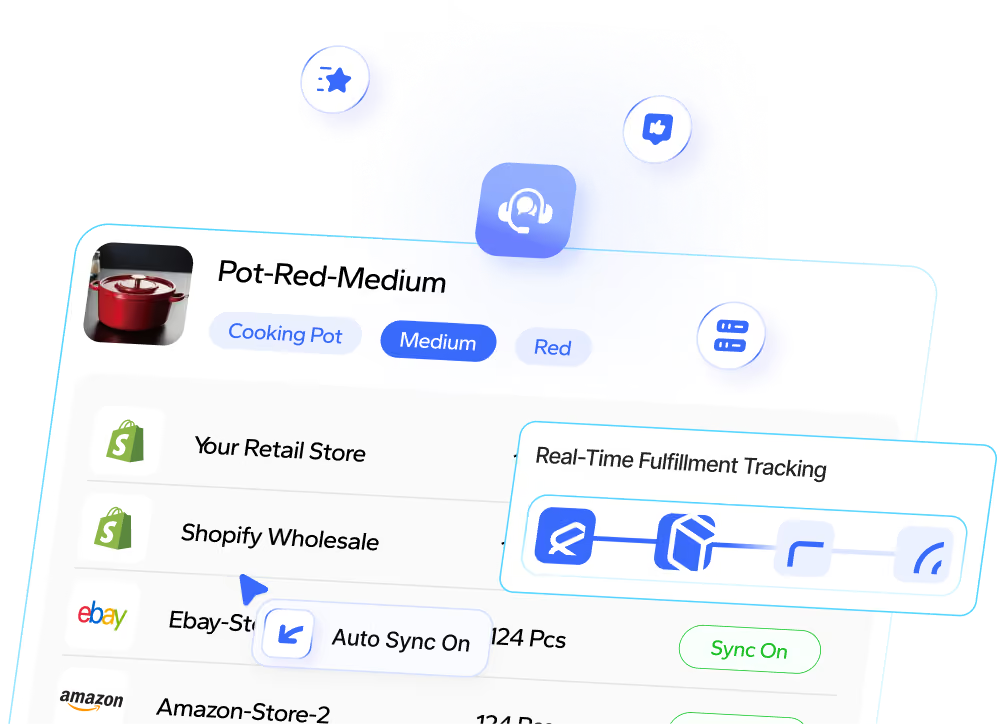
So, instead of repeatedly updating stock across individual stores, you can manage inventory from an inventory system like Sumtracker and keep your channels synced.
The difference becomes especially important as inventory operations become more complex.
At that point, the goal shouldn't simply be to find a faster way to edit stock; it should be to reduce how often manual inventory edits are needed in the first place.
Best Practices for Bulk Inventory Updates
Bulk updating inventory isn’t as easy as it sounds like it to be. Here’s a checklist that you can follow to make it easy for you.
Back Up Before Changes
Make a copy of your current inventory before making any changes by exporting it. This helps give you a point that you can refer to if you end up adding incorrect quantities.
Verify SKUs, Variants, and Locations
Before updating, check that you're working with the right SKU, variant, and inventory location.
Separate Available, Committed, and Incoming Stock
Keep physical inventory, committed, and incoming inventory separate when deciding what quantity to enter because not every unit associated with a product is available for sale.
Test Large Updates Before Applying
If you're making a large CSV update, test the process on a small group of products first. It's much easier to catch a formatting or quantity error before it affects your entire catalog.
Document Necessary Inventory Adjustments
Keep a record of major changes, such as adjustments made after a physical count, damaged stock, or inventory transfers. This makes discrepancies easier to investigate later.
Review Inventory After the Update
Review the updated quantities and spot-check important SKUs to make sure the inventory now matches what you expect.
If you're regularly managing inventory across multiple channels, Sumtracker helps you keep stock synced and reduce manual updates.
Try Sumtracker free for 14-days today.
FAQS
Can I bulk update inventory for multiple Shopify products?
Yes. Shopify lets you update inventory for multiple products and variants using its built-in bulk editor. For larger catalogs, you can also use a CSV file to make changes in bulk.
Can I bulk edit inventory for multiple Shopify locations?
Yes. You can update inventory for specific locations, but you need to make sure you're editing the correct location and quantity. Inventory is tracked separately by location.
Can I bulk update inventory for products with variants?
Yes. You can bulk edit inventory for products with multiple variants. Each variant can have its own inventory quantity, so review the SKU and variant carefully before saving your changes.
How can I fix a Shopify inventory update made by mistake?
If you make an incorrect bulk update, identify the affected products and locations, then restore the correct quantities using your previous inventory records or a backup export. It's a good practice to save a copy of your inventory before making large changes.
Conclusion
Bulk editing is one of the simplest ways to save time when managing Shopify inventory.
Whether you're correcting stock after a physical count, updating quantities after a shipment, or making changes across multiple locations, Shopify's built-in tools can handle many routine updates.
The important part is to avoid treating bulk editing as a simple numbers game.
Check the right SKU, variant, location, and available stock before making changes, and review your inventory afterward.
And if you're regularly making bulk adjustments because your inventory is spread across multiple stores or sales channels, it may be time to move beyond manual updates.

Bhoomi writes about inventory management and multichannel selling at Sumtracker. Her focus is on solving real operational problems for Shopify, Amazon, and marketplace sellers through well-researched content. She covers everything from multi-location inventory syncing and stock error troubleshooting to replenishment planning and platform comparisons, turning complex eCommerce operations into clear, actionable guidance.
LinkedInRelated Articles
Tool and strategies modern teams need to help their companies grow.

Ready to Simplify Your Inventory Management?
Join hundreds of e-commerce merchants who rely on Sumtracker to save time, eliminate errors, and grow their business.