.svg)
![10 Best Inventory Forecasting Tools for Shopify in 2026 [Tested & Reviewed]](https://cdn.prod.website-files.com/67907f49647e48895e5dc266/6a846c0974801543b4c0ce66_Growth%20Unlocked%20with%20Sumtracker%20(46).avif)
10 Best Inventory Forecasting Tools for Shopify in 2026 [Tested & Reviewed]


Are you searching for an inventory forecasting tool for your Shopify store?
Well, I got you.
I know it’s fairly easy to look at your current inventory levels and even manage them.
But it’s a task when you want to know what to reorder, when to reorder, and how much.
I came across tonnes of inventory forecasting tools available on the Shopify App Store.
When you start your search, you definitely see them.
But the question is which one is the best- okay, not the best, but which one suits you the best.
So to make it easier for you, I compared 10 of the most talked-about inventory forecasting tools to see which ones actually help Shopify merchants predict future demand, avoid stockouts, and know what to reorder.
Key Findings From My Evaluation
- Forecasting quality varies significantly between tools.
- The best ones don't stop at predicting customer demand; they also tell you what and when to reorder.
- AI-powered forecasting is becoming common, but more features don't always mean a better experience.
- Tools that combine forecasting with inventory management and purchasing offer a more complete workflow.
New to Shopify Inventory Forecasting?
For inventory forecasting, you just need to answer three questions before your stock runs out:
- What will I sell?
- When will I run out?
- How much should I order?
Shopify already gives you a decent starting point with its built-in inventory reports and forecasting tools.
But if you want more flexibility around demand forecasting, seasonality, automated replenishment, or purchase planning, that's where dedicated inventory forecasting apps can be useful.
A forecasting tool looks at historical sales data and other factors such as market trends, seasonal trends, sales velocity, lead times, and current inventory to estimate future demand.
The better tools take it a step further.
They turn those forecasts into actionable recommendations, such as which products need to be reordered, how much to order, and when to place the order.
That's what I focused on when evaluating the tools below.
Comparison of the Best Shopify Inventory Forecasting Software
Pricing and feature availability can change, so check each tool's current plan before purchasing.
Quick Results: My Top Picks
Best Overall: Sumtracker — combines inventory forecasting with replenishment, purchase orders, inventory management, and multichannel inventory visibility.
Best for Supply Planning: Prediko — combines demand forecasting with supply planning, dynamic buying, and inventory planning.
Best for Lost-Sales Insights: Inventory Forecasting Hero — combines demand forecasting with stockout detection and lost-sales analysis.
Best for Raw Material Planning: Organizely — extends inventory forecasting into raw materials, components, and bills of materials.
How I Evaluated These Tools
I evaluated each inventory forecasting tool based on the factors that matter most when narrowing down the best option.
What I Looked For:
- How useful are the demand forecasts?
- Does the tool recommend what and when to reorder?
- Does it account for seasonality, sales trends, or lead times?
- How easy is it to understand the forecast?
- Does forecasting connect with purchase orders or replenishment?
- How well does it fit into a Shopify inventory workflow?
- Does the pricing make sense for the features provided?
My Scoring System
Forecasting and replenishment receive the most weight because that is the main feature that I’m talking about here.
I also considered feature completeness, ease of use, Shopify integration, and overall value.
How I Calculated Final Scores
Each tool is evaluated across five categories:
- Forecasting & Accuracy — 35 points
- Replenishment & Recommendations — 25 points
- Feature Completeness — 20 points
- Ease of Use — 10 points
- Value for Money — 10 points
So, 60% of the score depends on two things: predicting demand and turning that prediction into an inventory decision.
1. Sumtracker — Best Overall Shopify Inventory Forecasting Tool
My Rating: 95/100
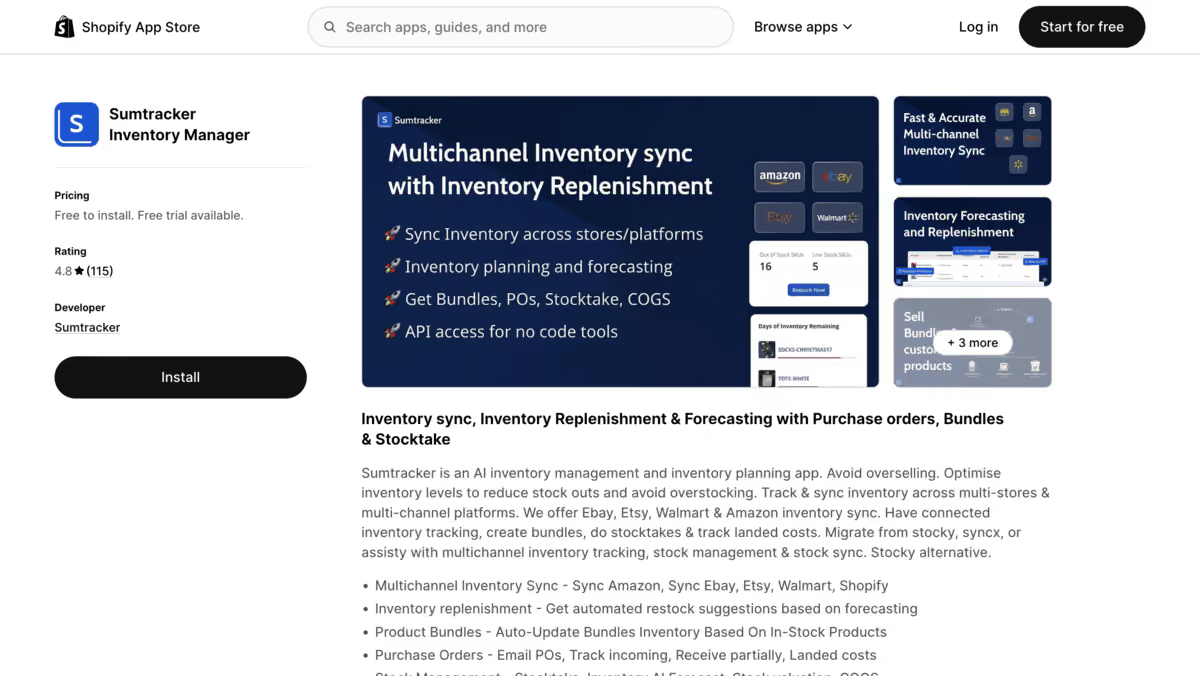
Sumtracker is an inventory forecasting and management platform built for Shopify and multichannel sellers.
It helps merchants forecast future demand using historical sales data, sales trends, seasonality, and effective in-stock days.
The forecasting system also considers supplier lead times when estimating future inventory requirements, giving merchants a clearer idea of when they may run low and how much stock they'll need.
Beyond forecasting, Sumtracker provides replenishment recommendations, including suggested reorder quantities and timing. These recommendations can then be turned into purchase orders within the same workflow.
Sumtracker also supports multichannel inventory management, allowing businesses selling across Shopify and other channels to use their inventory and sales data together when planning future stock.
Key Features
- Inventory forecasting & replenishment
- Sales velocity and seasonality forecasting
- Purchase order management
- Multichannel inventory sync
- Inventory reporting and low-stock alerts
My Testing Results
Sumtracker gives a clear view of expected inventory requirements based on historical sales and demand patterns.
The forecast considers seasonality, sales trends, effective in-stock days, and supplier lead times, which makes the recommendations more useful than simply projecting past sales forward.
What stood out was how closely the forecast is connected to replenishment. Instead of leaving you with a demand number, Sumtracker recommends what needs to be reordered and lets you move from the recommendation to a purchase order.
The other useful part is the connection to purchase orders. Once you've identified what needs to be replenished, you can create purchase orders directly from the forecasting workflow.
Pros & Cons
Strengths: Forecasting and replenishment in one workflow, purchase order management, multichannel inventory, seasonality, and strong inventory visibility.
Weaknesses: Merchants looking only for a lightweight forecasting dashboard may find the broader inventory management functionality more than they need.
Final Verdict
Best for: Shopify merchants who want forecasting connected to inventory management and purchasing.
Skip if: You only need a basic standalone forecasting calculator.
2. Rewize
My Rating: 92/100
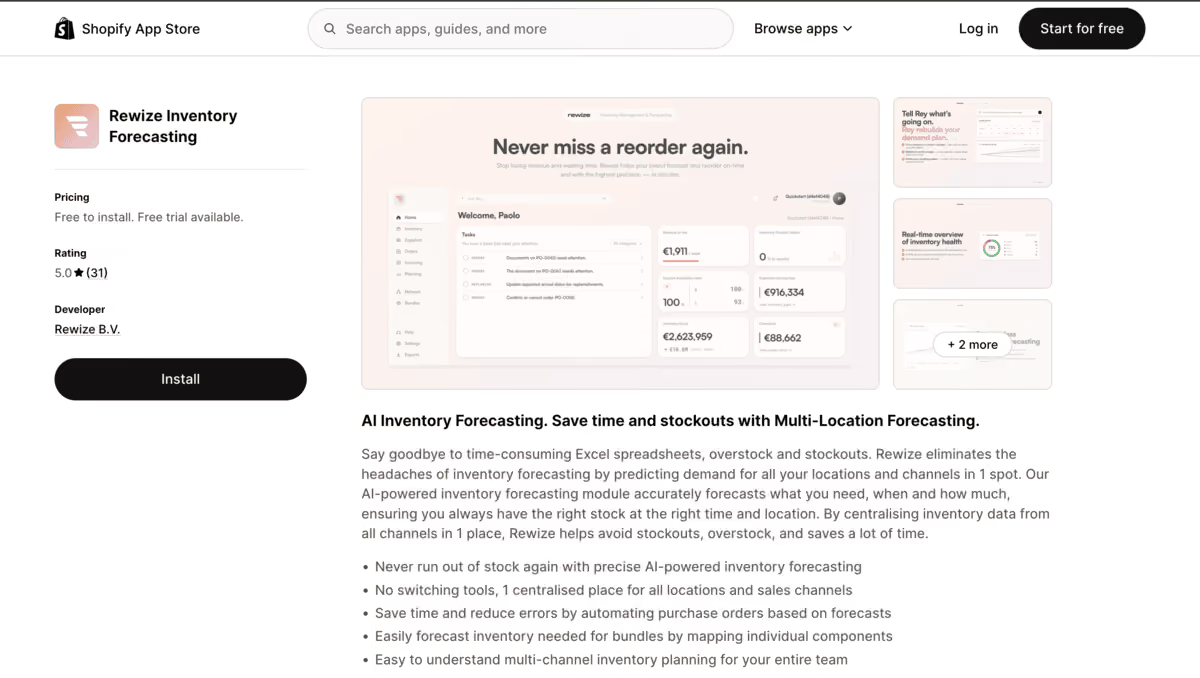
Rewize has an AI-first approach to inventory planning. It turns inventory data and business context into actionable buying decisions.
You can use its recommendations to determine which SKUs need to be purchased and when.
It's aimed primarily at DTC brands that want AI to take more of the manual work out of inventory planning.
Key Features
- AI-powered demand forecasting
- SKU-level purchase recommendations
- Purchase planning
- Campaign and business-goal inputs
- Purchase order workflow
My Testing Results
Rewize stands out if your main priority is turning forecasting into purchasing decisions.
The platform allows merchants to bring additional business context into the forecast, including campaigns, business goals, and their own knowledge of the business.
That makes it particularly interesting for growing DTC brands where historical sales alone don't always tell the whole story.
Pros & Cons
Strengths: Strong AI focus, purchase-oriented forecasting, SKU-level recommendations, and business-context inputs.
Weaknesses: May be more than a small Shopify store needs if its forecasting requirements are basic.
Final Verdict
Best for: Growing DTC brands that want AI-powered purchase planning.
Skip if: You only need basic sales-based forecasting.
3. Prediko
My Rating: 89/100
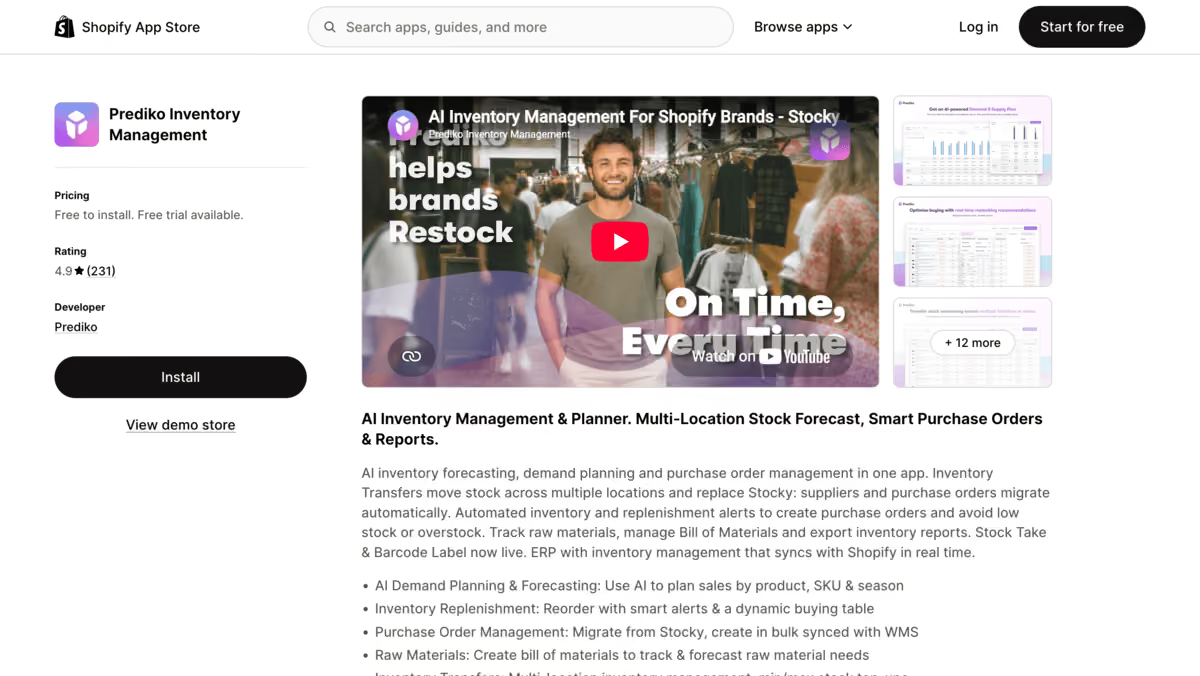
Prediko sits somewhere between an inventory forecasting app and a broader demand planning platform.
Its focus is helping Shopify brands understand what they are likely to sell and then plan their inventory around that demand.
Forecasting, purchasing, inventory alerts, and reporting are brought together in one workflow. This makes it particularly appealing to brands that have outgrown basic stock-level tracking.
Key Features
- AI sales forecasting
- Supply planning
- Dynamic buying table
- Purchase order management
- Inventory alerts
My Testing Results
Prediko gives you a fairly complete view of future inventory requirements. The forecasting dashboard makes it easy to see expected sales and how that demand could affect your stock levels.
What stood out was the supply planning workflow.
Instead of stopping at the sales forecast, Prediko connects projected demand with incoming inventory and future purchasing requirements, making it easier to plan ahead.
Overall, Prediko feels more focused on demand and supply planning than simple inventory forecasting.
Pros & Cons
Strengths: Strong demand-planning workflow, AI forecasting, purchasing, reporting, and inventory planning.
Weaknesses: The broader planning functionality may be unnecessary for merchants with very simple inventory needs.
Final Verdict
Best for: Shopify brands looking for demand planning alongside inventory forecasting.
Skip if: You only need a simple forecast and reorder alert system.
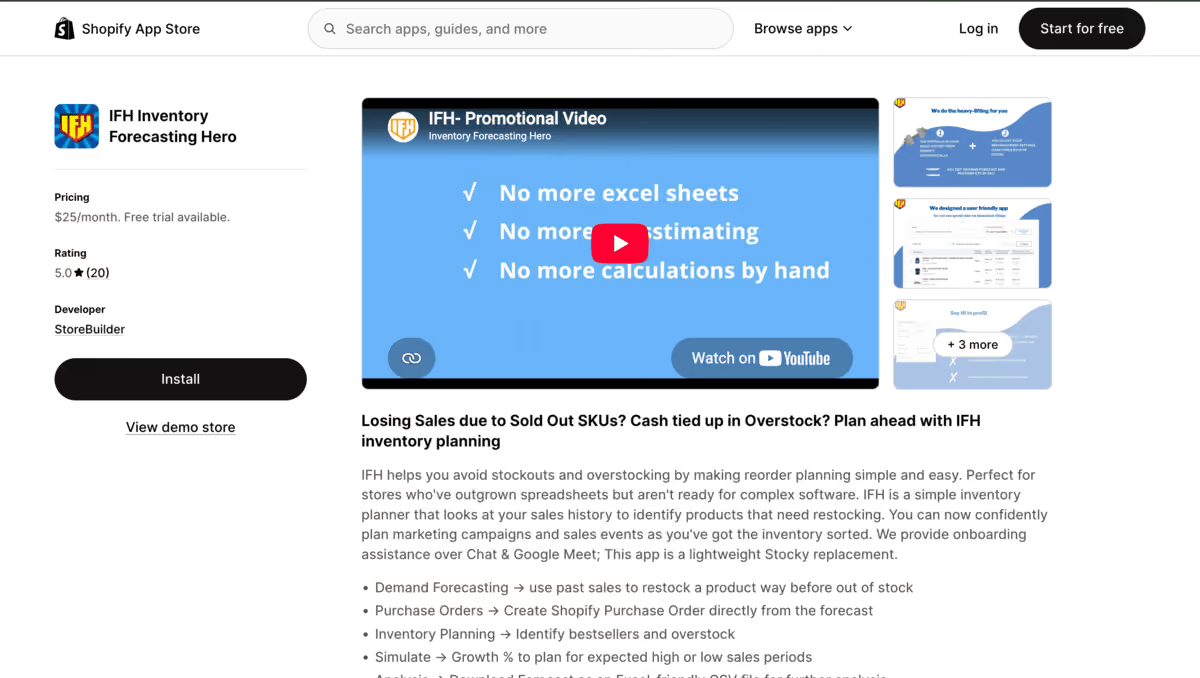
4. Inventory Forecasting Hero
My Rating: 87/100
Inventory Forecasting Hero helps you know what you're going to run out of before you actually run out.
The app combines demand forecasting with stockout detection and replenishment insights to help merchants stay ahead of inventory shortages.
It also looks at potential lost sales, giving merchants another way to understand the cost of running out of stock.
Key Features
- AI demand forecasting
- Stockout detection
- Lost-sales analytics
- Restock alerts
- Order planning
My Testing Results
Inventory Forecasting Hero keeps its focus firmly on forecasting and understanding future inventory requirements.
The dashboard centers on helping merchants see upcoming demand and identify products that may need attention.
The stockout and lost-sales information also adds useful context to the forecast.
Instead of looking only at what you sold, you can get a better sense of where inventory shortages may have affected your sales.
Pros & Cons
Strengths: Forecasting, stockout detection, lost-sales analysis, and supplier/3PL management.
Weaknesses: Pricing is higher than some lightweight Shopify forecasting apps.
Final Verdict
Best for: Merchants focused on preventing stockouts and improving replenishment planning.
Skip if: You want a very low-cost forecasting tool for a small catalog.
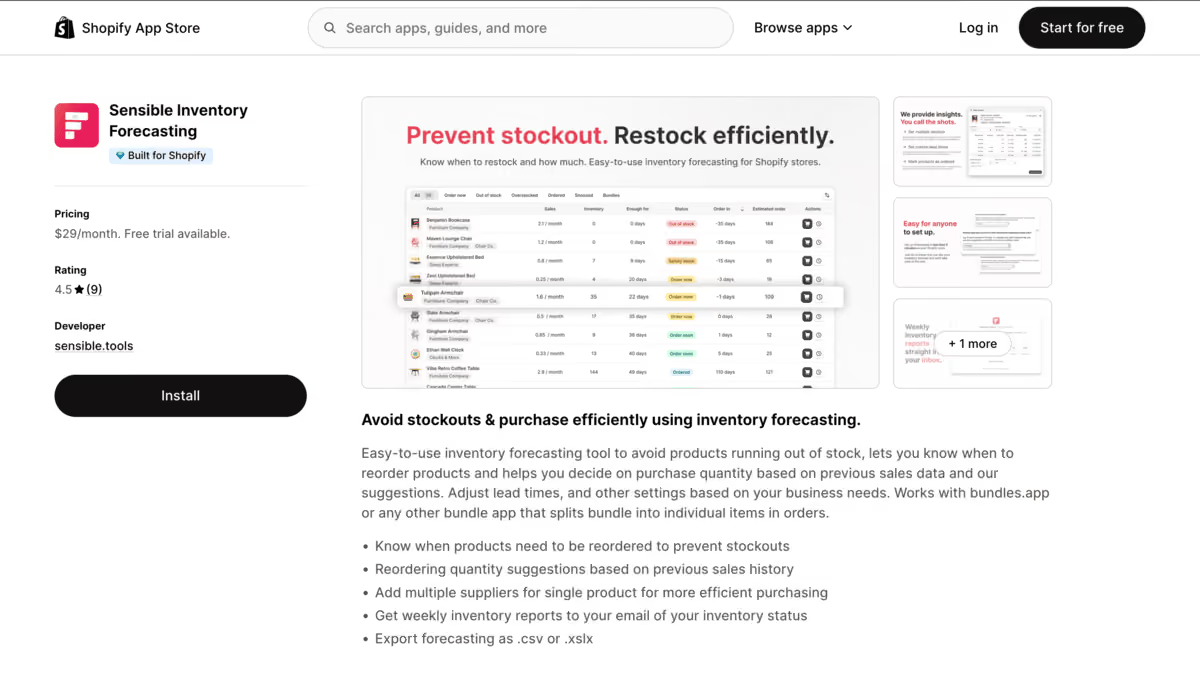
5. Sensible Inventory Forecasting
My Rating: 82/100
Sensible takes the opposite approach to some of the more feature-heavy platforms on this list.
If you don’t want an ERP or you want to just level up your inventory forecasting game, then it can be worth trying.
Historical data forms the foundation of its forecasts, with tools for vendors, inventory reporting, and reordering around it.
If you value simplicity of a tool and don’t want an extensive feature set, then Sensible is for you.
Key Features
- Historical sales forecasting
- Product-level forecasting settings
- Multiple vendors
- Weekly inventory reports
- CSV and XLSX exports
My Testing Results
Sensible is centered around turning historical sales into forecasts that can be used for inventory planning.
The interface doesn't try to overwhelm you with dozens of inventory management features.
Instead, it keeps the focus on forecasting, products, vendors, and reorder planning.
That makes it relatively straightforward to work through your inventory requirements, particularly if you're managing a Shopify store and don't need a complex planning system.
Pros & Cons
Strengths: Simple, Shopify-focused, affordable, and easy to understand.
Weaknesses: Doesn't offer the breadth of inventory operations available in more comprehensive platforms.
Final Verdict
Best for: Small and medium-sized Shopify stores that want straightforward forecasting.
Skip if: You need extensive multichannel inventory management or advanced purchasing workflows.
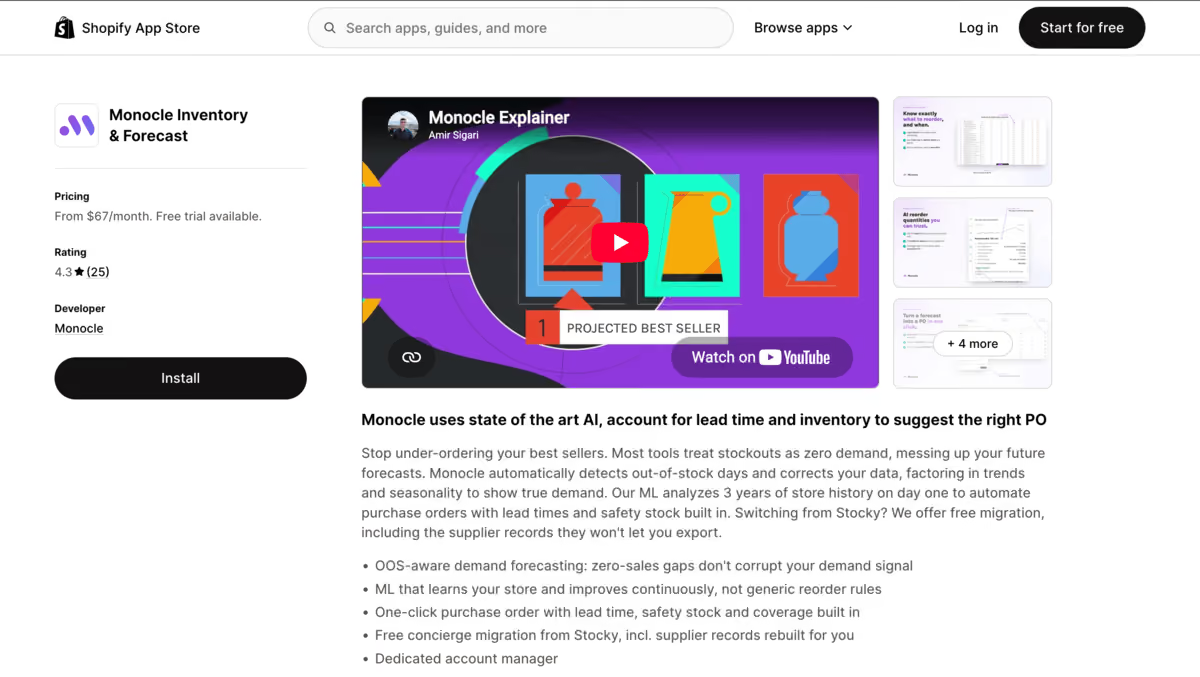
6. Monocle
My Rating: 86/100
Monocle approaches forecasting from an inventory analysis perspective.
Alongside predicting demand, it helps merchants understand how their products behave through tools such as ABC-XYZ analysis and market basket analysis.
That means the platform isn't just asking, “What will I sell?” but also helping merchants understand which products deserve the most inventory attention.
It's a better fit for brands that want forecasting combined with deeper SKU-level analysis.
Key Features
- AI demand forecasting
- Market basket analysis
- ABC-XYZ analysis
- Replenishment recommendations
- Purchase order creation
My Testing Results
For me, Monocle stood out because it combines forecasting with product-level inventory analysis.
Instead of treating every SKU the same, you can use ABC-XYZ analysis to know which SKUs sell the most and which don’t.
Market basket analysis is another feature that I found interesting; with this, you can understand relationships between products that may not be obvious from looking at individual SKU sales alone.
Pros & Cons
Strengths: AI forecasting, inventory analysis, replenishment, and purchase orders.
Weaknesses: Advanced functionality comes at a higher price than simpler forecasting apps.
Final Verdict
Best for: Merchants who want forecasting combined with inventory analysis.
Skip if: Your inventory operation is very small and you only need basic forecasts.
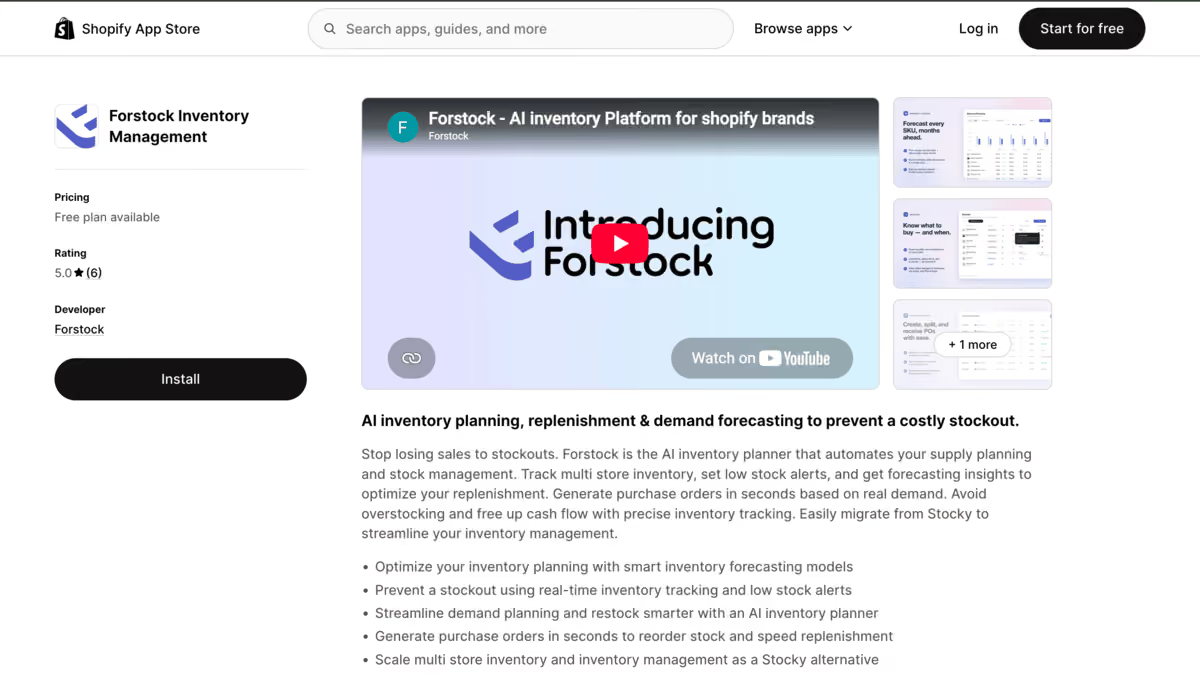
7. Forstock
My Rating: 85/100
Forstock puts replenishment planning at the center of its forecasting workflow. Its goal isn't simply to tell merchants that demand is going up or down, but to help translate those changes into inventory actions.
Safety stock, reorder planning, supplier information, and purchase orders all play a role in that process.
This makes it particularly relevant for businesses where purchasing decisions are the main reason for using a forecasting tool.
Key Features
- AI demand planning
- AI reorder planning
- Safety stock planning
- Purchase order creation
- Purchase order tracking
My Testing Results
With Forstock, you can turn your demand forecasts into inventory planning decisions.
The platform doesn't just look at expected sales; it also considers how much stock you should keep available.
If you don’t want ot reorder solely based on your average demand, use its safety stock planning feature.
The connection between demand planning, reorder planning, and purchase orders also makes the workflow feel geared toward actual purchasing rather than forecasting for reporting purposes.
Pros & Cons
Strengths: Demand planning, safety stock, reorder recommendations, and purchase orders.
Weaknesses: Some of the more advanced planning capabilities require paid plans.
Final Verdict
Best for: Shopify merchants looking for AI-powered replenishment planning.
Skip if: You only want basic demand forecasting.
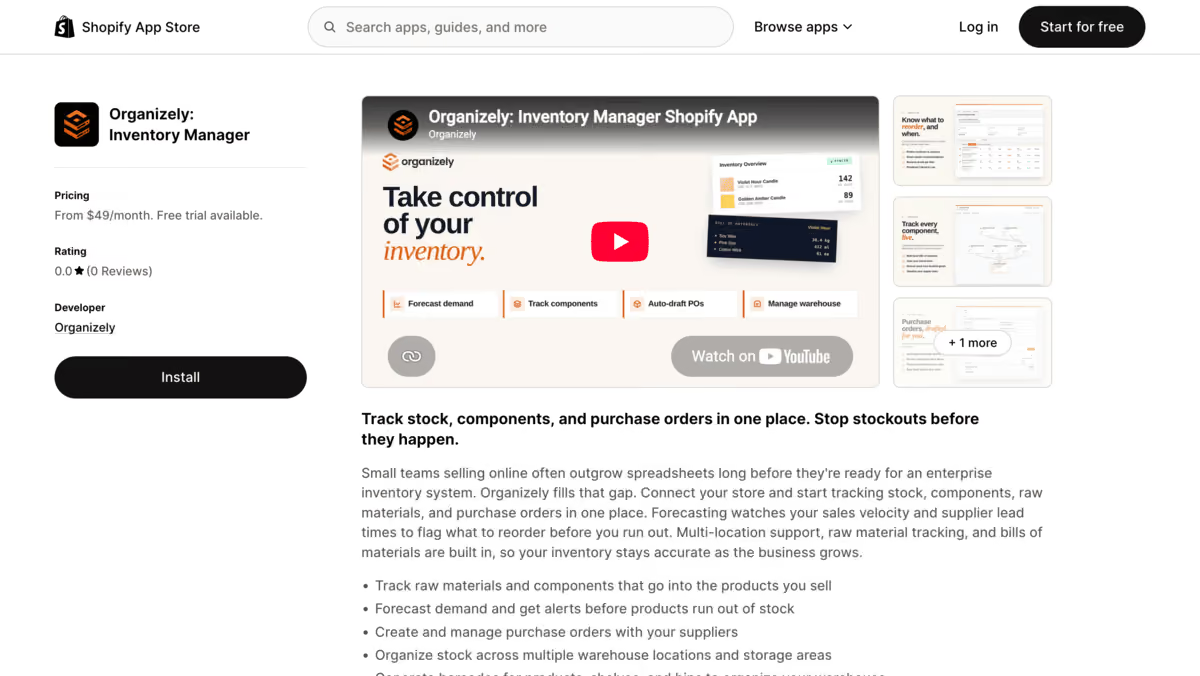
8. Organizely
My Rating: 87/100
If you are in the assembly or manufacturing business, then Organizely can be the tool that ends your search.
It combines demand planning with raw materials, components, suppliers, and bills of materials.
Instead of only forecasting the finished units, with Organizely you can now forecast demand for the inventory required to create those products.
That gives Organizely a different use case from most Shopify-focused forecasting apps.
Key Features
- AI demand forecasting
- Purchase orders
- Supplier management
- Multi-location inventory
- Raw-material tracking
My Testing Results
Organizely becomes more interesting when you look beyond finished-product demand.
With this, you can change your approach to inventory planning by working alongside raw materials, components, and BOMs.
The broader purchasing and supplier features also make it possible to connect those inventory requirements with procurement.
It's a more operational approach than a forecasting tool focused purely on finished-product sales.
Pros & Cons
Strengths: Forecasting, purchasing, components, raw materials, and BOM support.
Weaknesses: The manufacturing-oriented features may be unnecessary for a straightforward ecommerce store.
Final Verdict
Best for: Shopify merchants that manage components, raw materials, or assembled products.
Skip if: You only sell finished products and need simple demand forecasting.
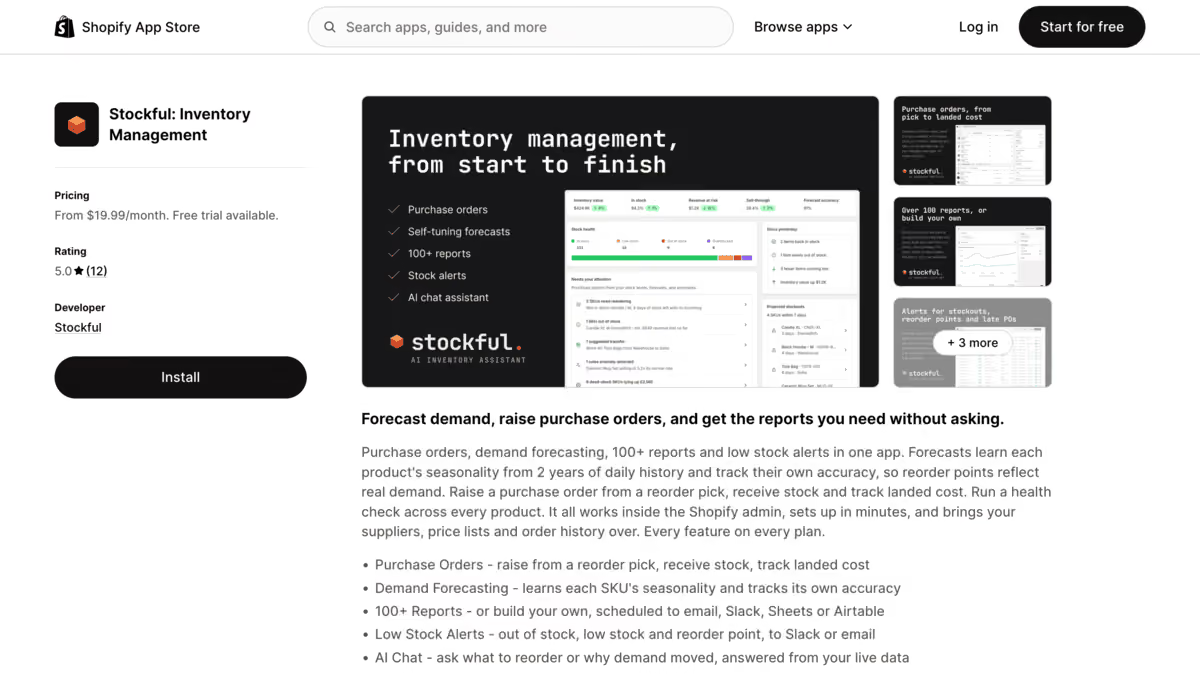
9. Stockful
My Rating: 83/100
Stockful is positioned as an AI inventory assistant rather than just another forecasting dashboard.
It brings together demand forecasts, seasonality, reorder recommendations, stock alerts, reports, and purchase orders in a relatively lightweight package.
The focus is on giving merchants actionable answers without requiring them to become inventory-planning experts.
Key Features
- AI inventory assistant
- Seasonality-aware forecasting
- Reorder recommendations
- Safety stock
- Stockout alerts
My Testing Results
Stockful uses historical sales and seasonality to estimate future demand at the product level.
Unusual sales patterns distort forecasts; it provides a combination of forecasting and anomaly detection that you can use to prevent them.
The additional inventory reports make it easier to investigate what's happening with individual products.
The reorder recommendations and purchase-order features then give you a way to act on the forecast rather than monitor it.
Pros & Cons
Strengths: Affordable, AI-powered, strong reporting, seasonality-aware forecasting, and purchase planning.
Weaknesses: The platform is relatively new compared with some established inventory planning tools.
Final Verdict
Best for: Shopify merchants looking for an affordable AI-powered forecasting and inventory analytics tool.
Skip if: You need a long-established enterprise inventory planning platform.
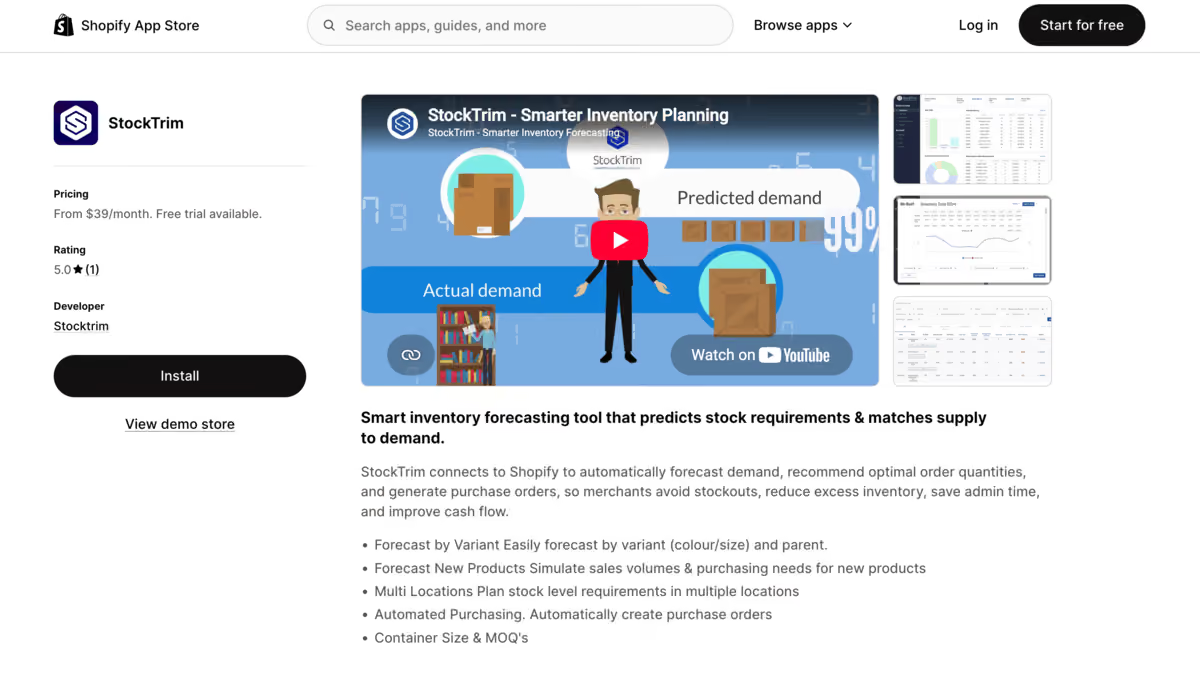
10. StockTrim
My Rating: 88/100
StockTrim is one of the more planning-heavy options in this comparison.
It uses statistical and machine-learning forecasting to handle situations that become difficult to manage manually, including multiple locations, changing supplier lead times, and large product catalogs.
It also supports more advanced planning scenarios such as new-product forecasting and multi-level bills of materials.
Key Features
- Machine-learning inventory forecasting
- Demand analysis
- Dynamic reorder scheduling
- Multi-location planning
- Variable supplier lead times
My Testing Results
StockTrim's forecasting approach goes beyond a basic projection of historical sales and supports factors such as supplier lead times, multiple locations, and different inventory planning scenarios.
The new-product forecasting capability is particularly notable because new SKUs don't have as much historical data as established products.
The trade-off is that there's more to configure and understand compared with a lightweight forecasting tool.
Pros & Cons
Strengths: Advanced forecasting, multi-location planning, lead-time support, and sophisticated inventory planning.
Weaknesses: More advanced than many smaller Shopify stores need, with pricing that increases as the business grows.
Final Verdict
Best for: Growing businesses with complex inventory planning requirements.
Skip if: You're looking for a simple, low-cost Shopify forecasting app.
What I Learned From Evaluating These Inventory Forecasting Tools
After comparing these tools, a few things stand out.
Forecasting Alone Isn't Enough
A forecast tells you what might happen. It doesn't automatically solve the inventory problem.
The more useful tools connect forecasting with reorder recommendations, supplier lead times, safety stock, and purchase orders.
Simplicity Matters
A forecasting model can be extremely sophisticated, but if it takes hours to understand the results, it's not particularly useful for a busy Shopify merchant.
For smaller stores, a simple forecast with clear reorder recommendations may be more valuable than an advanced planning system.
Seasonality Can Make a Big Difference
Historical sales aren't always enough.
A product that sells consistently throughout most of the year may suddenly see a large demand spike during a holiday or seasonal period. Tools that account for seasonality can produce more useful forecasts.
Forecasting Works Best With Inventory Management
This is probably the biggest takeaway.
The best workflow isn't:
Forecast → manually figure out what to do.
It's:
Forecast → identify inventory risk → calculate reorder → create PO
That removes a lot of manual work from inventory planning.
How to Choose the Right Inventory Forecasting Tool for Shopify
If you want forecasting + inventory management: Sumtracker is a strong all-around option.
If AI-powered purchase planning is your priority: Rewize is worth considering.
If you want demand and supply planning: Prediko is a good fit.
If you want simple Shopify forecasting: Sensible Inventory Forecasting keeps things straightforward.
If stockout prevention is your priority: Inventory Forecasting Hero focuses heavily on demand and stockout insights.
If you want AI forecasting at a lower starting price: Stockful is one of the more affordable options.
If you manage raw materials or components: Organizely is worth considering.
If you need advanced inventory planning: StockTrim might be the one for you.
Frequently Asked Questions
1. Which inventory forecasting tool is best for Shopify?
There is no single best tool for everyone. The best inventory forecasting tool depends upon what you need. If you want forecasting combined with replenishment, purchase orders, and inventory management, then Sumtracker works best.
2. What is the difference between inventory forecasting and demand forecasting?
Demand forecasting predicts the units you can sell, while inventory forecasting uses that prediction with current stock levels, lead times, and other inventory-related factors to tell you how much inventory you need and when to reorder.
3. How much does Shopify inventory forecasting software cost?
Pricing differs tool by tool. Some are low-cost, while more advanced platforms charge hundreds of dollars per month. Each tool has its own pricing criteria, which you can find on its website.
4. Do Shopify inventory forecasting tools account for seasonality?
Not all; some tools analyze historical seasonal patterns automatically, while others allow merchants to adjust forecasting assumptions. If your products have significant seasonal demand, this is an important feature to compare before choosing a tool.
5. Can inventory forecasting tools create purchase orders?
Yes. Several tools in this comparison connect forecasting with purchasing. They can use projected demand, current inventory, and lead times to recommend what to reorder, and some allow you to create purchase orders directly from those recommendations.
Conclusion
Inventory forecasting can make a big difference when you're managing a growing Shopify store. Instead of reacting when products are running low, you can use demand patterns and inventory data to plan ahead.
After comparing these 10 tools, Sumtracker stands out as the best overall option because it brings forecasting together with the rest of your inventory workflow. You can forecast demand, monitor stock levels, get replenishment recommendations, manage low-stock inventory, track bundles, and create purchase orders without switching between different systems.
The other tools are worth considering if you need a specific capability, but the right choice ultimately depends on your catalogue size, sales channels, and how much of your inventory planning you want to manage in one place.

Bhoomi writes about inventory management and multichannel selling at Sumtracker. Her focus is on solving real operational problems for Shopify, Amazon, and marketplace sellers through well-researched content. She covers everything from multi-location inventory syncing and stock error troubleshooting to replenishment planning and platform comparisons, turning complex eCommerce operations into clear, actionable guidance.
LinkedInRelated Articles
Tool and strategies modern teams need to help their companies grow.
.avif)

.avif)
Ready to Simplify Your Inventory Management?
Join hundreds of e-commerce merchants who rely on Sumtracker to save time, eliminate errors, and grow their business.