.svg)
.avif)
10 Best 3PL for Shopify in 2026 (Tested and Reviewed)


Are you spending more time packing orders than focusing on growing your Shopify store?
Then you should look for a helping hand.
By helping hand, no, I’m not talking about hiring more people; rather, partner with a third-party logistics provider.
A third-party logistics (3PL) provider helps you fulfill your orders by storing your inventory, picking and packing orders, and then ships to the customers.
I know it sounds like a relief, right, that you can put more time into creating strategies for growing your business.
All you need to do is choose the right provider from the sea of options.
And to make this easier, I have reviewed the 10 best Shopify 3PLs available in 2026.
Quick Results: My Top Picks
If you're looking for a quick recommendation, start with these:
- Best Overall: ShipBob or ShipMonk, ideal for most growing Shopify brands due to their reliable fulfillment networks and seamless Shopify integrations.
- Best for International Fulfillment: Flexport Fulfillment or Flowspace, great for businesses managing global shipping or selling across multiple channels.
- Best for Small Businesses: eFulfillment Service or ShipHero Fulfillment, strong options for merchants that want flexible fulfillment without enterprise-level complexity.
- Best for Specialized Fulfillment: Red Stag Fulfillment (heavy & high-value products) or Shipfusion (subscription & CPG brands).
How We Evaluated These Shopify 3PLs
I understand that not every fulfillment provider is a good fit for Shopify merchants.
Some softwares excel at fast shipping but lacks inventory visibility, while others offer sophisticated warehouse management but require enterprise-level budgets.
If you need more control over stock, tools like Sumtracker can also work alongside a 3PL to manage inventory across Shopify and other sales channels.
For this guide, I have evaluated each provider using the following criteria.
I also considered factors such as warehouse coverage, scalability, support for returns, international shipping, and merchant feedback to ensure every recommendation is suitable for Shopify businesses in 2026.
The Best Shopify 3PLs at a Glance
1. ShipBob — Best for Fast-Growing Shopify Brands
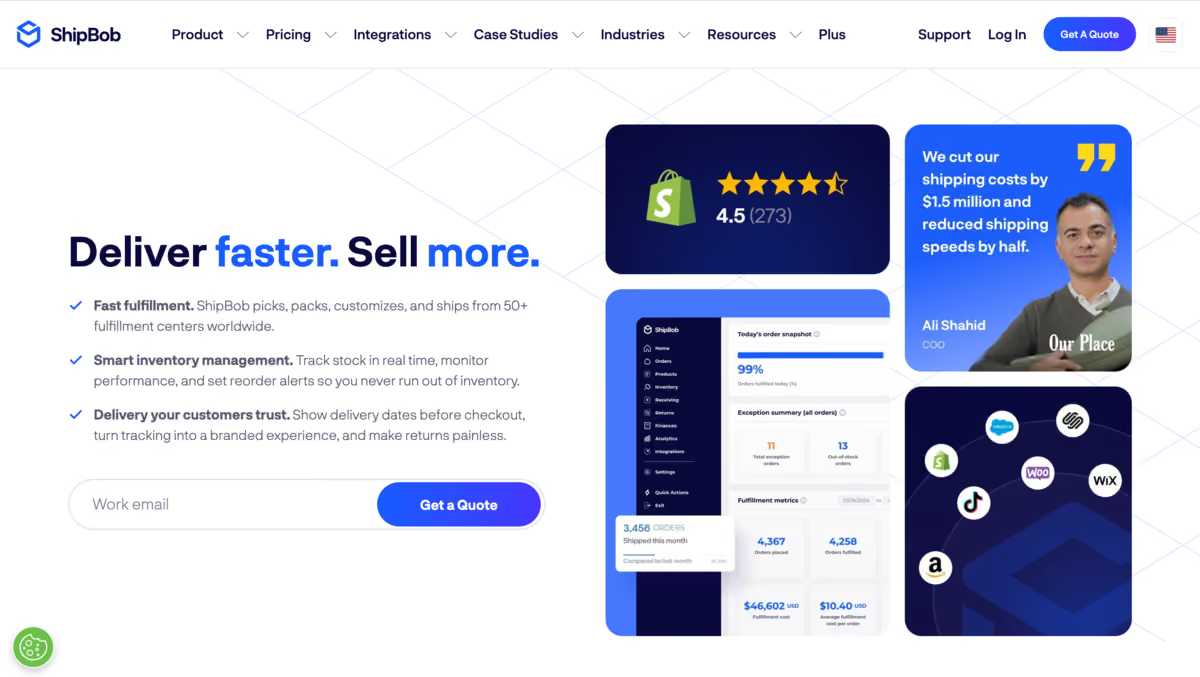
ShipBob is one of the most established fulfillment providers for Shopify merchants and is often the first platform growing DTC brands consider.
Apart from fulfillment, you also get real-time visibility into inventory, orders, and shipping performance.
You can easily distribute inventory across multiple fulfillment centers; Shipbob helps automatically ship from the warehouse closest to the customer, reducing delivery times and shipping costs.
Its Shopify integration is straightforward, automatically syncing orders, inventory, tracking information, and fulfillment updates without requiring manual work.
Key Services
- Shopify order fulfillment
- Global warehouse network
- Inventory distribution across fulfillment centers
- Returns management
- Inventory tracking and reporting
- International shipping
- B2B and wholesale fulfillment
- Analytics dashboard
My Evaluation
ShipBob balances fulfillment capabilities with ease of use.
Its extensive warehouse network, mature technology, and seamless Shopify integration make it suitable for brands that expect to scale without constantly switching logistics partners.
You’ll also get visibility into inventory and order performance through an intuitive dashboard.
While it isn't the cheapest option for smaller businesses, its reliability and operational efficiency totally make up for the higher cost.
I'd recommend it to growing Shopify brands that want a fulfillment partner capable of supporting both current operations and future expansion.
Pros & Cons
Pros
- Large global fulfillment network
- Excellent Shopify integration
- Strong inventory visibility
- Easy to scale with business growth
Cons
- Pricing isn't publicly available.
- Better suited for established businesses than very small stores
Final Verdict
Score: 95/100
Best for: Growing Shopify brands that need reliable fulfillment and inventory visibility.
Skip if: You're a new business with very low monthly order volumes.
2. Flexport Fulfillment — Best for International Fulfillment
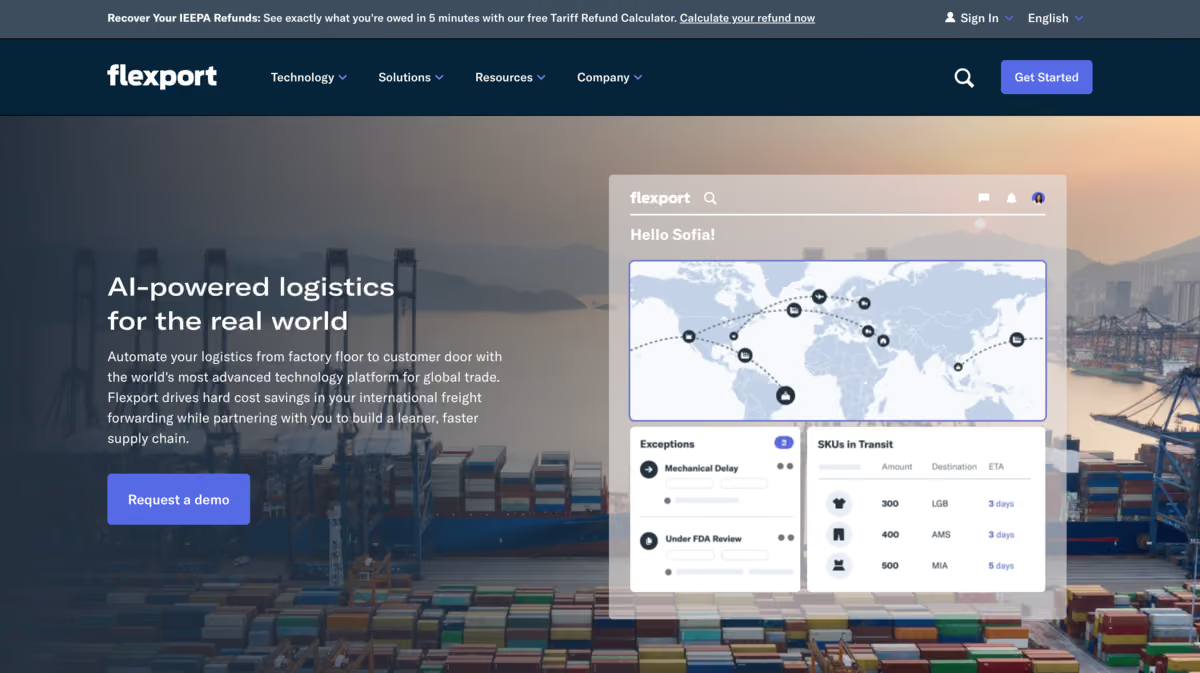
Flexport Fulfillment combines global logistics with ecommerce fulfillment, making it a strong choice for Shopify merchants selling internationally.
Flexport manages a larger portion of the supply chain that is from freight forwarding and customs to inventory storage and final-mile delivery.
It’s the primary fulfillment partner of Shopify that makes this platform much more relevant for Shopify sellers.
If you import products from overseas, you can manage inbound shipments and customer fulfillment from a single platform instead of coordinating multiple logistics providers.
Key Services
- Shopify fulfillment
- Freight forwarding
- International shipping
- Customs management
- Inventory storage
- Returns processing
- Supply chain visibility
- Analytics and reporting
My Evaluation
Flexport combines freight forwarding and fulfillment into a single platform.
If you're importing products internationally, managing inventory and logistics in one place can simplify operations considerably.
That said, businesses selling only within one country may not fully benefit from its global logistics capabilities.
Pros & Cons
Pros
- Excellent for international operations
- Strong supply chain visibility
- Reliable Shopify integration
- Nationwide fulfillment network
Cons
- More complex than standard fulfillment providers
- Pricing is custom
Final Verdict
Score: 93/100
Best for: Shopify merchants importing products or expanding internationally.
Skip if: Your business only fulfills domestic orders and doesn't need global logistics support.
3. ShipMonk — Best for Subscription & DTC Brands
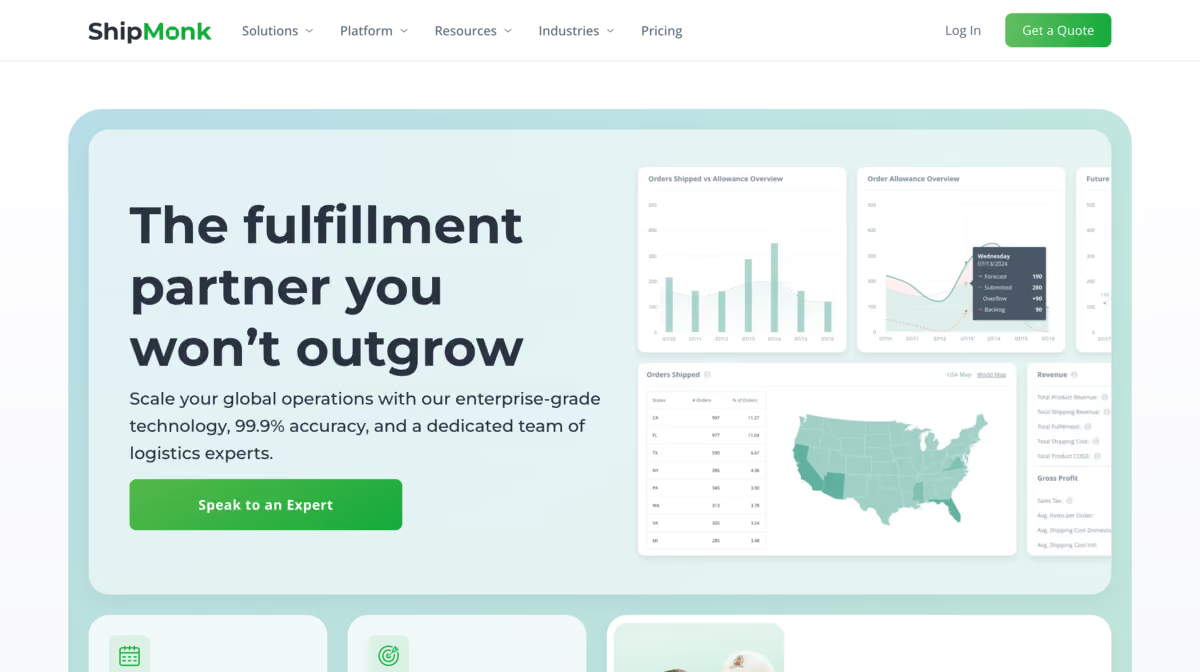
ShipMonk has a strong reputation among subscription box companies, direct-to-consumer brands, and businesses that require more than standard pick-and-pack fulfillment.
It supports kitting, bundling, custom packaging, and subscription order workflows that many traditional 3PLs struggle to handle efficiently.
You can directly integrate this with Shopify and start tracking fulfillment performance and inventory levels right away on the dashboards.
ShipMonk also operates warehouses across North America and Europe, making it a practical choice for brands expanding into international markets.
Key Services
- Shopify fulfillment
- Subscription box fulfillment
- Kitting and bundling
- Returns management
- International fulfillment
- Inventory management
- Custom packaging
- B2B fulfillment
My Evaluation
ShipMonk impressed me with how well it supports businesses that go beyond standard ecommerce fulfillment.
Features like subscription box fulfillment, kitting, bundling, and custom packaging make it particularly attractive for DTC brands.
Shopify integration is reliable, and you get good operational visibility as order volumes increase.
If you sell subscription products or have bundle products, this is the solid choice for you.
Pros & Cons
Pros
- Excellent for subscription businesses
- Strong customization capabilities
- Good international coverage
- Reliable Shopify integration
Cons
- Premium pricing
- Some advanced features may be unnecessary for simple businesses.
Final Verdict
Score: 92/100
Best for: Subscription businesses, bundled products, and growing DTC brands.
Skip if: You only need basic order fulfillment.
4. Red Stag Fulfillment — Best for Heavy & High-Value Products
Red Stag Fulfillment specializes in oversized, heavy, fragile, and high-value items that require extra care during storage and shipping.
So, it’s the best choice for you if you sell expensive goods where shipping accuracy matters more than processing thousands of low-cost orders, such as furniture, fitness equipment, electronics, appliances, industrial products, or others.
With its Shopify integration, you can automatically import orders, update inventory, and sync shipment tracking.
Key Services
- Shopify fulfillment
- Heavy and oversized product fulfillment
- High-value inventory handling
- Returns processing
- Inventory management
- Order tracking
- Quality assurance
- B2B fulfillment
My Evaluation
Red Stag Fulfillment takes a different approach from most providers by specializing in heavy, oversized, and high-value products.
Rather than trying to serve every type of merchant, it focuses on accuracy and careful handling, which is a major advantage if shipping mistakes are expensive.
I would recommend Red Stag to brands shipping products that require extra care.
If your catalog mainly consists of lightweight consumer goods, other providers may offer broader warehouse coverage or lower fulfillment costs.
Pros & Cons
Pros
- Excellent handling of oversized products
- High shipping accuracy
- Strong reputation for reliability
- Good Shopify integration
Cons
- Smaller warehouse network than some competitors
- Not ideal for lightweight, high-volume products
Final Verdict
Score: 91/100
Best for: Merchants selling heavy, oversized, fragile, or high-value products.
Skip if: Your catalog primarily consists of lightweight ecommerce products.
5. ShipHero Fulfillment — Best for Inventory Visibility & Warehouse Operations
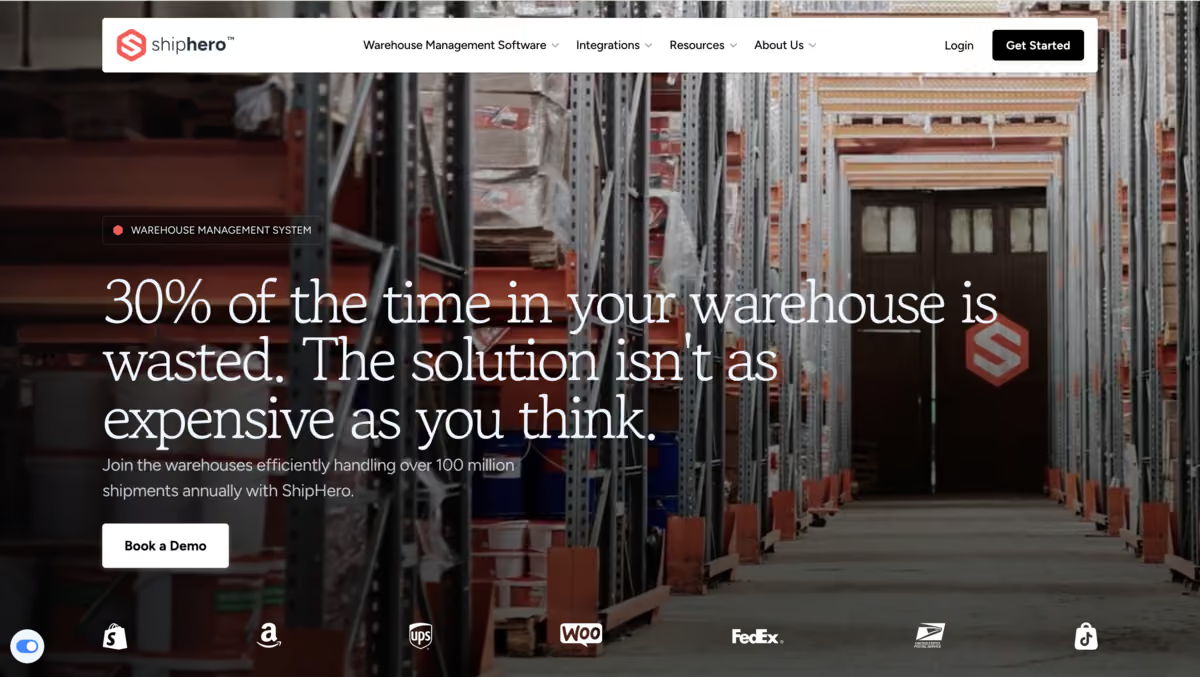
ShipHero primarily focuses on shipping orders and gives merchants greater visibility into inventory, warehouse operations, and fulfillment performance.
The platform integrates directly with Shopify, automatically syncing products, inventory, and orders.
It also provides detailed reporting on stock levels, fulfillment speed, warehouse activity, and shipping performance, making it particularly appealing to businesses that want more operational insights rather than treating fulfillment as a complete black box.
ShipHero operates fulfillment centers across the US and Canada while also offering warehouse management software for businesses running their own facilities.
Key Services
- Shopify fulfillment
- Warehouse management system (WMS)
- Real-time inventory tracking
- Order fulfillment
- Returns management
- Shipping automation
- Inventory reporting
- Multi-warehouse support
My Evaluation
ShipHero provides detailed reporting, warehouse management capabilities, and greater transparency into fulfillment performance.
It’s recommended to merchants who want more operational control without running their own warehouse.
If you are managing multiple SKUs or fulfillment locations, you will definitely appreciate its reporting tools.
That said, merchants looking for a simple plug-and-play fulfillment provider may find some of its advanced warehouse features unnecessary compared to more straightforward alternatives like ShipBob.
Pros & Cons
Pros
- Excellent inventory visibility
- Powerful warehouse management features
- Strong Shopify integration
- Suitable for scaling operations
Cons
- More complex than entry-level 3PLs
- Custom pricing
Final Verdict
Score: 91/100
Best for: Merchants that want detailed inventory reporting and warehouse visibility.
Skip if: You simply want basic order fulfillment with minimal operational involvement.
6. eFulfillment Service — Best for Small Businesses
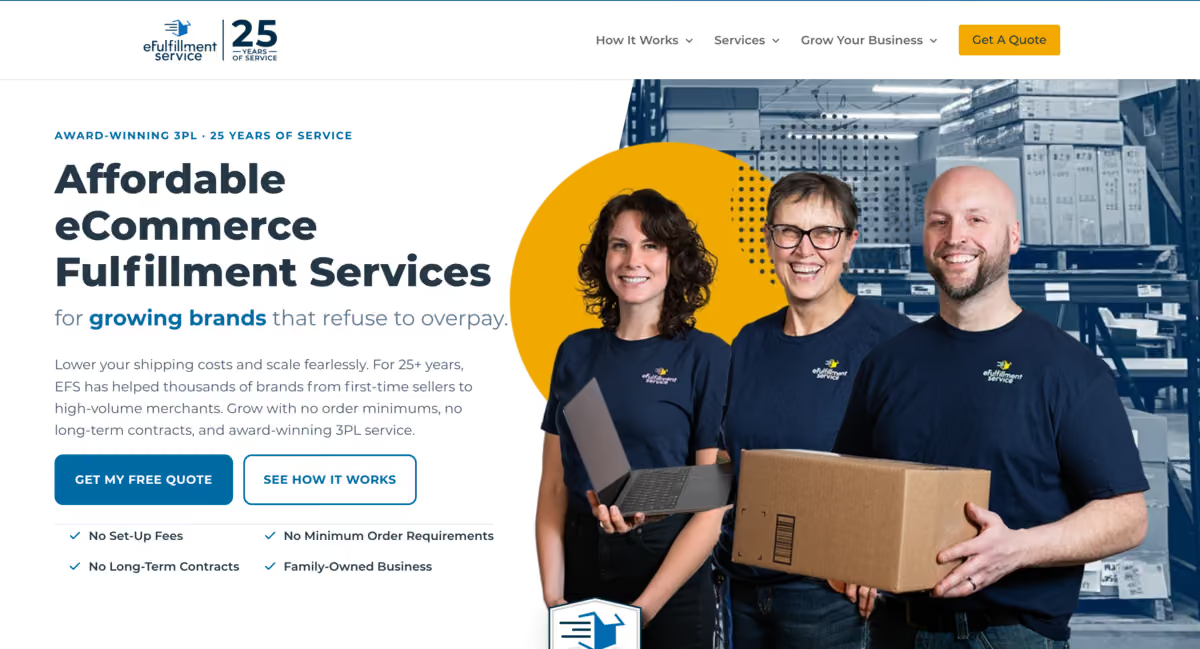
eFulfillment Service serves startups and growing businesses without imposing strict minimum order requirements or long-term contracts.
Its Shopify integration automatically imports orders, syncs inventory, and updates tracking information after shipments are processed.
You also get services like returns management, subscription fulfillment, kitting, and international shipping even if you are a small merchant.
This makes it one of the more accessible options if you are transitioning from self-fulfillment to outsourced logistics.
Key Services
- Shopify fulfillment
- Order picking and packing
- Inventory storage
- Returns processing
- Kitting and assembly
- Subscription box fulfillment
- International shipping
- Inventory reporting
My Evaluation
eFulfillment Service is one of the most accessible fulfillment providers for smaller Shopify businesses.
The absence of strict minimum order requirements and long-term contracts lowers the barrier to outsourcing fulfillment for the first time.
It is ideal for startups and growing brands that need reliable fulfillment without committing to enterprise-level pricing or order volumes.
While its warehouse network isn't as extensive as some larger competitors, it delivers solid value for businesses that prioritize flexibility over scale.
Pros & Cons
Pros
- Startup-friendly
- No strict volume requirements
- Flexible fulfillment services
- Easy Shopify integration
Cons
- Smaller warehouse network
- Less suitable for enterprise operations
Final Verdict
Score: 89/100
Best for: Small Shopify businesses and startups outsourcing fulfillment for the first time.
Skip if: You're already shipping high order volumes across multiple regions.
7. Shipfusion — Best for CPG & Subscription Brands
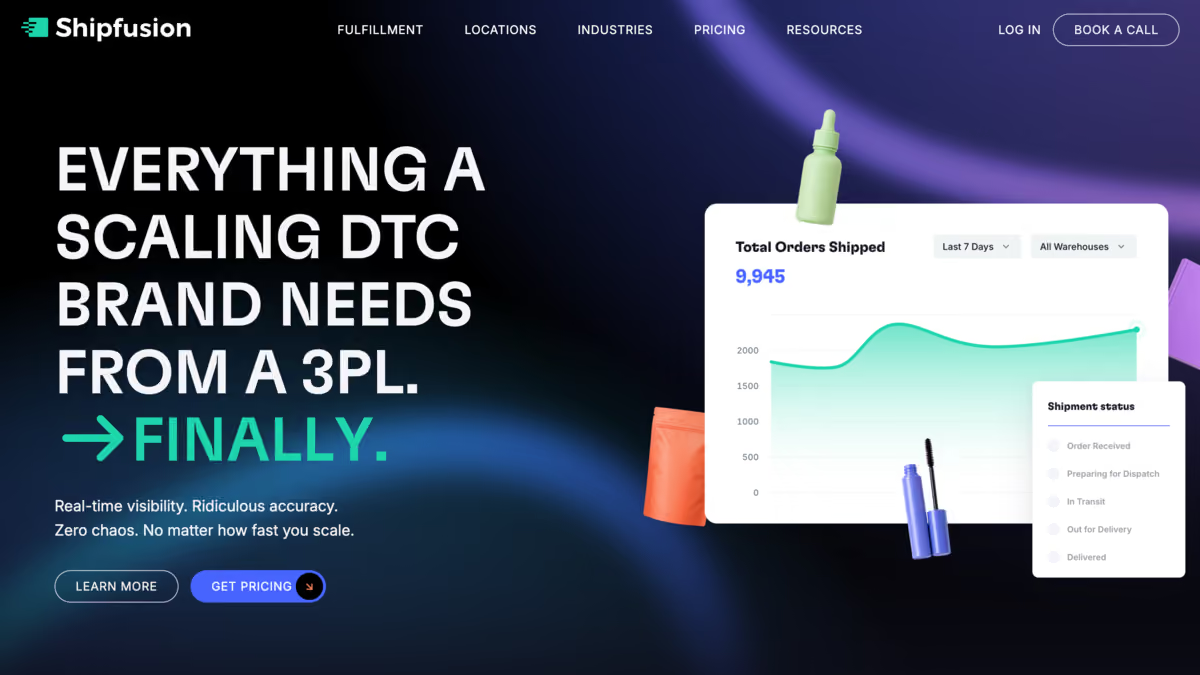
Shipfusion specializes in direct-to-consumer operations, subscription businesses, and consumer packaged goods (CPG), with services that support custom packaging, kitting, retail distribution, and recurring shipments.
You can integrate this platform with Shopify to sync orders and inventory.
In addition to DTC fulfillment, Shipfusion also supports wholesale and retail order fulfillment from the same inventory.
This flexibility makes it appealing for brands selling through multiple sales channels.
Key Services
- Shopify fulfillment
- Subscription box fulfillment
- Retail and wholesale fulfillment
- Inventory management
- Kitting and custom packaging
- Returns processing
- Multi-channel fulfillment
- Fulfillment reporting
My Evaluation
Shipfusion is a strong choice for brands that sell through multiple channels or require specialized fulfillment workflows.
Subscription boxes, custom packaging, wholesale orders, and retail distribution are all areas where it performs particularly well.
It’s best for consumer brands that want one fulfillment partner capable of supporting both direct-to-consumer and wholesale operations.
It offers more flexibility than many traditional 3PLs without becoming overly complicated to manage.
If your fulfillment needs are limited to standard ecommerce orders, however, some of its specialized capabilities may go unused, making a simpler provider a better fit.
Pros & Cons
Pros
- Excellent for CPG brands
- Strong subscription fulfillment
- Supports wholesale fulfillment
- Good inventory visibility
Cons
- Better suited for growing brands
- Pricing isn't publicly available.
Final Verdict
Score: 90/100
Best for: Consumer brands selling through both DTC and wholesale channels.
Skip if: You only need simple ecommerce fulfillment.
8. GoBolt — Best for Fast North American Fulfillment
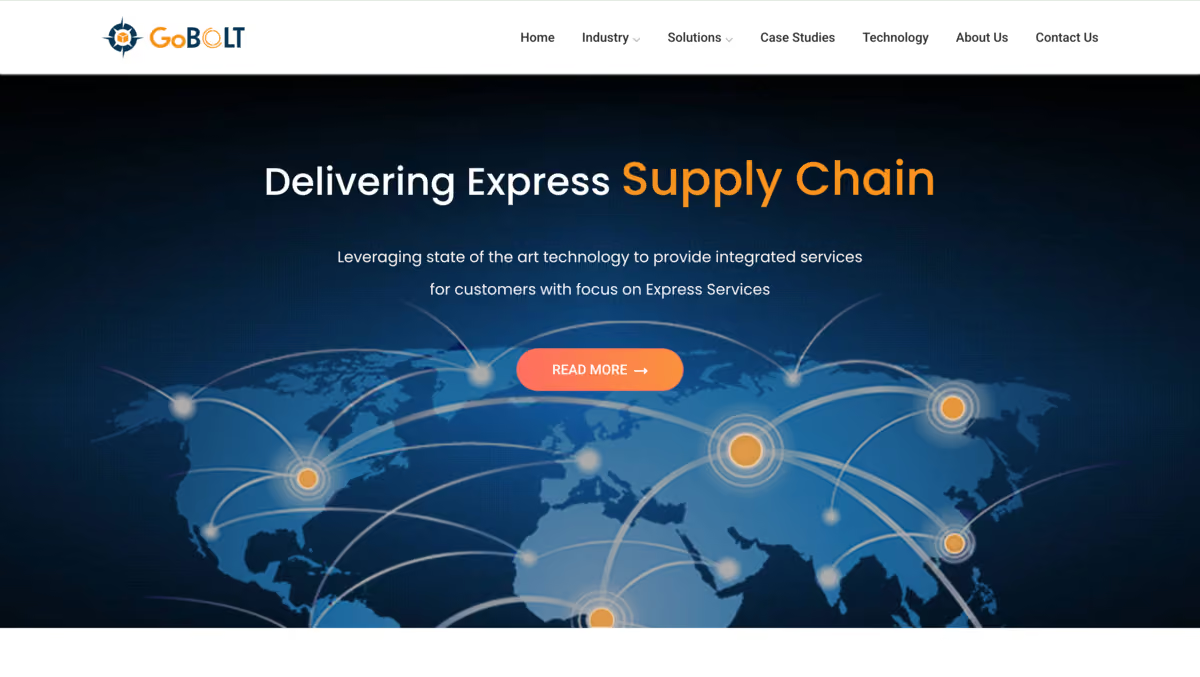
GoBolt is for Shopify merchants looking to offer faster delivery across the US and Canada.
Its fulfillment network is designed to reduce shipping times by storing inventory closer to customers, while its software automates order routing and shipment tracking.
You get services like returns management, inventory storage, freight services, and delivery optimization.
The thing that differentiates it is its emphasis on fast fulfillment and sustainability.
Key Services
- Shopify fulfillment
- US and Canada fulfillment network
- Inventory storage
- Returns management
- Freight services
- Order tracking
- Inventory reporting
- Sustainable delivery options
My Evaluation
GoBolt stands out for businesses focused on fast delivery across the United States and Canada.
Its fulfillment network helps merchants position inventory closer to customers, reducing shipping times without requiring multiple logistics partners.
I also appreciate its focus on sustainable logistics, which can be an added advantage for environmentally conscious brands.
It’s for Shopify merchants whose primary customer base is in North America and who want to improve delivery speed as they scale.
It’s not an ideal choice for you if you carry out international operations for fulfillment.
Pros & Cons
Pros
- Fast North American fulfillment
- Reliable Shopify integration
- Strong inventory visibility
- Sustainable logistics initiatives
Cons
- Limited international warehouse coverage compared to global providers
- Custom pricing
Final Verdict
Score: 90/100
Best for: Shopify merchants focused on fast fulfillment across North America.
Skip if: Your primary growth market is outside the US and Canada.
9. Flowspace — Best for Omnichannel Fulfillment
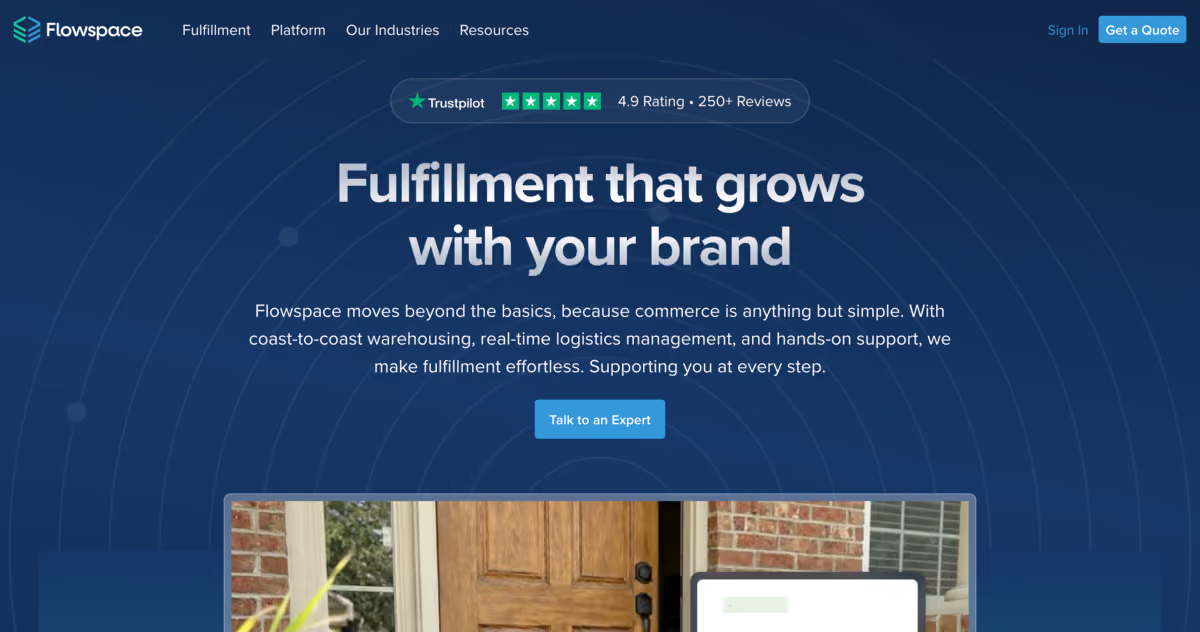
Flowspace is built for businesses that need a centralized fulfillment platform capable of handling inventory and orders across multiple sales channels.
You can connect Shopify and other ecommerce platforms to automatically sync inventory, import orders, and update shipment tracking.
Its nationwide warehouse network allows you to distribute inventory strategically, helping reduce shipping costs and improve delivery speeds.
Flowspace also offers inventory planning, transportation management, returns processing, and fulfillment analytics.
Key Services
- Shopify fulfillment
- Omnichannel order fulfillment
- Nationwide warehouse network
- Inventory management
- Returns processing
- Freight and transportation management
- Inventory analytics
- B2B fulfillment
My Evaluation
Flowspace is for merchants who have expanded beyond Shopify into marketplaces, retail, or wholesale channels.
What stands out to me is its ability to centralize fulfillment across multiple sales channels while giving businesses better control over inventory distribution and transportation.
Ideal for brands looking for a scalable omnichannel fulfillment solution rather than a basic 3PL.
While it offers impressive logistics capabilities, smaller Shopify businesses selling exclusively through one storefront may not need everything the platform provides.
Pros & Cons
Pros
- Strong omnichannel capabilities
- Large US warehouse network
- Good inventory visibility
- Suitable for scaling businesses
Cons
- Better suited for mid-market brands
- Pricing is customized
Final Verdict
Score: 89/100
Best for: Merchants selling across multiple channels beyond Shopify.
Skip if: Your business only fulfills Shopify orders and doesn't plan to expand into additional sales channels.
10. Quiet Platforms — Best for Enterprise Retail Brands
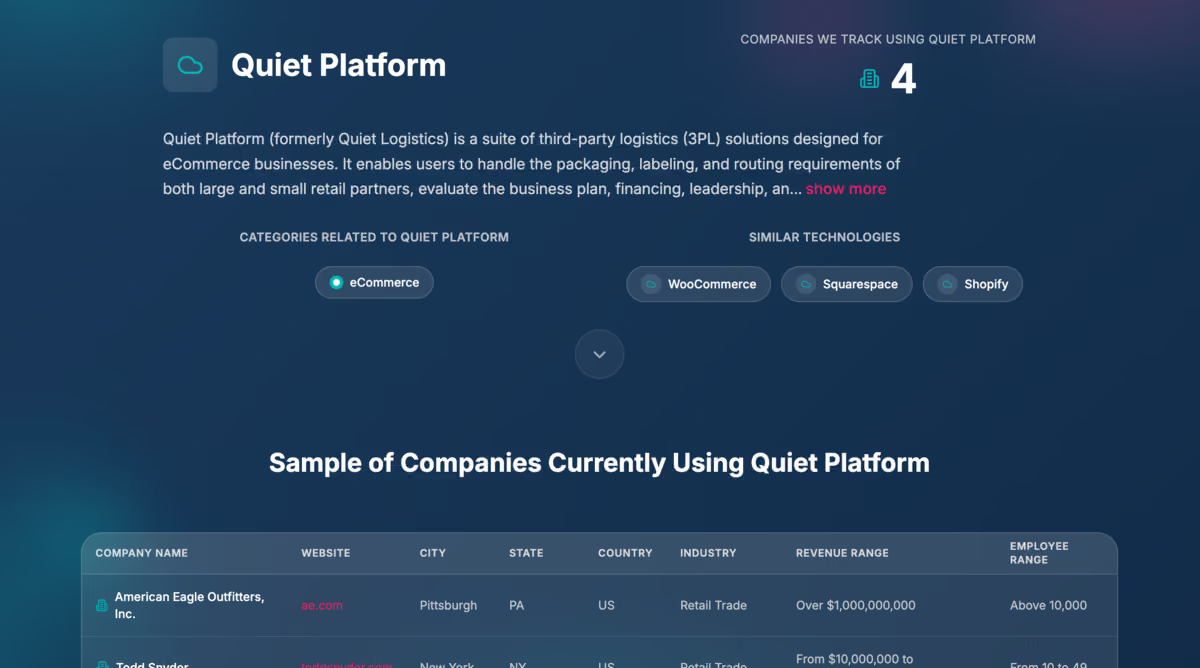
Quiet Platforms is an enterprise fulfillment platform for larger ecommerce and retail businesses requiring nationwide fulfillment, distributed inventory, and better logistics capabilities.
Integrates with Shopify while supporting warehouse operations, transportation management, and inventory distribution across its fulfillment network.
You can optimize inventory placement, reduce shipping distances, and improve delivery performance without managing multiple logistics providers.
The best part is that it offers technology with which you can make fulfillment decisions based on inventory availability, customer location, and shipping costs.
Key Services
- Shopify fulfillment
- Distributed inventory management
- Nationwide fulfillment network
- Transportation management
- Returns processing
- Order routing
- Warehouse analytics
- Omnichannel fulfillment
My Evaluation
Quiet Platforms is for enterprise retailers with a distributed fulfillment network, transportation technology, and sophisticated logistics capabilities.
I'd recommend Quiet Platforms to established retailers that require enterprise-grade fulfillment infrastructure and advanced inventory optimization.
This is an enterprise solution, so if your business is in the growth phase, then you won’t find much value with this platform.
Pros & Cons
Pros
- Built for enterprise fulfillment
- Strong logistics technology
- Excellent inventory distribution
- Supports omnichannel operations
Cons
- Not designed for smaller businesses
- Enterprise-focused pricing
Final Verdict
Score: 88/100
Best for: Enterprise and high-volume retail brands with complex fulfillment operations.
Skip if: You're a small or mid-sized Shopify business looking for a straightforward 3PL.
How to Choose the Best 3PL for Shopify
Finding the best 3PL for Shopify isn't about choosing the provider with the biggest warehouse network or the lowest shipping rates.
The right partner depends on how your business operates today and where you expect it to be in the next few years.
A fulfillment provider that works perfectly for a startup shipping 50 orders a month may struggle to support a brand processing thousands of daily orders.
Similarly, if you are handling a startup and choose an enterprise-grade provider for your needs, then you are signing yourself up for functionalities you don’t even need.
Before you start comparing providers, here are the factors that actually matter.
Shopify Integration
Since you have a Shopify store, our 3PL should work seamlessly with it.
Orders should sync automatically, inventory levels should update in real time, and customers should receive tracking information without manual intervention.
The more manual work involved, the greater the chance of fulfillment errors.
If you sell through multiple Shopify stores or additional marketplaces, it's also worth checking whether the provider can support those workflows as your business grows.
Warehouse Network
The location of your fulfillment centers has a direct impact on both delivery speed and shipping costs.
For example, if most of your customers are in the United States but your inventory is stored in a single warehouse on the West Coast, customers on the East Coast will generally wait longer and cost more to serve.
Providers with multiple strategically located warehouses allow inventory to be distributed closer to customers, helping reduce transit times while lowering shipping costs.
If international expansion is part of your roadmap, choosing a provider with warehouses in multiple countries can also simplify cross-border fulfillment.
Pricing Structure
Most Shopify 3PLs don't publish fixed pricing because fulfillment costs vary from one business to another.
So, instead of comparing headline prices, try to look at the complete pricing structure.
Total fulfillment costs comprise storage fees, receiving inventory, pick-and-pack charges, shipping costs, returns processing, account management fees, and minimum monthly commitments.
If you are thinking of choosing a provider with lower storage fees, then this can prove to be a wrong strategy.
Take into account all the features they are offering, the location, and other factors.
Requesting detailed quotes from your shortlist is usually the best way to make an accurate comparison.
Inventory Management
This is one of the most important factors that you must look out for.
If you are selling on multiple channels like Shopify, Amazon, or others, then choose the provider that gives you inventory tracking functionality; otherwise, you’ll be stuck wondering where your product is.
Some fulfillment providers simply store products and ship orders.
Others offer inventory tracking, reporting, demand forecasting, and multi-location inventory management that give merchants much greater visibility into their operations.
Better visibility makes it easier to avoid overselling, identify slow-moving products, and make informed purchasing decisions.
If your 3PL doesn’t offer enough inventory visibility, a tool like Sumtracker can help you keep stock synced across Shopify and other sales channels.
Scalability
If you are just starting out with your store and you are thinking that you should opt for a provider that handles low-volume orders.
Then let me tell you this thinking will lead you to change multiple providers in the future.
Changing fulfillment providers wastes a lot of time in processes like research, migration, etc, so it's worth thinking beyond your current order volume.
Opt for a provider that comfortably supports your business today as well as is capable of handling seasonal demand, new product launches, additional warehouses, and growth as your business expands.
Returns Management
This is no brainer that if you are selling something online, then you must tackle returns as well.
Returns are a core part of an ecommerce business, but the experience doesn't have to create extra work for your team.
Look for providers that handle inspections, restocking, exchanges, and return tracking efficiently.
A well-managed returns process not only improves customer satisfaction but also helps recover inventory faster and keeps your operations running smoothly.
Which Shopify 3PL Should You Choose?
The right 3PL depends on your order volume, product type, and growth stage. There's no single provider that's ideal for every Shopify merchant.
If you're looking for an all-around fulfillment partner that can scale with your business, ShipBob is one of the strongest options thanks to its extensive warehouse network, reliable Shopify integration, and mature fulfillment platform.
If you import products internationally or manage global supply chains, you should consider Flexport Fulfillment.
For subscription businesses or brands that frequently sell bundles and kits, ShipMonk offers specialized workflows that many general-purpose 3PLs don't.
If your catalog includes oversized, fragile, or expensive products, Red Stag Fulfillment is purpose-built for handling fragile items.
Merchants that prioritize warehouse visibility and operational reporting will likely find ShipHero the strongest fit, while eFulfillment Service remains an excellent option for startups and smaller businesses.
Brands expanding beyond Shopify into wholesale, marketplaces, or retail stores should consider Flowspace or Quiet Platforms, both of which offer stronger omnichannel capabilities than traditional fulfillment providers.
Before making a decision, always compare pricing, fulfillment locations, onboarding requirements, and service-level agreements, and request a personalized quote from your shortlisted providers.
Already have a 3PL?
You can use Sumtracker alongside it to keep inventory synced across Shopify and your other sales channels.
Try Sumtracker free for 14 days!
FAQs
What is a 3PL for Shopify?
A Shopify 3PL (third-party logistics provider) stores your inventory, fulfills customer orders, ships products, and often manages returns on your behalf.
How much does a Shopify 3PL cost?
You will need to request a quote from the providers to receive exact pricing, as most Shopify 3PLs offer custom pricing based on factors such as storage space, order volume, pick-and-pack fees, shipping destinations, and additional services.
Which Shopify 3PL is best for small businesses?
eFulfillment Service is a strong choice for startups and smaller Shopify merchants because it doesn't require large order volumes and offers flexible fulfillment services. Businesses expecting rapid growth may also consider ShipBob for its scalability.
Can I switch from one Shopify 3PL to another?
Yes. Many Shopify merchants switch 3PLs as their fulfillment requirements evolve. The migration usually involves transferring inventory to the new warehouse, reconnecting your Shopify store, and updating fulfillment settings.
Can I use more than one 3PL with Shopify?
Yes. Many growing Shopify merchants work with multiple 3PLs to reduce shipping times, expand into new regions, or separate domestic and international fulfillment. Shopify supports multiple fulfillment locations, allowing orders to be routed based on inventory availability and your fulfillment setup.
Conclusion
Choosing the right 3PL can have a significant impact on your shipping costs, delivery speeds, and customer experience.
While all of the providers on this list integrate with Shopify, they're built for different types of businesses.
Startups may prioritize affordability and flexible onboarding, while fast-growing brands often need Shopify fulfillment networks, better inventory visibility, and faster delivery times.
Businesses with specialized requirements, such as subscription boxes, oversized products, or international logistics, should also consider providers that cater to those needs.
Take the time to evaluate your order volume, product catalog, shipping destinations, and future growth plans before selecting a fulfillment partner.

Bhoomi writes about inventory management and multichannel selling at Sumtracker. Her focus is on solving real operational problems for Shopify, Amazon, and marketplace sellers through well-researched content. She covers everything from multi-location inventory syncing and stock error troubleshooting to replenishment planning and platform comparisons, turning complex eCommerce operations into clear, actionable guidance.
LinkedInRelated Articles
Tool and strategies modern teams need to help their companies grow.

Ready to Simplify Your Inventory Management?
Join hundreds of e-commerce merchants who rely on Sumtracker to save time, eliminate errors, and grow their business.
