.svg)
.avif)
Shopify Dropshipping vs Own Inventory Pros and Cons: A Complete Comparison


Launching your Shopify store?
But not sure if you should invest in your own inventory or just dropship it?
It's one of those very first decisions you need to make that has a huge impact on your business.
This one choice affects everything from startup costs and profit margins to customer experience and long-term scalability.
While dropshipping lets you start selling without buying inventory upfront, holding your own inventory gives you greater control over fulfillment, branding, and product quality.
In this guide, we'll compare both dropshipping and the own inventory model so that you can make the right choice for your business.
Understanding Shopify Dropshipping vs Own Inventory: The Core Difference
The biggest difference between dropshipping and holding your own inventory is who owns and fulfills the products after a customer places an order.
With dropshipping, a third-party supplier stores and ships the product directly to your customers. You focus on selling the products, while the supplier handles inventory storage and fulfillment.
With your own inventory, you purchase or manufacture products, store them yourself or with a fulfillment partner, and fulfill customer orders using your own stock.
Although the distinction seems simple, it influences almost every part of running an ecommerce business, from profitability and inventory planning to customer satisfaction and brand perception.
The table below compares both dropshipping and own inventory models across the factors that matter most.
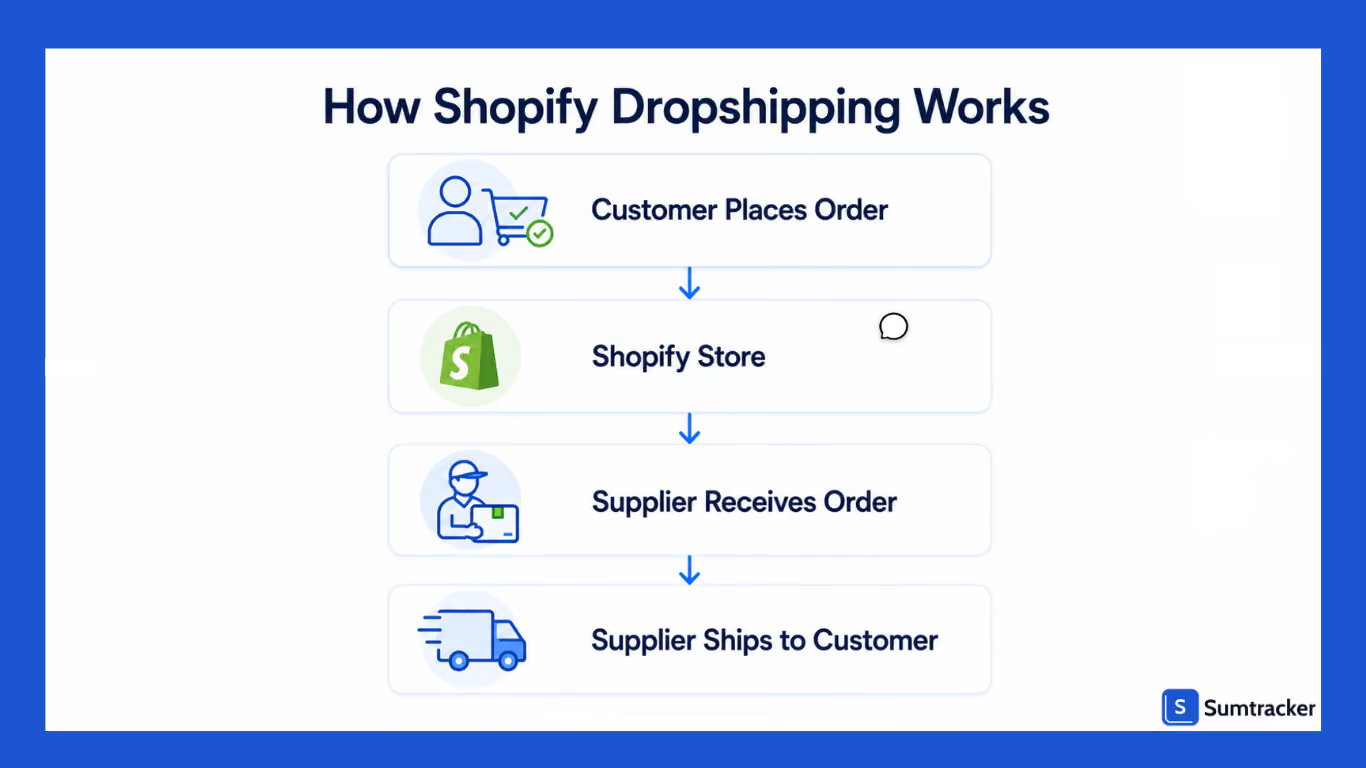
How Shopify Dropshipping Works
Dropshipping removes the need to purchase inventory before making a sale.
Since you don't own the inventory, you don't have to worry about unsold products or storage space.
This makes dropshipping a better option if you are stepping foot in the world of business.
Advantages of Shopify Dropshipping
Low upfront investment
In dropshipping, you don't need to invest in inventory before making a sale; this reduces financial risk and makes it easier for you to start your online business.
Launch your store faster.
You don't need to wait for inventory to arrive; you can just quickly get started with adding products, building product pages, and begin marketing.
Experiment with different product categories
With dropshipping, you can try out selling different categories and niches, and put up different pricing strategies without stocking up on inventory.
If a product doesn't perform well, you can replace it with another option.
Fewer operational responsibilities
When you don't own the inventory, you save yourself from several day-to-day operational tasks and can focus more time on business growth opportunities.
Real-world example:
As Palmetto State Armory (PSA) expanded beyond firearms into outdoor gear and accessories, it used dropshipping to grow its product catalog without holding additional inventory.
As the business scaled to around 3,000 dropship orders per day, PSA automated supplier and inventory workflows, positioning the business to scale its dropshipping operations by 2–3x without increasing operational overhead.
Read the full case study here.
Disadvantages of Shopify Dropshipping
Lower profit margins
The price that suppliers quote you includes charges for storage and fulfillment, which makes the amount you earn from sales lower.
Limited control over inventory
A supplier may run out of stock, discontinue a product, or experience fulfillment delays without much notice.
If your store continues accepting orders for unavailable products, you'll have to cancel orders or delay shipments, which can negatively affect the customer experience.
Dependence on supplier performance
Your customers interact with your brand, but much of their experience depends on your supplier.
If orders are shipped late, products arrive damaged, or packaging isn't handled properly, customers will associate those issues with your business rather than the supplier.
Limited branding opportunities
Creating a memorable brand is difficult when another company handles fulfillment.
You have limited influence over packaging, inserts, product presentation, or the overall unboxing experience.
How Holding Your Own Inventory Works
With the own-inventory model, you purchase products before customers order them.
Holding your own inventory requires more planning, but you also get complete visibility into your stock levels and greater control over fulfillment.
You decide how products are packaged, when they are shipped, and how inventory is replenished.
As your business grows, inventory management becomes an important operational process rather than simply keeping products on a shelf.
.avif)
Advantages of Holding Your Own Inventory
Complete control over inventory
When you own your inventory, it’s a no-brainer that you have clear knowledge about the availability and where it's stored.
You're not dependent on a supplier's stock levels or inventory updates. This gives you greater confidence when accepting customer orders.
Higher profit margins
Buying products in bulk often reduces the cost per unit compared to purchasing individual items through a dropshipping supplier.
While you'll invest more upfront, lower product costs can improve your profit margins over time.
Better customer experience
When you manage inventory, you decide how products are packed, how quickly orders are shipped, and how returns are handled.
This level of control allows you to create a better buying experience for your customers from the moment they place the order and receive it at their doorstep.
More opportunities to build your brand
Owning inventory gives you the flexibility to create a memorable experience through custom packaging, personalized inserts, branded labels, or bundled products.
These details may look small initially, but over time they help customers remember your business and encourage repeat purchases.
Disadvantages of Holding Your Own Inventory
Higher upfront investment
Unlike dropshipping, you'll need to purchase inventory before making sales.
This means part of your capital is tied up in products sitting on shelves until customers buy them.
Storage and fulfillment costs
Whether you use your own warehouse, rent storage space, or work with a fulfillment provider, storing products comes with ongoing expenses.
You'll also need to account for packing materials, shipping supplies, and fulfillment operations.
Risk of excess or obsolete inventory
Products that sell well today may become less popular over time, while seasonal inventory may lose relevance after a particular period.
If you purchase more inventory than you can sell, you'll have capital tied up in products that aren't generating revenue.
More operational complexity
Managing inventory involves much more than storing products.
As order volume increases, the inventory tasks become more difficult to manage manually, making inventory management systems an important part of daily operations.
Financial Comparison: When Does Holding Inventory Become More Profitable?
The cost of running a Shopify business goes beyond the initial investment.
While dropshipping usually costs less to start, owning inventory can become more profitable as your business grows.
The real question isn't which model is cheaper than the other; it's which one gives you more profit after covering operating costs.
When you're just starting, dropshipping keeps your financial risk low.
Holding inventory works differently.
You'll need to spend more money upfront because products need to be purchased before they're sold. However, this upfront investment often reduces your cost per unit, giving you healthier margins on every successful sale.
The difference becomes clearer when you compare the financial structure of both models.
If you're still experimenting with products, buying inventory can create unnecessary risk.
You may end up investing in products that don't sell as expected, leaving cash tied up in slow-moving stock.
The decision doesn't have to be all or nothing.
Many merchants gradually transition by stocking only their best-selling products while continuing to dropship slower-moving items.
This approach reduces financial risk while allowing the business to benefit from better margins where they matter most.
Cash Flow and Working Capital Comparison
Cash flow is one of the biggest differences between dropshipping and holding your own inventory, yet it's often overlooked when comparing the two business models.
While profit tells you whether your business is making money, cash flow determines whether you have enough money available to keep the business running.
If your store is profitable, you can still struggle with having too much cash tied up in excess inventory or other operating expenses.
Understanding how money moves through each model can help you avoid cash shortages and make smarter inventory decisions.
How Cash Flow Works in Dropshipping
With dropshipping, cash flow is relatively straightforward.
A customer pays you upfront for the order they place.
You then use part of that payment to purchase the product from your supplier, who fulfills the order. Since inventory isn't purchased in advance, very little capital is locked into stock.
For merchants who are just starting or have limited capital, this flexibility can make it easier to grow without taking on significant financial risk.
How Cash Flow Changes When You Hold Inventory
Owning inventory changes the timing of your expenses.
Instead of buying products after receiving an order, you're purchasing inventory weeks or even months before it generates revenue.
Until those products are sold, that money remains tied up in stock.
Ordering too much stock can leave you with limited funds for marketing or other business activities, while ordering too little may result in missed sales opportunities.
The Hybrid Approach: Combining Dropshipping and Your Own Inventory
Choosing between dropshipping and holding your own inventory doesn't have to be an all-or-nothing decision.
Like many Shopify merchants, you can also adopt a hybrid inventory approach, combining both models to balance flexibility, profitability, and operational efficiency.
Instead of treating dropshipping and owned inventory as competing strategies, think of them as tools that solve different business needs.
The key is knowing which products are best suited for each fulfillment model.
.avif)
Stock Your Best Sellers
Once you've identified products with consistent demand, it often makes sense to keep those items in your own inventory.
Since these products sell regularly, purchasing them in advance can help you:
- Improve profit margins.
- Maintain better inventory availability.
- Ship orders more quickly.
- Deliver a more consistent customer experience.
Because demand is relatively predictable, the risk of carrying inventory is lower than it is for newly launched products.
Dropship Slow-Moving Products
Not every product deserves warehouse space.
Some items sell occasionally but still add value to your catalog by giving customers more choices.
Purchasing these products in bulk can tie up capital without generating enough sales to justify the investment.
Using dropshipping for slower-moving products helps you expand your product catalog without more inventory costs or storage requirements.
This approach is particularly useful for products with unpredictable demand or niche appeal.
Test New Products Before Investing in Inventory
Launching a new product always involves some uncertainty.
Rather than purchasing inventory immediately, you can start by dropshipping the product to understand customer demand.
Once a product consistently performs well, you can transition it into your own inventory and take advantage of better margins and greater fulfillment control.
This reduces the risk of investing heavily in products that may not perform as expected.
Decision Framework: Which Shopify Business Model Is Right for You?
By now, you've seen that both dropshipping and holding your own inventory have their advantages.
The challenge isn't deciding which model is objectively better; it's determining which one aligns with your business today.
A business that's just getting started has very different needs from one that's processing a steady stream of orders every day.
Use the framework below to evaluate which approach best fits your current stage.
Choose Dropshipping If...
Dropshipping is a good fit when your priority is getting your business off the ground with minimal financial risk.
It may be the right choice if you:
- You're launching your first Shopify store.
- You have limited capital to invest in inventory.
- You're still testing products or exploring different niches.
- You want to validate customer demand before buying stock.
- You'd rather spend your time on marketing and sales than inventory management.
- Your product catalog changes frequently.
- You don't want to manage storage, packing, or shipping operations.
At this stage, flexibility is often more valuable than maximizing profit margins. The ability to experiment without committing to inventory can help you learn what works before making larger investments.
As discussed in the Dropship Unlocked Podcast, many new merchants get stuck trying to follow conflicting advice instead of committing to a business model that matches their goals.
Having a clear strategy from the start can make it easier to build momentum as your business grows.
Choose Own Inventory If...
Holding inventory becomes a stronger option once your business starts showing consistent demand and you're ready to build a more scalable operation.
It may be the better choice if you:
- Your best-selling products generate consistent sales.
- You want better control over fulfillment and inventory.
- Improving profit margins has become a priority.
- You want to create a stronger brand experience.
- Faster shipping and order accuracy are important to your customers.
- You're comfortable investing in inventory to support future growth.
- You have processes in place to manage inventory effectively.
At this stage, the additional operational effort is often outweighed by the increased control and long-term business benefits.
Choose the Hybrid Model If...
A hybrid approach works well for merchants who want the flexibility of dropshipping while taking advantage of the benefits of holding inventory.
It may be the right fit if you:
- Some products sell consistently while others don't.
- You regularly launch new products.
- You want to improve margins without purchasing inventory for every SKU.
- You're gradually transitioning away from a fully dropshipping business.
- You want to reduce inventory risk while maintaining a broad product catalog.
This approach allows you to invest in inventory where it creates the most value while keeping slower-moving or experimental products on a dropshipping model.
FAQS
Is dropshipping better than holding your own inventory?
Neither is better for every business. Dropshipping suits beginners, while holding inventory offers greater control, better margins, and stronger branding as your business grows.
Can I use both dropshipping and my own inventory in the same Shopify store?
Yes. Many merchants stock their best-selling products and dropship new, seasonal, or slow-moving items to balance profitability, flexibility, and inventory risk.
When should I switch from dropshipping to holding inventory?
Switch when you have consistent product demand, predictable sales, sufficient working capital, and want better margins, faster fulfillment, and more control over customer experience.
Is holding inventory riskier than dropshipping?
Yes. Holding inventory requires upfront investment and carries the risk of unsold stock, while dropshipping minimizes inventory-related financial risk by purchasing products only after a sale.
How do I decide which products to stock?
Stock products with consistent demand and predictable sales. Continue dropshipping products that are new, seasonal, or sell infrequently to reduce inventory risk.
Conclusion
Choosing between Shopify dropshipping and holding your own inventory isn't about finding a universally better business model; it's about choosing the one that fits your current stage of growth.
If you're launching a new store with limited capital or testing product demand, dropshipping offers a low-risk way to get started.
As your business grows and sales become more predictable, holding inventory can help you improve profit margins, deliver a better customer experience, and build a stronger brand.
You don't have to commit to one model forever.
Many successful Shopify merchants start with dropshipping, gradually stock their best-selling products, and eventually adopt a hybrid approach that balances flexibility with profitability.
The right fulfillment strategy is the one that supports sustainable growth for your business, not just today, but as you scale

Bhoomi writes about inventory management and multichannel selling at Sumtracker. Her focus is on solving real operational problems for Shopify, Amazon, and marketplace sellers through well-researched content. She covers everything from multi-location inventory syncing and stock error troubleshooting to replenishment planning and platform comparisons, turning complex eCommerce operations into clear, actionable guidance.
LinkedInRelated Articles
Tool and strategies modern teams need to help their companies grow.
.avif)

Ready to Simplify Your Inventory Management?
Join hundreds of e-commerce merchants who rely on Sumtracker to save time, eliminate errors, and grow their business.