.svg)
.avif)
Reorder Point for Inventory Replenishment: A Practical Guide


Stockouts don’t happen because businesses forget to reorder.
They happen because they reorder too late.
If you’ve ever stared at your inventory dashboard wondering, “Should I reorder this now… or can it wait a few more days?” you’re not alone.
That uncertainty is where most inventory problems begin.
This is exactly where reorder points make a difference.
A properly set reorder point tells you precisely when to restock, based on real demand and lead time, so you replenish before stock runs out, without overbuying or tying up unnecessary cash.
In this guide, we’ll break down what reorder points are, how to calculate them accurately, and how to use them effectively in modern, data-driven inventory replenishment systems.
.avif)
What is a Reorder Point in Inventory Management?
A reorder point (ROP) is the inventory level at which you need to place a new order to replenish stock before you run out.
In simple terms:
When your stock hits this number → it’s time to reorder.
The reorder point ensures you have enough inventory to cover sales during your supplier’s lead time.
For example:
- If you sell 10 units per day
- And your supplier takes 7 days to deliver
- You’ll sell 70 units during that time
So you must reorder before your stock falls below that level otherwise, you risk stockouts.
The reorder point is proactive, not reactive. It prevents inventory gaps before they happen.
Why Reorder Point is Critical for Inventory Replenishment
Inventory replenishment isn’t just about placing purchase orders. It’s about timing.
You can reorder regularly and still run out of stock. You can reorder in bulk and still hurt cash flow. The difference isn’t effort, it’s precision.
That’s why the reorder point is so critical.
Preventing Stockouts During Lead Time
Most stockouts occur during lead time, the period between placing an order and receiving it.
If you wait until inventory is “almost finished,” it’s already too late. A reorder point ensures you place the order early enough to cover sales during supplier lead time.
It builds prevention into your system.
Protecting Revenue and Customer Satisfaction
When a product goes out of stock:
- You lose immediate sales
- Customers may switch to competitors
- Your ranking on marketplaces can drop
- Backorders create operational stress
Reorder points reduce this risk by creating a clear trigger for replenishment.
Improving Cash Flow and Inventory Efficiency
Reordering too early leads to excess stock.
Excess stock means:
- Capital tied up in inventory
- Higher storage costs
- Increased risk of dead stock
A well-calculated reorder point balances availability with financial efficiency. You reorder when necessary not out of fear.
Eliminating Subjective Purchasing Decisions
Without reorder points, purchasing becomes reactive:
- “Sales are picking up, maybe we should reorder.”
- “Stock looks low, let’s place an order just in case.”
With reorder points, the decision becomes objective:
When stock hits X → reorder.
That clarity reduces decision fatigue and operational errors.
Supporting Scalable Inventory Operations
Manual monitoring works when you have 10 SKUs.
It breaks when you have 100 or 1,000.
Reorder points allow you to systematize replenishment across products, warehouses, and sales channels. They create a repeatable framework that scales with your business.
The Reorder Point Formula (With Examples)
The reorder point formula determines exactly when you should place a new order based on demand and supplier lead time.
The standard formula is:
Reorder Point = (Average Daily Usage × Lead Time) + Safety Stock
It combines three key elements of inventory management: how fast you sell, how long suppliers take, and how much buffer you need.
.avif)
Breaking It Down
Average Daily Usage
How many units you sell per day on average.
Example: 600 units sold in 60 days = 10 units per day
Lead Time
How many days does it take your supplier to deliver inventory?
Example: 8 days.
Safety Stock
Extra inventory is kept as a buffer against demand spikes or delays.
Example Calculation
Let’s assume:
- Average daily sales = 10 units
- Lead time = 8 days
- Safety stock = 20 units
Demand during lead time:
10 × 8 = 80 units
Add safety stock:
80 + 20 = 100 units
Your reorder point is 100 units.
This means when stock drops to 100 units, it’s time to reorder, ensuring you can continue selling while waiting for new inventory to arrive.
How Demand Variability Impacts Your Reorder Point
In real life, demand isn’t stable.
Some days you sell 5 units. Some days you sell 20.
This variability directly impacts your reorder point.
If demand fluctuates heavily:
- You need higher safety stock
- Your reorder point increases
- You reduce risk of stockouts
If demand is consistent:
- Safety stock can be lower
- Reorder point remains stable
- Inventory investment is more predictable
Products with unpredictable demand require more buffer. Stable products need less.
Understanding your sales volatility is just as important as knowing your average sales.
Step-by-Step Guide to Setting Reorder Points for Your Products
Knowing the formula is one thing. Applying it correctly across your products is what makes it powerful.
Here’s a practical, structured approach you can follow.
.avif)
Step 1: Analyze Historical Sales Data
Start with reliable data. Review at least 60–90 days of sales history for each SKU.
This helps you calculate realistic average daily usage instead of relying on assumptions.
If demand is highly seasonal, use data from the same period last year for better accuracy.
Step 2: Calculate Average Daily Usage
Use this formula:
Average Daily Usage = Total Units Sold ÷ Number of Days
This gives you a baseline demand rate for each product.
Avoid using unusually high or low sales periods unless they reflect normal operations.
Step 3: Determine Actual Supplier Lead Time
Confirm how long it truly takes to receive inventory after placing an order.
Do not rely on ideal or promised timelines. Use:
- Average delivery time
- Past shipment history
- Realistic supplier performance
Underestimating lead time is one of the most common causes of stockouts.
Step 4: Set Appropriate Safety Stock
Safety stock protects you from:
- Demand fluctuations
- Shipping delays
- Supplier inconsistencies
Products with unpredictable sales or unreliable suppliers require higher safety stock.
Stable, predictable SKUs can operate with a smaller buffer.
Step 5: Apply the Reorder Point Formula
Use the complete formula:
Reorder Point = (Average Daily Usage × Lead Time) + Safety Stock
This gives you a clear reorder trigger for each SKU.
Step 6: Review and Adjust Regularly
Reorder points should not be static.
Review them:
- Every 30–60 days
- After major sales shifts
- During seasonal changes
- When supplier lead times change
Inventory is dynamic, your reorder points should be too.
Common Mistakes When Setting Reorder Points
Reorder points are simple in theory but small miscalculations can lead to costly inventory problems. Many businesses implement them, but not always correctly.
Here are the most common mistakes to avoid.
1. Ignoring Safety Stock
Relying only on average daily sales and lead time assumes everything will go perfectly.
In reality:
- Demand fluctuates
- Shipments get delayed
- Suppliers miss deadlines
Without safety stock, even minor disruptions can cause stockouts.
2. Using Unrealistic Lead Times
Many businesses calculate reorder points based on “promised” lead times rather than actual delivery history.
If your supplier says 7 days but consistently delivers in 9–10 days, your reorder point will be too low.
Always base calculations on realistic, historical averages.
3. Using Too Little Sales Data
Calculating average daily usage from a short or abnormal time frame (like a promotional week) skews the numbers.
Use at least 60–90 days of stable sales data or seasonal data when appropriate.
4. Treating All SKUs the Same
Not all products behave similarly.
- Fast-moving SKUs require tighter monitoring
- Slow-moving products may need lower safety stock
- Highly volatile products require larger buffers
Applying a single rule across all SKUs often leads to overstocking some and understocking others.
5. Not Updating Reorder Points Regularly
Demand changes. Suppliers change. Lead times change.
If reorder points are calculated once and never reviewed, they quickly become outdated.
Revisit them periodically especially after major sales shifts or supplier changes.
6. Confusing Reorder Point with Order Quantity
The reorder point tells you when to reorder not how much to order.
Order quantity depends on factors like:
- Economic order quantity (EOQ)
- Budget constraints
- Storage capacity
- Supplier minimum order quantities
Mixing these concepts can distort your replenishment strategy.
Automating Reorder Points Using Inventory Management Software
As your SKU count grows and sales happen across multiple channels, manually tracking reorder points becomes unreliable.
Automation ensures your replenishment decisions are based on real-time data not outdated spreadsheets or assumptions.
.avif)
Here’s how Sumtracker simplifies and automates reorder point management:
1. Real-Time Inventory Sync
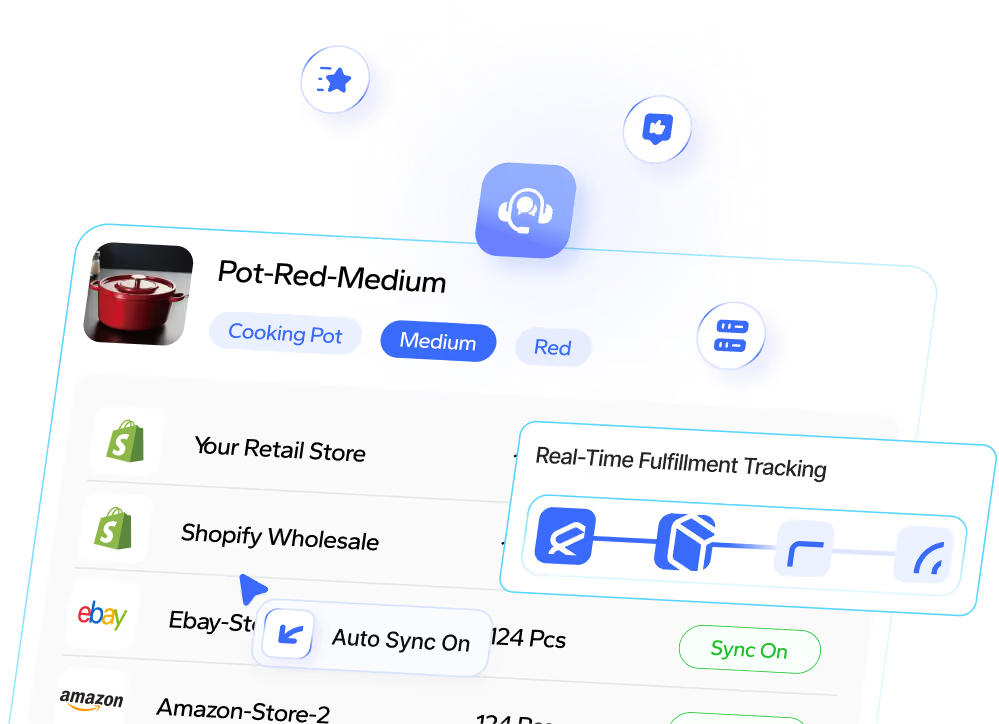
Inventory updates instantly across Shopify, Amazon, Etsy, and other connected channels. Reorder triggers are based on live stock levels, not delayed reports.
2. SKU-Level Reorder Points
Set customized reorder thresholds per product based on sales velocity, lead time, and safety stock requirements.
3. Automated Low Stock Alerts
Get notified when inventory reaches its reorder point so you can place purchase orders on time — without constant manual checks.
4. Multi-Location Inventory Visibility
Manage stock across multiple warehouses in one centralized dashboard to prevent duplicate purchasing or stock imbalances.
5. Integrated Purchase Order Management
Create and track purchase orders directly within the system, ensuring a smooth replenishment workflow from reorder trigger to restocking.
Conclusion
Reorder points turn inventory replenishment from a guessing game into a controlled, data-driven process.
By combining sales velocity, lead time, and safety stock, you create a clear trigger that protects revenue, improves cash flow, and reduces operational stress.
The formula is simple but the discipline of applying it consistently is what drives real results.
As your business grows and inventory complexity increases, automation becomes the key to maintaining accuracy at scale.
If you want to prevent stockouts without overstocking, it’s time to move beyond spreadsheets.
Start using Sumtracker to automate reorder points and make smarter replenishment decisions with confidence.
FAQs
1. What is the difference between reorder point and safety stock?
A reorder point is the stock level that triggers a new order. Safety stock is the extra buffer inventory kept to handle demand spikes or supplier delays. Safety stock is included within the reorder point calculation.
2. How often should reorder points be updated?
Reorder points should be reviewed every 30–60 days or whenever sales velocity, seasonality, or supplier lead times change. Regular updates ensure your replenishment decisions remain aligned with current demand patterns.
3. Can reorder points completely eliminate stockouts?
No system can eliminate stockouts entirely. However, accurate reorder points combined with appropriate safety stock significantly reduce the risk of running out during lead time or unexpected demand surges.
4. Do fast-moving and slow-moving products require different reorder strategies?
Yes. Fast-moving products usually require higher reorder points and tighter monitoring, while slow-moving items can operate with lower buffers. Each SKU should be calculated individually based on demand patterns.
5. Is automation necessary for managing reorder points?
Manual tracking works for small inventories. As SKU counts and sales channels grow, automation ensures reorder decisions are based on real-time data, reducing errors and improving scalability.
Conclusion

Bhoomi writes about inventory management and multichannel selling at Sumtracker. Her focus is on solving real operational problems for Shopify, Amazon, and marketplace sellers through well-researched content. She covers everything from multi-location inventory syncing and stock error troubleshooting to replenishment planning and platform comparisons, turning complex eCommerce operations into clear, actionable guidance.
LinkedInRelated Articles
Tool and strategies modern teams need to help their companies grow.
.avif)

Ready to Simplify Your Inventory Management?
Join hundreds of e-commerce merchants who rely on Sumtracker to save time, eliminate errors, and grow their business.