.svg)
Top 10 Shopify Demand Forecasting Software for 2026


If you run a Shopify store, demand rarely behaves the way you expect it to.
A product that sold steadily last month suddenly spikes. Another one slows down without warning. And before you know it, you are either scrambling to restock or sitting on inventory that is not moving.
Demand forecasting software exists to reduce that uncertainty. Instead of guessing what to reorder and when, these tools help Shopify merchants plan inventory based on real sales patterns, seasonality, and growth trends.
In this guide, we break down the top Shopify demand forecasting software options for 2026, what to look for in a forecasting tool, and how different solutions fit different types of merchants.
Why Demand Forecasting Matters for Shopify Stores in 2026
Shopify stores are operating in a far more complex environment than they did a few years ago.
Most merchants now sell across multiple channels, run frequent promotions, and deal with longer or less predictable supplier lead times. At the same time, customer expectations around fast shipping and product availability continue to rise.
Demand forecasting helps bring structure to that complexity. Instead of reacting to stockouts or overordering after the fact, merchants can plan inventory ahead of demand. This means fewer missed sales, healthier cash flow, and less stress during high-volume periods.
In 2026, forecasting is less about “perfect predictions” and more about making informed inventory decisions with confidence.
What Shopify Merchants Should Look for in Demand Forecasting Software
Choosing demand forecasting software is less about fancy charts and more about how well the tool fits into everyday Shopify operations. These are the key areas merchants should pay attention to.
Reliable Shopify Integration
Forecasting starts with accurate data. The software should sync cleanly with Shopify and update automatically as sales happen. If inventory or order data is delayed or incomplete, forecasts quickly become unreliable.
Clear Reorder Recommendations
A good forecast should lead to clear actions. Shopify merchants should be able to see exactly what needs to be reordered, in what quantity, and by when. Tools that turn forecasts into simple reorder guidance are far more useful than ones that only show projections.
Support for Seasonality and Growth
Sales patterns change throughout the year. Demand forecasting software should account for seasonal trends, sales spikes, and long-term growth instead of relying only on recent sales history. This helps merchants plan ahead rather than constantly catching up.
Ease of Use for Lean Teams
Most Shopify businesses do not have dedicated planning teams. Forecasting tools should be easy to understand, quick to set up, and usable without spreadsheets or complex configurations. If the tool is hard to trust or interpret, it will not be used.
Lead Time and Supplier Planning
Forecasts are only effective when they align with real supplier timelines. The software should factor in lead times and purchasing cycles so merchants know when to place orders, not just how much to buy.
Scalability as the Business Grows
What works for a small store may not work at scale. Shopify merchants should look for forecasting software that can grow with their business, support higher order volumes, and adapt as operations become more complex.
Here's the best 10 demand forecasting software for Shopify in 2026:
Sumtracker
Sumtracker is a demand forecasting and inventory planning platform built for fast-growing eCommerce brands. It combines accurate real-time inventory syncing with practical forecasting insights, helping merchants stay in stock without relying on spreadsheets or complex planning tools.
%20(1).avif)
Key Features
- Real-time inventory sync across Shopify, Amazon, Etsy, eBay, and Walmart
- Demand-based forecasting driven by historical sales trends and stock movement
- Clear reorder recommendations with suggested quantities and timing
- Purchase order creation, receiving, and supplier tracking
- Multi-location inventory visibility with centralized planning
- Inventory health reports covering stock coverage, sell-through, and low-stock risk
Pros
- Forecasting is directly tied to live inventory data, reducing planning errors
- Very easy to adopt for Shopify teams without dedicated planners
- Strong multichannel support with consistent stock accuracy
- Helps prevent both stockouts and overstocking with clear, actionable insights
Cons
- Not designed for advanced financial scenario modeling
- Limited manufacturing and MRP-style workflows
Pricing
- Starts from $59/month with a free trial available.
Customer Reviews
- Rated 5 stars on Shopify.
- Highly rated by users for ease of use, fast onboarding, and reliable inventory forecasting.
- Merchants highlight its simplicity and how it saves hours on restocking, purchasing, and day-to-day inventory management.
.avif)
Inventory Planner by Mipler
Inventory Planner by Mipler is a lightweight Shopify app focused on inventory planning and demand forecasting. It is suited for merchants who want simple planning tools without complexity.
.avif)
Key Features
- Inventory planning and forecasting
- Basic reorder recommendations
- Shopify-native setup
Pros
- Simple and easy to use
- Quick Shopify integration
- Good for small stores
Cons
- Limited forecasting depth
- Not suitable for complex operations
Pricing
- Starts at $29.99/ month with free plan available.
Customer Reviews
- Rated highly for simplicity and ease of setup.
IFH – Inventory Forecasting Hero
Inventory Forecasting Hero is a simple Shopify app designed to help merchants forecast demand and restock on time. It focuses on clarity rather than advanced analytics.
.avif)
Key Features
- Demand forecasting
- Restock recommendations
- Simple inventory planning dashboard
Pros
- Very easy to understand
- Good for small Shopify stores
- Minimal setup required
Cons
- Not suitable for scaling brands
- Limited forecasting sophistication
Pricing
- Starts at $25/ month with free plan available
Customer Reviews
- Rated 4.9 stars on Shopify app store.
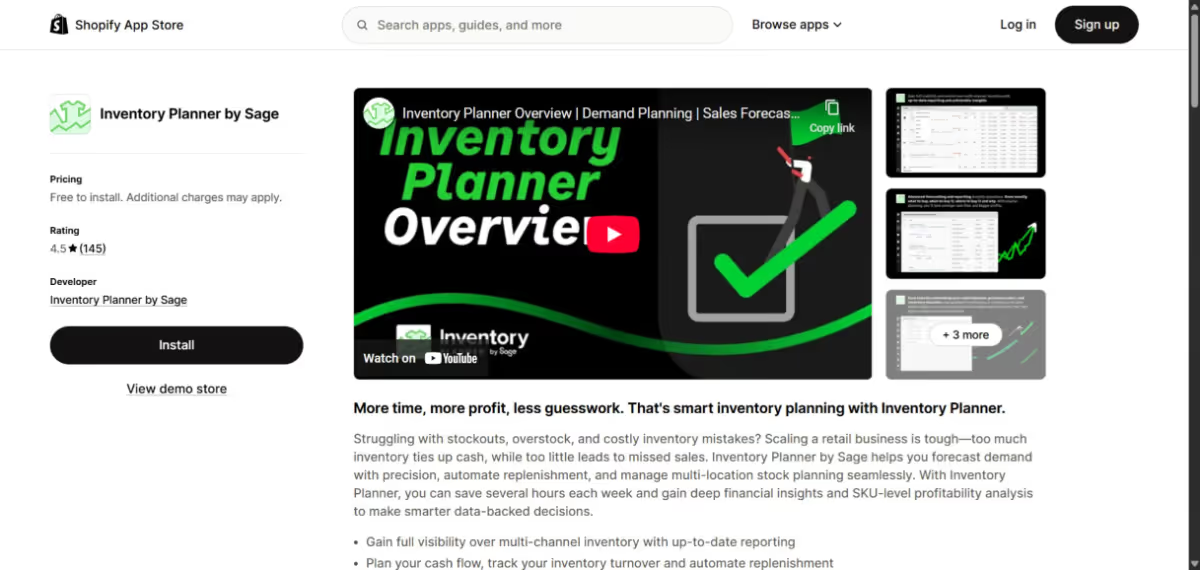
Inventory Planner by Sage
Inventory Planner is a well-known demand forecasting tool used by larger and more mature Shopify brands. It focuses heavily on analytics and long-term purchasing decisions.
Key Features
- Advanced demand forecasting models
- Automated purchase suggestions
- Stock coverage and sell-through analysis
- Multi-location planning
Pros
- Powerful forecasting logic
- Detailed planning reports
- Suitable for data-driven teams
Cons
- Can feel complex for smaller teams
- Higher cost compared to Shopify-first tools
Pricing
- Custom pricing based on business size and SKU count.
Customer Reviews
- Rated 4.4 stars on Shopify
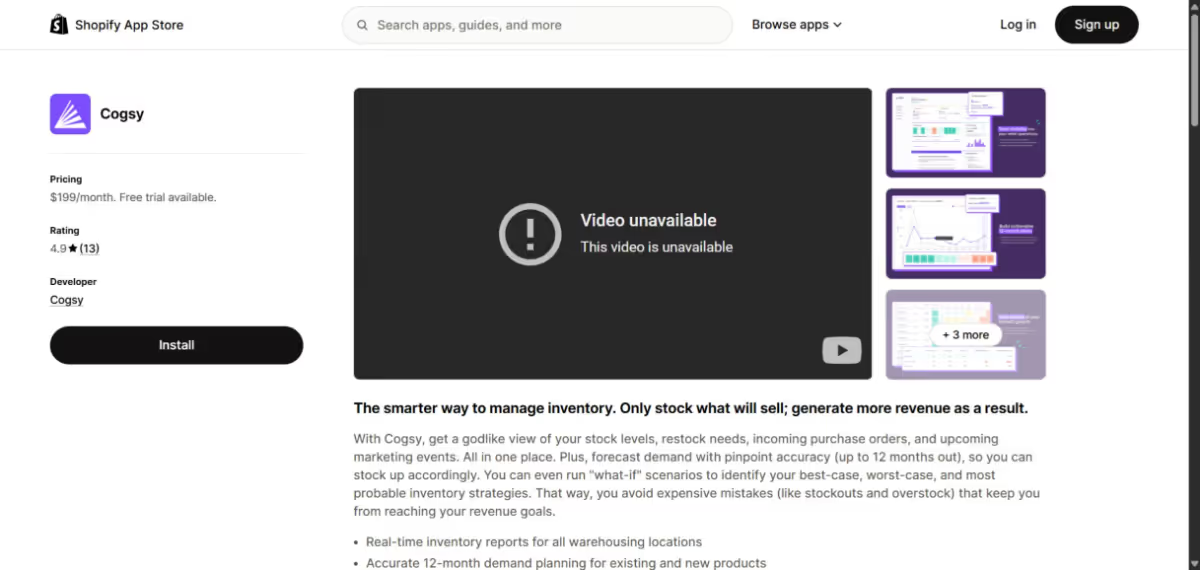
Cogsy
Cogsy positions itself as a planning platform for fast-growing DTC and Shopify brands. Its forecasting focuses on forward-looking inventory coverage rather than day-to-day stock control.
Key Features
- Demand forecasting and inventory coverage tracking
- Scenario planning for growth
- Automated reorder reminders
- Supplier lead-time planning
Pros
- Strong for long-term planning
- Helpful for cash-aware inventory decisions
Cons
- Less focused on real-time inventory accuracy
- Not ideal for operational inventory management
Pricing
- Starts from $199/month
Customer Reviews
- Rated 4.9 stars on Shopify but only 13 reviews are available.
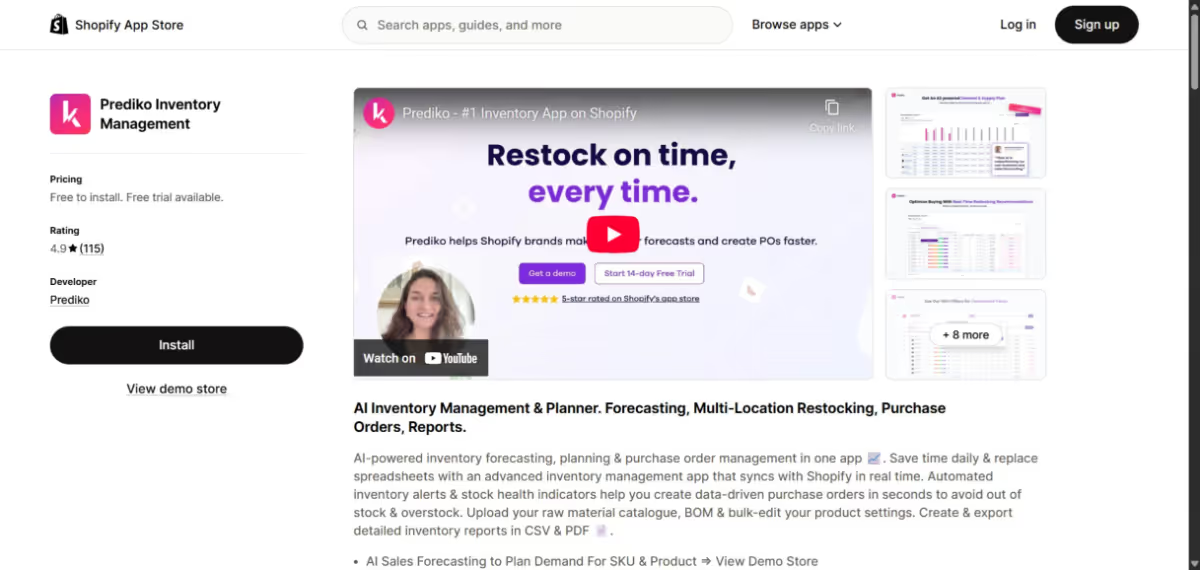
Prediko
Prediko is a Shopify-focused demand forecasting tool built around automation. It is designed for merchants who want forecasts and reorder suggestions with minimal setup.
Key Features
- Predictive demand forecasting
- Automated reorder recommendations
- Shopify-native integration
- Sales and inventory insights
Pros
- Quick to implement
- Clean and simple interface
Cons
- Limited customization for advanced planning
- Less control over forecasting assumptions
Pricing
- Starts from $49/month
Customer Reviews
- Rated 4.9 on Shopify app store with some users complaining about time-consuming setup
StockTrim
StockTrim is a statistical demand forecasting tool used by multi-channel retailers, including Shopify sellers. It focuses primarily on replenishment planning rather than inventory operations.
.avif)
Key Features
- Statistical demand forecasting
- Multi-channel sales support
- Reorder quantity calculations
- Supplier planning tools
Pros
- Strong forecasting logic
- Useful for replenishment planning
Cons
- Not Shopify-first in design
- Limited inventory workflow features
Pricing
- Starts from $199/month
Customer Reviews
- Very limited reviews available on Shopify app store.
Netstock
Netstock is an advanced demand forecasting platform typically used by mid-market and ERP-connected businesses. Shopify merchants usually adopt it when inventory complexity increases significantly.
.avif)
Key Features
- Demand forecasting and optimization
- Inventory and supply planning
- ERP integration support
- Advanced analytics
Pros
- Deep forecasting and optimization
- Suitable for complex operations
Cons
- Heavy setup and onboarding
- Overkill for most Shopify SMBs
Pricing
- Custom pricing available
Customer Reviews
- Users praise its inventory optimization and supply planning capabilities.
Katana Cloud Inventory
Katana is primarily an inventory and production management tool with basic demand forecasting features. It is often used by Shopify merchants involved in manufacturing or assembly.

Key Features
- Inventory and production planning
- Material requirements forecasting
- Shopify integration
- Multi-location inventory tracking
Pros
- Strong for production-based businesses
- Good visibility into materials and stock
Cons
- Forecasting is not its core strength
- Limited demand planning depth
Pricing
- Starts from $399/month
Customer Reviews
- Rated 4.6 stars on Shopify App Store.
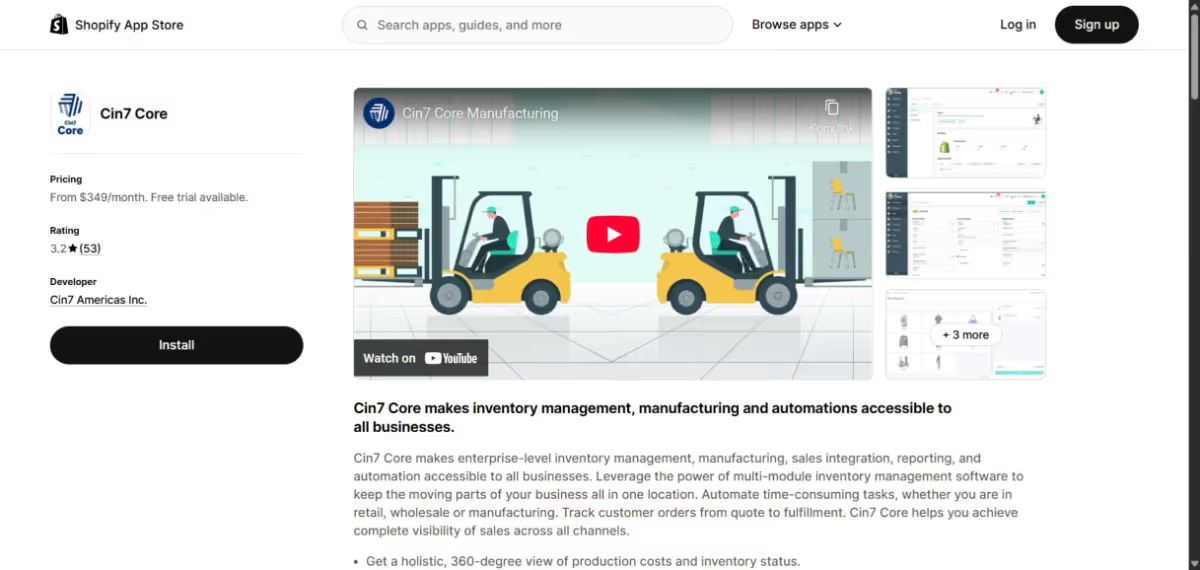
Cin7 Core
Cin7 Core combines inventory management, forecasting, and operational workflows in one platform. It is designed for Shopify merchants managing complex, multi-channel operations.
Key Features
- Demand forecasting and replenishment
- Purchase and order management
- Warehouse and inventory workflows
- Multi-channel support
Pros
- All-in-one operational platform
- Scales with business complexity
Cons
- Can feel overwhelming
- Higher cost and setup effort
Pricing
- Starts from $349/month
Customer Reviews
- Rated 3.4 stars on Shopify app store
Conclusion: Plan Demand With Confidence in 2026
Demand forecasting is no longer about chasing perfect predictions. For Shopify merchants in 2026, it is about making confident inventory decisions before problems show up.
The right forecasting software helps you move from reactive restocking to planned growth. Whether you are running a small store or managing a complex, multi-channel operation, the goal is the same to stay in stock.
As this list shows, not all tools approach forecasting the same way. Some focus on analytics, others on automation. The best solution is one that fits your workflow today and continues to support you as your business scales.
If you are looking for a Shopify-first demand forecasting tool that combines accurate inventory syncing, clear reorder guidance, and simple planning workflows, Sumtracker is built for exactly that.
👉 Start a free trial of Sumtracker and see how demand forecasting can become a daily advantage
FAQS
1. What is demand forecasting for Shopify stores?
Demand forecasting is the process of predicting future product demand using historical sales data, seasonality, and growth trends. For Shopify stores, it helps plan inventory so you stock the right products at the right time.
2. Does Shopify have built-in demand forecasting?
Shopify offers basic inventory tracking and low-stock alerts, but it does not provide true demand forecasting. Most merchants rely on third-party apps to forecast demand, plan reorders, and manage inventory more accurately.
3. How does demand forecasting help prevent stockouts on Shopify?
Demand forecasting helps merchants anticipate future sales instead of reacting after inventory runs out. By knowing when and how much to reorder, Shopify stores can avoid stockouts during promotions, seasonal spikes, and periods of rapid growth.
4. Is demand forecasting only useful for large Shopify stores?
No. While larger stores benefit greatly, demand forecasting is also valuable for small and growing Shopify businesses. Even simple forecasts can reduce overordering, free up cash flow, and make inventory planning more predictable.
5. How do I choose the right demand forecasting software for my Shopify store?
The right tool should integrate cleanly with Shopify, provide clear reorder recommendations, account for seasonality and lead times, and be easy to use. It should also match your business size and scale as your operations grow.
Conclusion

Bhoomi writes about inventory management and multichannel selling at Sumtracker. Her focus is on solving real operational problems for Shopify, Amazon, and marketplace sellers through well-researched content. She covers everything from multi-location inventory syncing and stock error troubleshooting to replenishment planning and platform comparisons, turning complex eCommerce operations into clear, actionable guidance.
LinkedInRelated Articles
Tool and strategies modern teams need to help their companies grow.
.avif)


Ready to Simplify Your Inventory Management?
Join hundreds of e-commerce merchants who rely on Sumtracker to save time, eliminate errors, and grow their business.