.svg)
.avif)
How can you Sync Inventory for Listings with Different SKUs


Selling across multiple channels like Shopify, Amazon, or eBay is essential for growth but it often creates inventory challenges when the same product has different SKUs on each platform.
For example, imagine you sell a black t-shirt:
- On Shopify → SKU: TSHIRT-BLK
- On Amazon → SKU: BLK-TEE-01
These both products are treated as separate items.
So when a sale happens on one channel, the other doesn’t update leading to mismatched stock and overselling.
In this guide, we’ll explore why this happens and how to fix it without changing your existing SKUs.
Why Listings with Different SKUs Create Inventory Chaos
At first glance, using different SKUs across platforms doesn’t seem like a big deal. After all, each marketplace has its own way of organizing listings. But the moment you start selling the same product under different SKUs, things begin to break down.
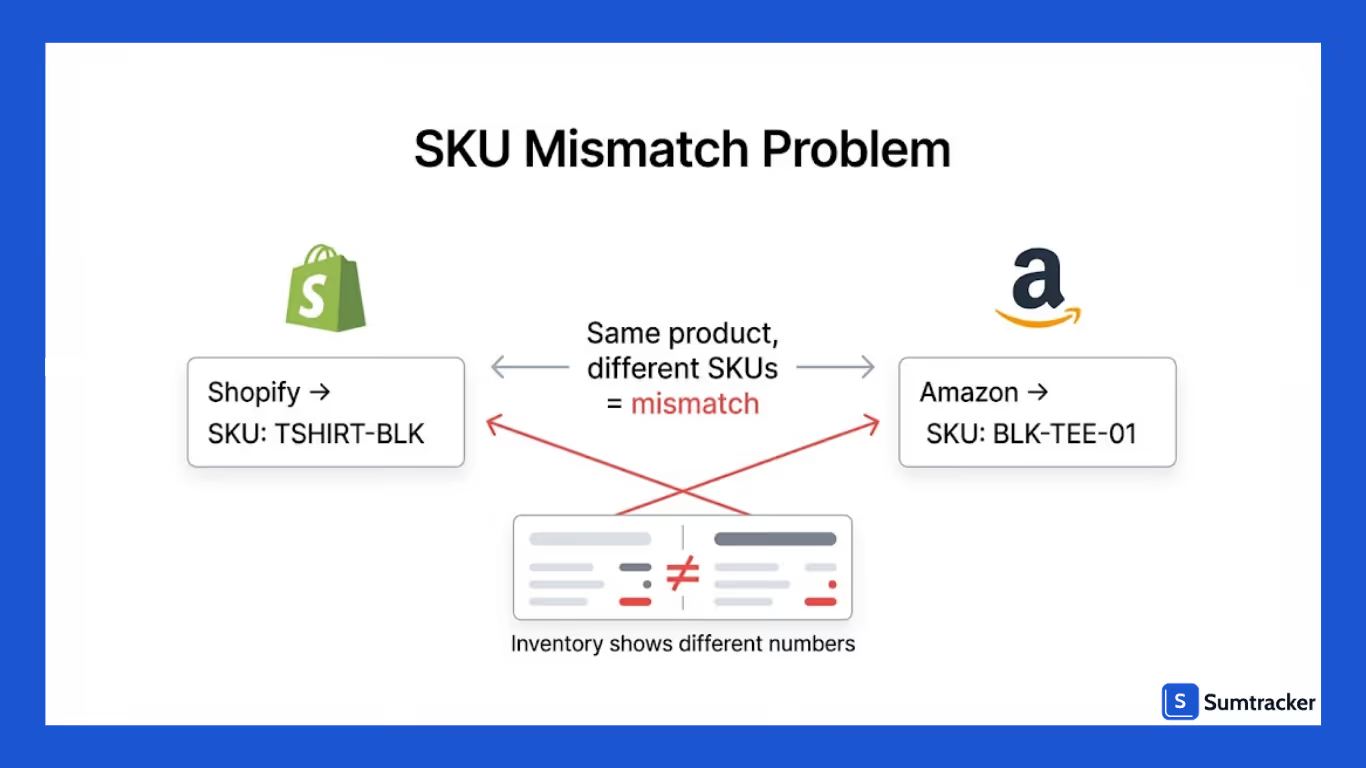
Every sale updates inventory in isolation. Shopify deducts from one SKU, Amazon from another, and suddenly your stock levels no longer reflect reality. What you think you have in stock and what you actually have are two very different numbers.
This leads to a chain reaction:
- Overselling on fast-moving channels
- Stockouts on others despite available inventory
- Manual corrections that eat into your time
Why Native Platform Sync Falls Short for SKU Mapping
At first, native integrations feel like they should be enough. Connect your store, enable syncing, and inventory should update automatically across channels—simple, right?
That assumption holds true only when your SKUs are perfectly aligned across platforms.
Most native systems whether it’s Shopify, Amazon, or eBay are built around a straightforward idea:
one SKU = one product = one inventory record
But real-world setups are rarely that clean.
As soon as:
- The same product has different SKUs across channels
- You introduce bundles or multipacks
- Listings are created independently per marketplace
…the native sync starts to fall apart.
Here’s why:
1. No understanding of SKU relationships
Native systems don’t recognize that different SKUs can represent the same product. To them, each SKU is completely independent.
2. No shared inventory logic
If Shopify sells one unit, Amazon has no built-in way to know it should reduce stock for its version of that product—unless the SKUs match exactly.
3. Limited support for complex scenarios
Bundles, kits, and multi-SKU mappings aren’t handled natively. These setups require logic beyond simple SKU matching.
4. Platform-first, not system-first
Each platform prioritizes its own inventory system. There’s no centralized layer connecting everything together.
How Smart SKU Mapping Solves Multi-Listing Inventory Issues
When the same product is listed under different SKUs, inventory gets fragmented across channels.
Smart SKU mapping solves this by linking those SKUs to a single inventory source, so all listings stay in sync without changing how they’re set up.

1. Connecting Multiple SKUs to One Product
Instead of treating each SKU as separate, smart mapping links them together behind the scenes.
This means different SKUs across platforms like Shopify, Amazon, and eBay all point to the same product.
2. Creating a Single Source of Truth
Once mapped, all SKUs pull inventory from one shared stock pool.
You’re no longer managing separate quantities per listing—there’s just one accurate number across all channels.
3. Syncing Inventory in Real Time
Every sale, regardless of channel, updates the same inventory instantly.
This keeps stock levels consistent and avoids mismatches between platforms.
4. Eliminating Manual Reconciliation
Since all listings are connected, there’s no need to manually adjust inventory across channels.
This reduces errors and saves significant operational time.
5. Supporting Complex Inventory Setups
Smart SKU mapping also handles scenarios like:
- Bundles and kits using shared components
- Multipacks with different SKU formats
- Channel-specific SKUs that cannot be changed
Managing Inventory Across Channels Without Changing Existing SKUs
As businesses expand across platforms like Shopify, Amazon, and eBay, SKU structures naturally diverge.
Changing them later can break listings, disrupt integrations, and create operational risk. Instead of forcing standardization, a better approach is to manage inventory centrally while keeping all existing SKUs untouched.
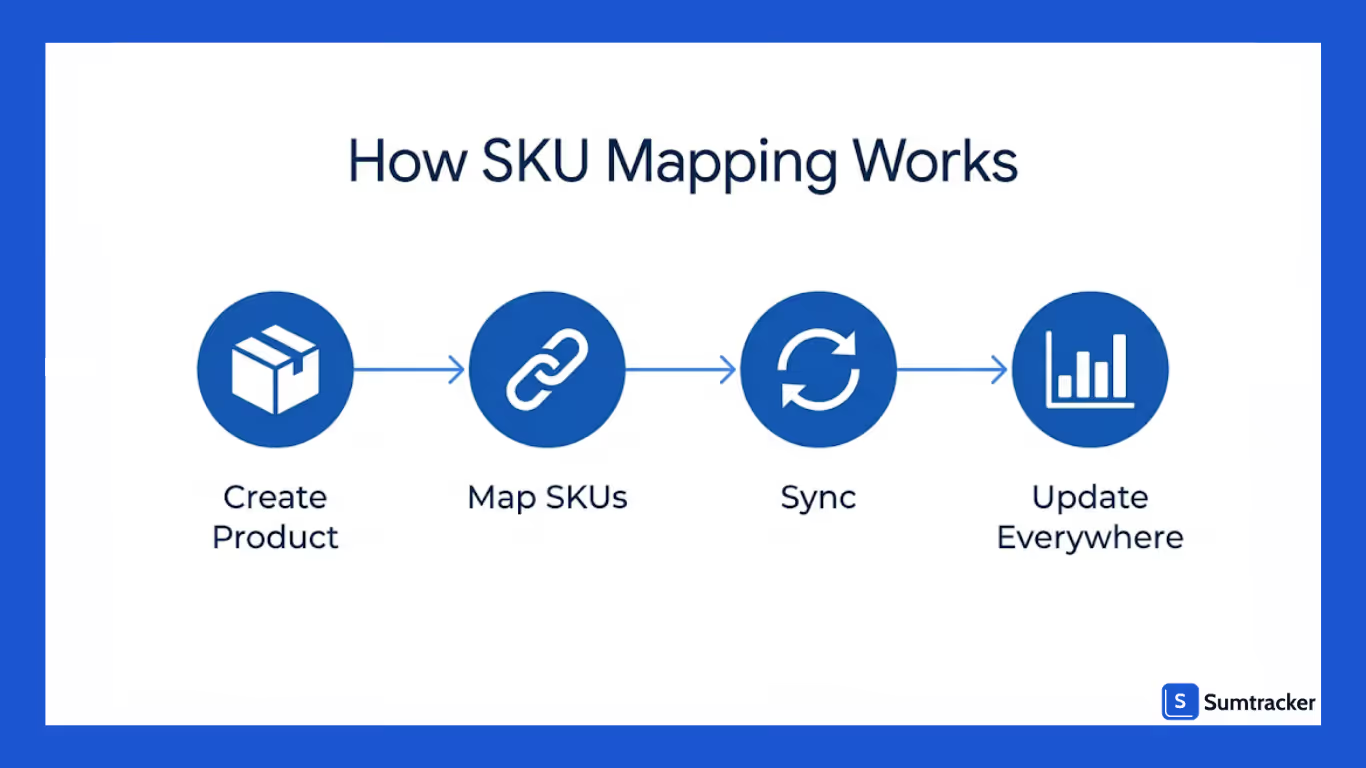
With Sumtracker, this is handled through a combination of SKU mapping and bundle-based inventory logic. Here’s how it works in practice:
How Sumtracker Handles Different SKUs Without Changes
- Step 1: Create a Base Product (Inventory Source)
Define a single product in Sumtracker that holds the actual inventory quantity. This becomes your “source of truth.” - Step 2: Link Different SKUs to the Same Product
Connect SKUs from different channels (Shopify, Amazon, etc.) to this base product so even if SKUs differ, they represent the same item internally. - Step 3: Use Bundles/Aliases Where Needed
If direct mapping isn’t possible, you can create bundles or aliases:- 1:1 bundles → for identical products with different SKUs
- Multipacks → deduct multiple units from the base product
- Kits → combine multiple SKUs into one listing
- Step 4: Enable Real-Time Sync
Once linked, every sale from any channel updates the base product inventory, which then reflects across all mapped SKUs automatically. - Step 5: Maintain Listings as They Are
No SKU changes are required on any platform, your existing listings, ads, and workflows continue uninterrupted.
Conclusion
Managing inventory across multiple channels becomes increasingly complex when the same product is listed under different SKUs.
What starts as a small inconsistency can quickly lead to overselling, stock mismatches, and hours of manual corrections.
The key isn’t to force all your SKUs to match, it’s to connect them intelligently behind the scenes.
By shifting to a centralized inventory approach with smart SKU mapping, you can ensure that every sale reflects accurately across all platforms, no matter how your listings are structured.
If you're selling across Shopify, Amazon, eBay, or beyond, tools like Sumtracker help you bring all your inventory into one system without changing your existing SKUs.
👉 Start syncing your inventory the right way with Sumtracker.
FAQs
1. Can I sync inventory if my SKUs are different across platforms?
Yes, you can. By using SKU mapping, different SKUs can be linked to a single product, allowing inventory to stay synced across all channels.
2. Do I need to change my existing SKUs to fix inventory sync issues?
No, changing SKUs is not necessary. Modern inventory systems like Sumtracker allow you to keep your existing SKUs and manage inventory centrally.
3. How does SKU mapping prevent overselling?
SKU mapping connects multiple listings to one shared inventory pool. When a sale happens on any channel, stock is updated everywhere, reducing the risk of overselling.
4. Can this setup handle bundles and multipacks?
Yes, advanced inventory systems support bundles, kits, and multipacks by deducting the correct quantity from the base product’s inventory.
5. Which platforms can I sync using this approach?
You can sync inventory across major platforms like Shopify, Amazon, eBay, Etsy, and more using a centralized inventory system.
Conclusion

Bhoomi writes about inventory management and multichannel selling at Sumtracker. Her focus is on solving real operational problems for Shopify, Amazon, and marketplace sellers through well-researched content. She covers everything from multi-location inventory syncing and stock error troubleshooting to replenishment planning and platform comparisons, turning complex eCommerce operations into clear, actionable guidance.
LinkedInRelated Articles
Tool and strategies modern teams need to help their companies grow.

.avif)
Ready to Simplify Your Inventory Management?
Join hundreds of e-commerce merchants who rely on Sumtracker to save time, eliminate errors, and grow their business.
