.svg)
.avif)
How to Track Real-Time Inventory Across Multiple Locations in One Dashboard


If you’re selling from more than one warehouse, store, or fulfillment partner, you’ve probably had this moment:
“The product says it’s in stock… but where, exactly?”
Maybe one location is overselling, another is sitting on dead stock, or transfers aren’t reflected until hours later.
As your business grows, inventory visibility becomes less about counting units and more about knowing what’s actually available, where, and right now.
That’s where a centralized, real-time inventory dashboard comes in.
Instead of hopping between channel admin panels, spreadsheets, and warehouse reports, you get a single source of truth that shows live stock movement across every location you sell and fulfill from.
Let’s break down what that really means and why it matters.
What Real-Time Inventory Actually Means Across Warehouses and Stores
Real-time inventory isn’t just about fast updates. It’s about accuracy at the moment a decision is made.
.avif)
In a multi-location setup, true real-time inventory means:
- Stock updates the instant an order is placed, fulfilled, canceled, or returned
- Inventory changes reflect at the location level, not just total stock
- Transfers, adjustments, and incoming purchase orders are accounted for immediately
If one warehouse ships an order, your available stock should drop instantly, not after a manual sync or overnight refresh. And if inventory is reserved for pending orders, that stock shouldn’t appear as sellable elsewhere.
Why Native Channel Dashboards Fall Short for Multi-Location Tracking
Most ecommerce platforms do a decent job tracking inventory within their own ecosystem. The problem starts when:
- You sell on multiple channels
- You fulfill from multiple locations
- Inventory moves between warehouses
Native dashboards are typically channel-centric, not inventory-centric. They often:
- Show inventory per channel, not across all locations
- Don’t clearly distinguish between available, reserved, and incoming stock
- Lag behind real-world movements like transfers or manual adjustments
As a result, merchants end up cross-checking numbers, exporting CSVs, or maintaining backup spreadsheets, just to feel confident they won’t oversell.
The Risks of Not Having a Unified Inventory Dashboard
When inventory data is spread across multiple channels, locations, and tools, problems don’t always show up immediately. They creep in quietly until one day you’re dealing with stockouts, overselling, or piles of unsold inventory in the wrong place.
.avif)
Without a unified inventory dashboard, every team ends up working from a slightly different version of the truth. Sales sees one number, operations sees another, and purchasing is left guessing which one to trust.
Some of the most common risks include:
Overselling and stockouts
When inventory isn’t tracked centrally, the same units can appear available in multiple places. This leads to canceled orders, delayed shipments, and frustrated customers.
Inventory stuck in the wrong location
You may have stock on hand, but not where demand actually is. Without clear, location-level visibility, products sit idle in one warehouse while another runs out.
Poor replenishment decisions
If purchasing decisions are based on incomplete or delayed data, teams either overorder (tying up cash) or reorder too late (causing stockouts). Both scenarios hurt profitability.
Operational inefficiencies
Manual checks, spreadsheet reconciliations, and constant cross-verification slow teams down. Instead of acting on insights, time is spent validating data.
What to Look for in a Multi-Location Inventory Dashboard
Not all inventory dashboards are built for multi-location reality. Some look polished on the surface but still leave you second-guessing the numbers when it’s time to fulfill orders or place a purchase order.
A good multi-location inventory dashboard should reduce uncertainty, not add to it. That means focusing less on vanity metrics and more on clear, trustworthy inventory signals.
Here are the essentials to look for:
Location-level inventory visibility
You should be able to see exactly how much stock is available at each warehouse or store—not just a combined total. This is critical for fulfillment decisions and transfer planning.
Clear separation of stock statuses
Available, reserved, incoming, and committed stock should be clearly defined and visible. If everything is lumped into one number, it’s easy to oversell or reorder too late.
Real-time updates from every inventory movement
Orders, fulfillments, returns, transfers, and manual adjustments should update inventory instantly. Delayed or batch-based updates defeat the purpose of real-time tracking.
A single source of truth across channels
The dashboard should pull inventory data into one centralized view instead of forcing you to check each sales channel individually.
Scalability as you add locations
What works for two locations should still work for five or ten. The dashboard should make it easy to add new warehouses or stores without breaking inventory accuracy.
How a Centralized Dashboard Syncs Inventory Changes in Real Time
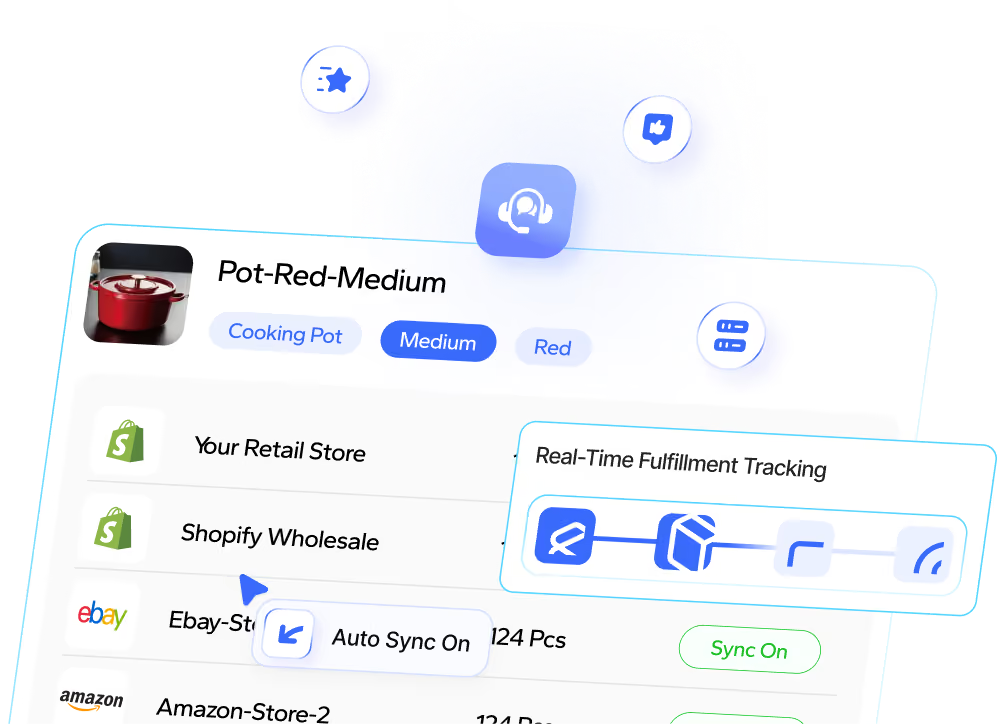
A centralized inventory dashboard syncs inventory in real time by treating inventory as a shared system across all connected channels and locations, rather than allowing each channel to manage stock independently.
.avif)
Every inventory-affecting event updates inventory immediately at the core level. That update is then reflected consistently across all connected channels and locations, ensuring everyone is working from the same data.
The key to real-time sync is event-based updates, not scheduled refreshes. Instead of waiting for periodic syncs, inventory changes are triggered the moment something happens. This prevents delays that often cause overselling or mismatched stock counts.
Real-time centralized syncing also ensures:
- Inventory is updated at the SKU level, not just at the channel level
- Stock is reduced once, even if orders come from different channels
- Location-level availability remains accurate as inventory moves
- Paused or disconnected channels don’t introduce silent discrepancies
When It’s Time to Use a Dedicated Inventory Management System
If any of these sound familiar, it’s usually a sign you need a dedicated inventory management system:
You’re selling on multiple channels, but inventory accuracy depends on double-checking numbers across dashboards.
You have stock in different locations, but no clear way to see what’s actually available where.
Stock levels look fine on one channel but don’t match reality when it’s time to fulfill.
Low-stock issues are discovered too late, often after orders are already delayed.
At this stage, inventory management stops being about tracking quantities and starts being about control and consistency.
A dedicated inventory management system like Sumtracker is built specifically for this phase of growth.
Instead of letting each channel manage its own inventory, Sumtracker centralizes inventory data and becomes the single source of truth across all locations and sales channels.
Inventory changes are captured in real time and reflected consistently so stock is counted once, reduced once, and trusted everywhere.
With Sumtracker, teams can:
- Monitor inventory across all locations from one dashboard
- Maintain accurate stock levels across multiple sales channels
- Spot low-stock products early and take action before stockouts happen
- Make replenishment decisions using reliable, up-to-date data
Conclusion
Tracking inventory across multiple locations doesn’t get harder because inventory itself is complicated, it gets harder because visibility breaks down as your business grows.
When inventory lives across warehouses, stores, and sales channels, real-time accuracy becomes critical. Without it, teams are forced to rely on assumptions, manual checks, and delayed data.
A centralized, real-time inventory dashboard removes that guesswork by giving you one clear, reliable view of what’s available, where it’s available, and what needs attention next.
If inventory decisions are starting to affect fulfillment speed, customer experience, or cash flow, that’s a strong signal it’s time to move beyond native dashboards and spreadsheets.
A dedicated system like Sumtracker helps bring consistency, clarity, and confidence back into multi-location inventory management.
FAQs
1. What is a centralized inventory dashboard?
A centralized inventory dashboard is a single system that tracks inventory across all warehouses, stores, and sales channels in one place. It shows real-time stock levels, location-wise availability, and inventory status without needing manual reconciliation.
2. How does real-time inventory help prevent overselling?
Real-time inventory ensures stock is updated immediately when an order is placed or fulfilled. Because inventory is reduced once at the core level, the same units can’t be sold across multiple channels by mistake.
3. Why isn’t Shopify or marketplace inventory tracking enough for multiple locations?
Native channel dashboards are built to manage inventory within that specific platform. They struggle when inventory is shared across multiple locations or channels, often leading to delayed updates, mismatched stock counts, and poor visibility.
4. Can a centralized system show inventory by location?
Yes. A dedicated inventory management system tracks stock at the location level, allowing you to see exactly how much inventory is available at each warehouse or store rather than just a combined total.
5. When should a growing business consider using Sumtracker?
If you’re selling on multiple channels, fulfilling from more than one location, or spending too much time verifying inventory numbers, Sumtracker helps centralize inventory, maintain real-time accuracy, and support smarter replenishment decisions.
Conclusion

Bhoomi writes about inventory management and multichannel selling at Sumtracker. Her focus is on solving real operational problems for Shopify, Amazon, and marketplace sellers through well-researched content. She covers everything from multi-location inventory syncing and stock error troubleshooting to replenishment planning and platform comparisons, turning complex eCommerce operations into clear, actionable guidance.
LinkedInRelated Articles
Tool and strategies modern teams need to help their companies grow.

.avif)
Ready to Simplify Your Inventory Management?
Join hundreds of e-commerce merchants who rely on Sumtracker to save time, eliminate errors, and grow their business.