.svg)
10 Best Shopify Warehouse Management Systems (Tested & Reviewed for 2026)


Are your warehouse inventory operations getting out of hand?
Have you started spending more time fixing your warehouse inventory chaos instead of focusing on getting your orders done?
I know you have started finding this relatable already.
Warehouse operations are harder to manage because there are more moving parts that you have to keep track of.
Well, the solution to the problems is a warehouse management system.
Now you will be like, “Great, another thing I need to spend hours researching”
But no, I got you covered.
I've curated a list of the best warehouse management systems and have also tested them based on features, ease of use, scalability, and overall value.
Now you can compare the options faster, so let’s get started!
Quick Results: My Top Picks
If you’re primarily trying to improve inventory visibility, replenishment planning, and multi-channel inventory management, Sumtracker is the strongest inventory-focused solution on this list.
If you need a dedicated warehouse management system with advanced fulfillment workflows, ShipHero and Logiwa stand out as the strongest overall options.
How We Tested These Tools
There are tons of warehouse management systems that integrate with Shopify, but not all of them are meant for you.
To create this list, I reviewed tools that are commonly used by Shopify merchants and compared them on the basis of criteria like features, ease of use, etc.
What I Looked For
- How well does the platform integrate with Shopify?
- Does it support barcode-driven warehouse workflows?
- Can it manage inventory across multiple warehouse locations?
- How easy is it to receive, pick, pack, and ship orders?
- Does the platform reduce manual work through automation?
- Can it scale as order volume increases?
My Evaluation Criteria Focused on What Matters Most
Warehouse functionality received the highest weighting. A warehouse management system should improve warehouse efficiency, not just provide inventory visibility.
Inventory accuracy was heavily considered. Incorrect inventory counts lead to fulfillment delays, overselling, and unnecessary operational issues.
Shopify integration mattered. Inventory, orders, and fulfillment updates should flow seamlessly between systems.
Ease of use was important. A powerful system isn't very useful if warehouse teams struggle to adopt it.
Scalability was also considered. The best solutions should support growth without requiring businesses to switch platforms every few years.
How I Calculated Final Scores
Each warehouse management system was scored across five categories and then added up to create a final score out of 100.
- Example — ShipHero: Warehouse Functionality (28/30) + Inventory Management (22/25) + Shopify Integration (18/20) + Ease of Use (13/15) + Value for Money (10/10) = 94/100
- Example — Fishbowl: Warehouse Functionality (22/30) + Inventory Management (21/25) + Shopify Integration (13/20) + Ease of Use (12/15) + Value for Money (10/10) = 72/100
Warehouse functionality and inventory management account for 55 of the 100 available points because they have the biggest impact on warehouse efficiency and fulfillment accuracy.
Shopify integration accounts for 20 points, while ease of use and value for money make up the remaining 25 points. This ensures the rankings reward tools that are practical to implement, not just feature-rich on paper.
1. Sumtracker: Best Inventory Management Alternative to a WMS
Best For: Growing multichannel brands
Most of the time, you don’t even need a clunky warehouse management system for your operation because
When merchants start experiencing inventory issues, their first instinct is often to look for a WMS.
But in reality, warehouse execution isn't usually the problem.
The bigger challenge is knowing what inventory you have, where it's located, when to reorder it, and keeping stock levels accurate across all your sales channels.
If that sounds like you, then Sumtracker is the solution you should check out!
Instead of focusing on warehouse workflows like wave picking and labor management, Sumtracker focuses on inventory control.
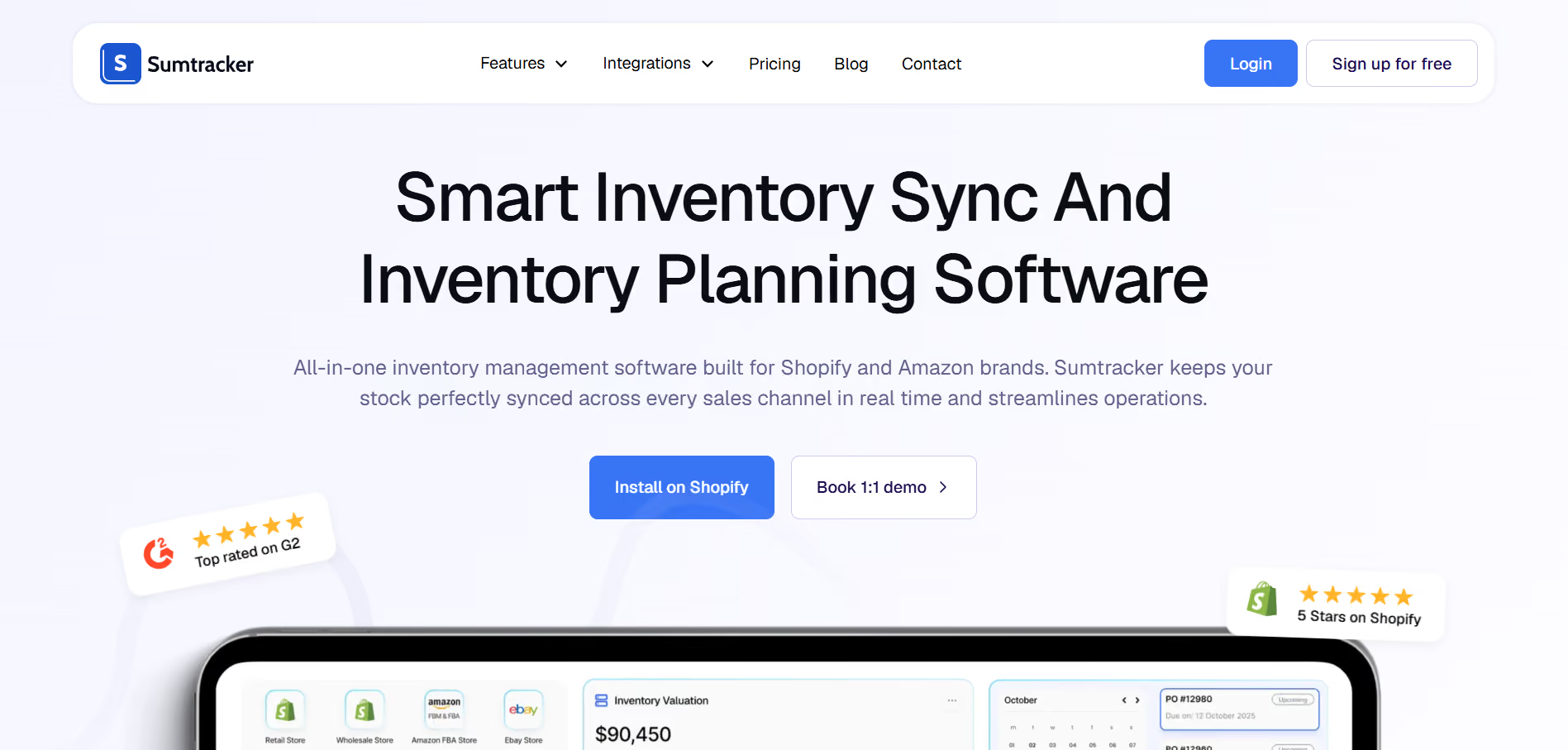
It helps merchants track inventory across multiple locations, sync stock across sales channels, create purchase orders, smart replenishment, and maintain accurate inventory levels without the complexity of a full WMS.
For many Shopify brands, that's exactly what's needed.
Key Features
- Multi-channel inventory sync
- Inventory replenishment
- Purchase order management
- Bundle and kit management
- Inventory reporting and analytics
- Low-stock alerts
Pros
- Easy to implement and use
- Strong inventory planning capabilities
- Excellent multi-channel inventory synchronization
- Supports bundles and kits
- Affordable pricing
Cons
- Not a traditional warehouse management system
- Limited warehouse execution features
- Not designed for complex fulfillment operations
Pricing
Starts at $59/month.
Why Choose Sumtracker?
If inventory accuracy, stock visibility, and replenishment planning are your biggest operational challenges, Sumtracker delivers more value than many traditional warehouse management systems.
For businesses managing inventory across Shopify, Amazon, Etsy, eBay, and other channels, it provides a centralized source of truth.
2. ShipHero (94/100)
Best For: Ecommerce fulfillment operations
ShipHero is one of the most recognized warehouse management systems in the Shopify ecosystem.
Unlike traditional warehouse software that was originally built for distributors, ShipHero was designed specifically for ecommerce businesses.
The platform combines warehouse management, inventory tracking, barcode scanning, shipping, and fulfillment workflows into a single solution. Warehouse teams can use mobile devices to receive inventory, pick products, pack orders, and update inventory levels in real time.
What helped ShipHero earn the highest score in this review is its ability to balance advanced warehouse functionality with usability.
.avif)
Key Features
- Mobile barcode scanning
- Pick and pack workflows.
- Batch picking
- Multi-warehouse management
- Shipping automation
- Inventory management
- Returns management
Pros
- Built specifically for ecommerce
- Excellent warehouse execution capabilities
- Strong barcode workflows
- Supports multiple warehouses
Cons
- Custom pricing
- More functionality than smaller businesses need
Final Verdict
ShipHero scored 94/100 because it offers the strongest combination of warehouse functionality, Shopify integration, and scalability. For most Shopify businesses looking for a dedicated warehouse management system, it's one of the safest choices available.
3. Logiwa (92/100)
Best For: High-volume ecommerce brands
Logiwa is built for businesses that have outgrown basic inventory management systems.
This platform focuses heavily on warehouse automation, inventory visibility, order routing, and fulfillment management.
Businesses operating multiple warehouses can manage inventory movement and order fulfillment from a single platform.
One of Logiwa's biggest strengths is scalability. As order volumes increase and warehouse operations become more complex, the platform provides the visibility and automation needed to maintain efficiency.
.avif)
Key Features
- Real-time inventory visibility
- Warehouse automation
- Order routing
- Multi-location inventory management
- Inventory transfers
- Picking and packing workflows
- Reporting and analytics
Pros
- Highly scalable
- Strong automation capabilities
- Excellent multi-location support
- Designed for growing ecommerce brands
Cons
- Steeper learning curve
- Pricing isn't publicly available.
Final Verdict
Logiwa scored 92/100 because of its strong warehouse automation and inventory visibility capabilities. It's an excellent choice for high-volume Shopify brands managing multiple warehouses.
4. Extensiv (89/100)
Best For: 3PL operations
Extensiv is widely used by third-party logistics providers and fulfillment companies. Unlike many warehouse management systems that focus on a single business, Extensiv is built to manage inventory and fulfillment for multiple clients simultaneously.
The platform supports inventory control, warehouse workflows, fulfillment operations, reporting, and multi-client management. For businesses operating as a 3PL, these capabilities are invaluable.
.avif)
Key Features
- Multi-client warehouse management
- Inventory tracking
- Barcode scanning
- Warehouse workflows
- Fulfillment management
- Reporting and analytics
Pros
- Excellent for 3PL operations
- Strong warehouse controls
- Mature platform
- Scalable infrastructure
Cons
- More complex than many merchants need
- Longer implementation process
Final Verdict
Extensiv scored 89/100 thanks to its robust warehouse controls and 3PL-focused functionality. If you're managing fulfillment for multiple clients, it's one of the strongest options available.
5. Hopstack (87/100)
Best For: Warehouse automation
Hopstack focuses on helping businesses automate warehouse operations and improve productivity through better workflows and operational visibility.
The platform provides real-time warehouse tracking, task management, barcode scanning, and warehouse analytics. Businesses looking to reduce manual processes and improve operational efficiency will appreciate Hopstack's automation-first approach.
.avif)
Key Features
- Warehouse automation
- Barcode scanning
- Inventory visibility
- Task management
- Warehouse analytics
- Performance reporting
Pros
- Modern interface
- Strong automation capabilities
- Excellent operational visibility
Cons
- Enterprise-focused pricing
- Less established than larger competitors
Final Verdict
Hopstack scored 87/100 because it excels at warehouse automation and operational visibility. It's particularly well-suited for growing warehouse teams looking to improve efficiency.
6. Pulpo WMS (84/100)
Best For: Growing Shopify warehouses
Pulpo WMS is designed for ecommerce businesses that need better warehouse organization without the complexity that often comes with enterprise warehouse management systems.
The platform focuses on improving inventory accuracy, streamlining warehouse workflows, and reducing fulfillment errors through barcode-driven processes. For Shopify merchants that are starting to feel operational growing pains, Pulpo offers a practical middle ground between spreadsheets and enterprise software.
One of Pulpo's biggest advantages is ease of implementation. Many warehouse management systems require extensive setup and training. Pulpo focuses on helping warehouse teams become productive quickly.
.avif)
Key Features
- Barcode scanning
- Picking and packing workflows
- Inventory management
- Warehouse transfers
- Returns management
- Shopify integration
- Inventory visibility
Pros
- Ecommerce-focused
- Fast implementation
- Easy-to-use interface
- Strong barcode workflows
- Improves inventory accuracy
Cons
- Limited enterprise functionality
- Smaller ecosystem than larger competitors
Final Verdict
Pulpo WMS scored 84/100 because it balances warehouse functionality and ease of use exceptionally well. If you're looking for a warehouse management system that your team can adopt quickly, Pulpo deserves a spot on your shortlist.
7. SKULabs (83/100)
Best For: Barcode-driven fulfillment
If fulfillment mistakes are becoming a recurring problem, SKULabs is worth considering.
The platform focuses heavily on barcode scanning and warehouse accuracy. Rather than offering every warehouse feature imaginable, SKULabs prioritizes helping businesses pick, pack, and ship orders correctly.
For Shopify merchants, even small improvements in fulfillment accuracy can reduce customer complaints, returns, and operational headaches.
SKULabs also combines inventory management, shipping workflows, and warehouse operations in a single platform, making it easier for warehouse teams to work from one system.
.avif)
Key Features
- Barcode scanning
- Picking workflows
- Shipping management
- Inventory tracking
- Purchase orders
- Multi-channel inventory management
Pros
- Easy warehouse adoption
- Strong barcode functionality
- Improves fulfillment accuracy
- E-commerce-focused workflows
Cons
- Fewer advanced automation features
- Can become expensive as order volume grows
Final Verdict
SKULabs scored 83/100 because of its strong fulfillment workflows and barcode scanning capabilities. If reducing picking and packing errors is your primary goal, it's one of the strongest options available.
8. Infoplus (80/100)
Best For: Scaling fulfillment operations
Infoplus is designed for businesses that need more advanced warehouse workflows as fulfillment complexity increases.
The platform supports receiving, inventory management, picking, packing, shipping, and warehouse automation. It also includes more advanced functionality such as wave picking and batch picking, making it attractive for businesses processing larger volumes of orders.
One area where Infoplus stands out is flexibility. Businesses can customize workflows and warehouse processes to match their operational requirements rather than adapting to rigid software limitations.
.avif)
Key Features
- Wave picking
- Batch picking
- Warehouse automation
- Inventory management
- Receiving workflows
- Shipping management
- Carrier integrations
Pros
- Advanced warehouse workflows
- Strong fulfillment functionality
- Flexible configuration options
- Scales well with growth
Cons
- More complex than entry-level solutions
- Longer onboarding process
Final Verdict
Infoplus scored 82/100 because of its advanced warehouse capabilities and flexibility. It's a strong fit for businesses that need sophisticated warehouse workflows without moving to a full enterprise platform.
9. Helm WMS (77/100)
Best For: Warehouse execution and visibility
Helm WMS focuses on helping businesses gain better control over warehouse operations.
The platform provides tools for inventory management, warehouse task management, barcode scanning, and operational reporting. While it may not be as widely known as some of the larger players on this list, it offers a solid set of warehouse management features.
Businesses that struggle with warehouse visibility often find themselves reacting to problems instead of preventing them. Helm helps solve this by providing better oversight into inventory movement and warehouse activities.
.avif)
Key Features
- Warehouse task management
- Inventory control
- Barcode scanning
- Inventory transfers
- Operational reporting
- Warehouse performance tracking
Pros
- Strong warehouse visibility
- Flexible workflows
- Good operational controls
Cons
- Smaller ecosystem
- Limited public pricing information
- Less brand recognition
Final Verdict
Helm WMS scored 80/100 because it provides reliable warehouse functionality and operational visibility. It's a solid option for businesses looking to improve warehouse control without investing in enterprise software.
10. Fishbowl (72/100)
Best For: Manufacturing businesses
Fishbowl is a little different from the other tools on this list.
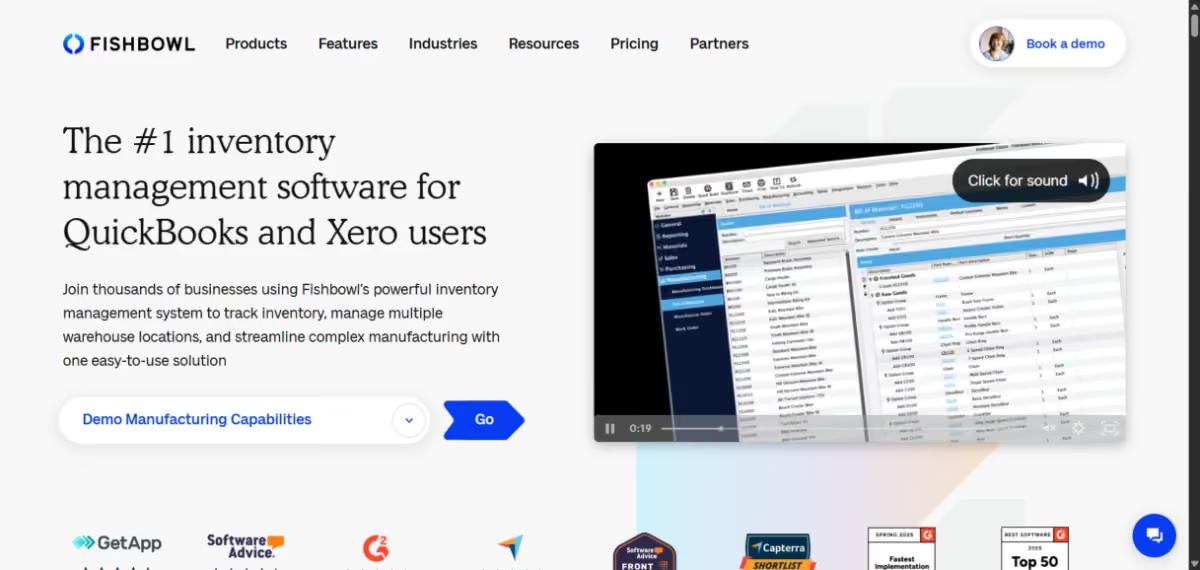
While it includes warehouse management functionality, its biggest strength is combining inventory management, manufacturing, and warehouse operations into a single platform.
For businesses that manufacture products, assemble kits, or manage production workflows, this combination can eliminate the need for multiple software tools.
However, businesses looking exclusively for warehouse management may find some of Fishbowl's manufacturing functionality unnecessary.
Key Features
- Manufacturing management
- Inventory control
- Warehouse tracking
- Barcode scanning
- Purchase orders
- Supplier management
- Reporting and analytics
Pros
- Strong manufacturing functionality
- Detailed inventory controls
- Established platform
- Supports complex inventory workflows
Cons
- Older interface
- Less ecommerce-focused than competitors
- Additional setup may be required.
Final Verdict
Fishbowl scored 72/100 because it excels in manufacturing and inventory management, but isn't as ecommerce-focused as the other warehouse management systems on this list. For manufacturers selling through Shopify, however, it remains a strong option.
How to Choose the Right Warehouse Management System
If you’re a growing ecommerce brand: ShipHero or Logiwa. Both offer strong warehouse management, inventory visibility, and fulfillment workflows that can scale as order volumes increase.
If inventory management is a bigger challenge than warehouse management: Sumtracker. Multi-channel inventory sync, forecasting, replenishment, purchase orders, and inventory visibility without the complexity of a full WMS.
If you operate multiple warehouses or manage complex fulfillment operations: Extensiv or Infoplus. Both are built to handle larger-scale warehouse operations, advanced workflows, and high order volumes.
If warehouse automation is your top priority: Hopstack or Logiwa. Strong automation capabilities, operational visibility, and workflow optimization for growing warehouse teams.
If you’re transitioning away from manual processes: Pulpo WMS or SKULabs. Both improve inventory accuracy and fulfillment efficiency through barcode-driven workflows.
If you manufacture your own products: Fishbowl. Combines manufacturing, inventory management, and warehouse operations in a single platform.
If warehouse visibility and operational control are your biggest concerns: Helm WMS. Strong warehouse tracking, inventory control, and reporting capabilities.
Not sure you need a full WMS?
If inventory tracking, replenishment, and keeping stock synced across channels are your main challenges, Sumtracker may be all you need.
Try Sumtracker free for 14 days!
Frequently Asked Questions
What is the best warehouse management system for Shopify?
ShipHero is one of the best warehouse management systems for Shopify due to its strong fulfillment workflows, barcode scanning, and warehouse management features. However, the right choice depends on your order volume, warehouse complexity, and business needs.
Does Shopify have a built-in warehouse management system?
No. Shopify offers basic inventory tracking and order management features, but it doesn’t provide advanced warehouse management capabilities such as barcode-guided picking, warehouse task management, wave picking, or warehouse automation.
What’s the difference between inventory management software and a warehouse management system?
Inventory management software focuses on stock tracking, forecasting, and replenishment. A warehouse management system focuses on warehouse operations such as receiving, putaway, picking, packing, and shipping inventory efficiently.
Do small Shopify stores need a warehouse management system?
Not necessarily. Many small Shopify businesses can manage inventory using Shopify and inventory management software. A dedicated WMS becomes more valuable as order volumes increase and warehouse operations become more complex.
What should I look for when choosing a Shopify warehouse management system?
Look for strong Shopify integration, barcode scanning, inventory accuracy, multi-warehouse support, reporting capabilities, ease of implementation, and pricing that fits your business requirements.
Conclusion
Warehouse management systems are often evaluated based on features alone, but the right choice depends on the problems you’re trying to solve.
If your business is struggling with picking accuracy, warehouse productivity, fulfillment speed, or managing multiple warehouses, a dedicated warehouse management platform such as ShipHero, Logiwa, or Extensiv may be the right investment.
However, many Shopify merchants discover that their biggest challenge isn’t warehouse execution, it’s inventory visibility.
Before investing in a complex warehouse management system, it’s worth asking whether inventory accuracy, stock synchronization, and replenishment planning are the real bottlenecks in your operation.
If they are, an inventory-focused solution like Sumtracker may provide a faster path to operational improvements.

Bhoomi writes about inventory management and multichannel selling at Sumtracker. Her focus is on solving real operational problems for Shopify, Amazon, and marketplace sellers through well-researched content. She covers everything from multi-location inventory syncing and stock error troubleshooting to replenishment planning and platform comparisons, turning complex eCommerce operations into clear, actionable guidance.
LinkedInRelated Articles
Tool and strategies modern teams need to help their companies grow.



Ready to Simplify Your Inventory Management?
Join hundreds of e-commerce merchants who rely on Sumtracker to save time, eliminate errors, and grow their business.