.svg)

Top 8 Inventory Management Software That Sync Shopify and Amazon (2026)


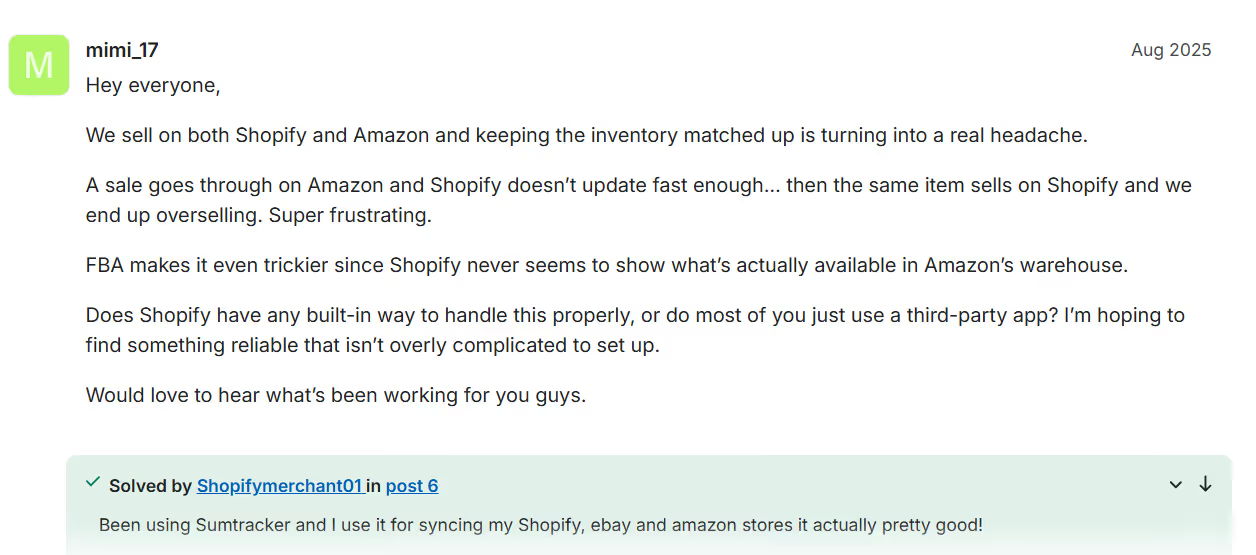
If you sell on both Shopify and Amazon, this probably sounds familiar.
An order comes through on Amazon. Shopify doesn’t update quickly enough. The same SKU sells again.
Now you’re oversold, scrambling to explain delays, and watching your seller metrics take a hit.
Add FBA into the mix, and suddenly it’s even harder to know what’s actually available versus what’s sitting in Amazon’s warehouse.
This isn’t a rare edge case.
It’s one of the most common operational headaches for multichannel brands.
And while Shopify doesn’t offer a built-in, foolproof way to manage real-time Shopify–Amazon inventory syncing, the right inventory management software can eliminate these mismatches entirely.
In this guide, we’ll break down the best inventory management tools that sync Shopify and Amazon in 2026, so you can stop worrying about overselling and start scaling with confidence.
Sellers running Amazon and Shopify together face the hardest version of the stock problem: two channels, two different update speeds, and one shared pool of inventory.
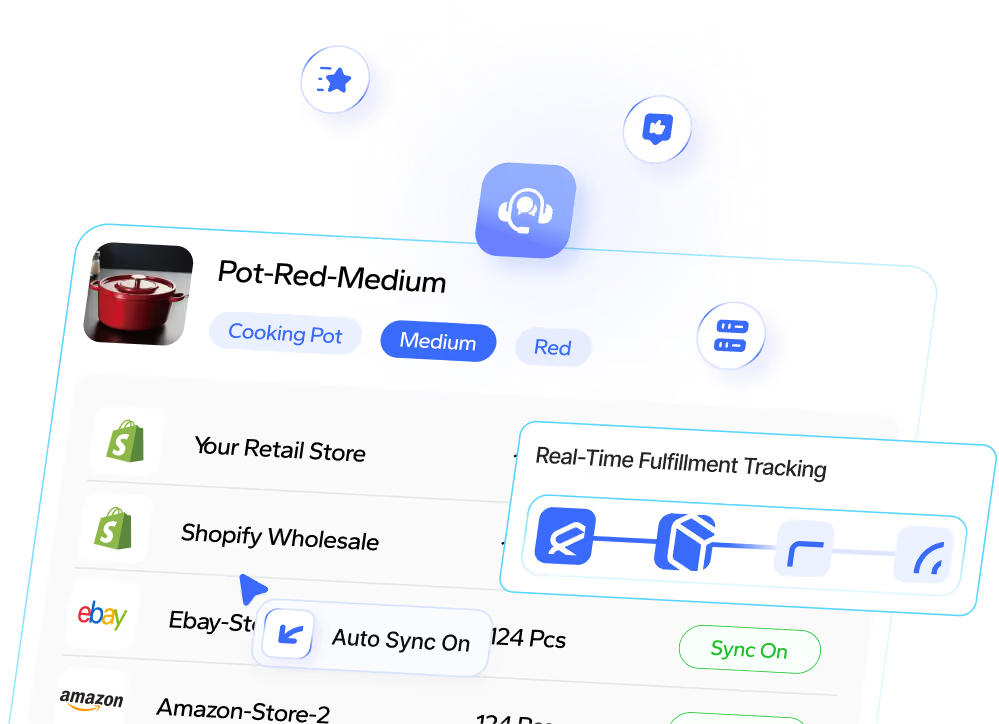
Sumtracker gives merchants a single dashboard to manage inventory across Amazon, eBay, Walmart, Etsy, and Shopify from one centralized product record, making it easier to keep inventory consistent across connected sales channels.
Why Shopify–Amazon Inventory Sync Is Critical
When you sell on both Shopify and Amazon, you’re working with one shared inventory pool, not two separate ones.
If stock doesn’t update instantly across channels, problems show up fast.
Here’s what typically happens when syncing isn’t tight:
- A unit sells on Amazon
- Shopify doesn’t update quickly enough
- The same product sells again
- You’re suddenly oversold
And overselling isn’t just inconvenient. It leads to:
- Order cancellations
- Negative reviews
- Lower Amazon seller metrics
- Lost customer trust
- Refund processing headaches
Now add FBA into the mix.
Inventory sitting in Amazon’s warehouse doesn’t automatically reflect correctly on Shopify unless you’re using proper sync software. Without visibility, you might:
- Show stock that isn’t actually available
- Hide stock that is sellable
- Miscalculate restocking needs
At scale, even small sync delays turn into real revenue leaks.
As your business grows beyond Shopify and Amazon, inventory sync becomes even more complex. If you're planning to sell across additional marketplaces, our guide on Shopify multi-channel inventory sync explains how to keep inventory accurate across every connected sales channel.
How We Selected These Software (2026 Criteria)
There are plenty of tools that claim to “sync Shopify and Amazon.” But not all of them actually manage inventory in a meaningful way.
So we applied clear selection standards.
Real Inventory Management (Not Just Connectors)
We prioritized software that truly manages stock, not just tools that push listings or update quantities in batches.
Each platform had to offer structured inventory logic, not simple integration bridges.
Reliable Two-Way Sync
Every tool on this list supports active Shopify and Amazon syncing, including FBA workflows where applicable.
We focused on systems that provide real-time or near real-time updates to prevent overselling.
Core Inventory Management Capabilities
Beyond syncing, the software needed structured inventory functionality, such as purchase orders, stock transfers, low-stock alerts, or centralized visibility.
Built for Modern Multichannel Brands
We included software that supports:
- Multi-location inventory
- Purchase orders and stock transfers
- Scalable operations
And we avoided overly complex ERP systems that require enterprise-level implementation.
Actively Maintained in 2026
Outdated, sunset, or stagnant products were excluded.
Here's the complete list of best tools of 2026:
Sumtracker - Best overall for Shopify-first multi-channel sellers
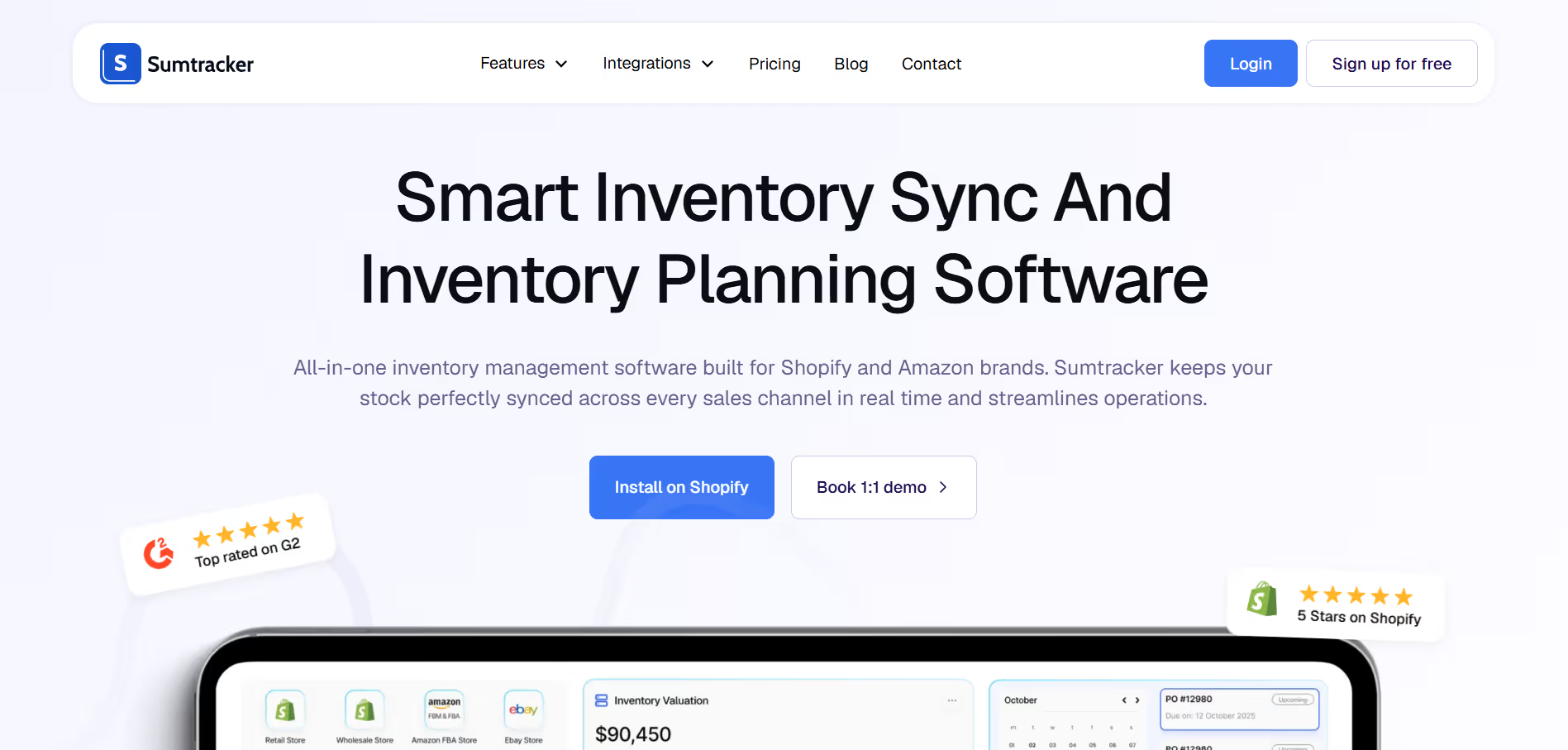
If you’re serious about syncing inventory between Shopify and Amazon without overselling or manual headaches, Sumtracker is one of the most cost-effective and reliable options in 2026.
It’s built for multichannel sellers and gives you real-time stock accuracy across stores and marketplaces without needing an ERP-level implementation.
Event-driven sync across Shopify, Amazon, eBay, Walmart, and Etsy, with automatic bundle and kit resolution. Built for brands running 50 to 50,000 orders a month that need stock accuracy without an ERP implementation.
Key Features
- Real-time two-way inventory sync between Shopify, Amazon, and other sales channels
- Multi-location inventory tracking and visibility
- Purchase order creation and management
- Automated low-stock alerts and restock insights
- Centralized dashboard for stock levels and reporting
Best For
Growing Shopify and Amazon sellers who want real-time inventory sync and smarter restocking workflows without complex setup.
Pricing
Sumtracker’s plans are based on monthly order volume and start at $59/month. A 14-day free trial is available.
Limitations
- Not a full ERP focuses on inventory and sync rather than deep financials
- Some advanced workflows (e.g., complex manufacturing workflows) are not part of standard plans
Zoho Inventory
Zoho Inventory is a cloud-based inventory and order management tool that integrates well with Shopify and Amazon channels, making it easier to sync stock, process orders, and streamline fulfillment across platforms.
.avif)
Key Features
- Real-time inventory tracking and stock adjustments
- Multi-channel selling (including Shopify & Amazon)
- Purchase orders, supplier & warehouse management
- Serial/batch tracking and barcode support
- Integration with Zoho Books for accounting
Best For
Small to mid-sized brands that want a well-rounded inventory and order system with marketplace integrations at a competitive price.
Pricing
Zoho Inventory plans start at $29/month (Standard).
Limitations
- Some advanced warehouse features require higher tiers
- Interface and setup may feel overwhelming for absolute beginners
SKULabs
SKULabs is a powerful multi-channel inventory, warehouse, and order management platform built for real-time syncing and streamlined fulfillment across Shopify, Amazon, and other channels.
.avif)
Key Features
- Real-time inventory sync with Shopify & Amazon
- Multi-warehouse & barcode-driven workflows
- Batch picking, cycle counting, and WMS tools
- Centralized order management and shipping support
- Reporting and insights dashboards
Best For
Medium to large sellers who manage their own fulfillment operations or work with multiple warehouses and want advanced picking/shipping tools.
Pricing
Plans typically start at $299/month for basic inventory/fulfillment tools and scale up to $1,999/month for enterprise features.
Limitations
- Pricier than basic solutions
- Complexity may be overkill for small sellers
Sellbrite
Sellbrite lets you centralize listings, inventory, and orders across marketplaces like Shopify, Amazon, eBay, and more with a focus on easy setup and broad channel reach.
.avif)
Key Features
- Unified inventory and order view across channels
- FBA stock syncing and automatic updates
- Bulk listing tools and multi-warehouse support
- Excel-like stock editor and integration templates
Best For
Smaller sellers or brands expanding product listings across marketplaces with simple, centralized inventory and order controls.
Pricing
Starts at around $29/month for entry plans and scales with order volume and advanced features (FBA sync add-ons).
Limitations
- Feature set is lighter than full ERP systems
- Performance can vary for high-volume sellers
Cin7 Core
Cin7 Core is a more advanced inventory and operations platform tailored for complex multichannel businesses. It integrates Shopify and Amazon stock while offering deep tools like B2B portals and accounting connectivity.
.avif)
Key Features
- Real-time inventory and order management
- Warehouse & supplier workflows
- BOM, manufacturing, and advanced reporting
Best For
Mid-sized to larger brands that need more than basic inventory sync including manufacturing tracking, B2B operations, or multi-warehouse control.
Pricing
Plans start at $349/month, rising to $999/month or more for advanced tiers.
Limitations
- More expensive than lightweight tools
- Setup and training may take time
Brightpearl
Brightpearl is an ERP-style retail and inventory operations platform that connects inventory, order management, and financials across Shopify, Amazon, and other channels.
.avif)
Key Features
- Unified inventory visibility in real time
- Automated workflows and business rules
- Warehouse management and fulfillment tools
- Integrations with retail POS and accounting systems
Best For
Enterprise retailers or high-volume brands that require deep automation and business intelligence across all selling channels.
Pricing
Brightpearl typically offers custom enterprise pricing, often reflecting its robust capabilities and support setup.
Limitations
- Cost and complexity make it less ideal for smaller sellers
- Onboarding and training are more involved
Veeqo
Veeqo (now associated with Amazon offerings) blends inventory sync with shipping automation and reporting, making it a strong choice for sellers who want shipping + stock under one roof.
.avif)
Key Features
- Automatic inventory updates across Shopify, Amazon, and other channels
- Discounted shipping rates via carriers
- Warehouse tools and demand forecasting
- Bulk order shipment and tracking tools
Best For
Sellers focused on both inventory and fulfillment, especially those who ship frequently and want carrier cost optimization.
Pricing
Veeqo's plans start around $19/month and more advanced plans can reach $250+/month for premium support.
Limitations
- Base free tier is basic; full features require paid plans
- Inventory focus is paired with shipping, not a pure inventory specialist
Syncio
Syncio focuses on real-time inventory syncing between Shopify stores and marketplaces. It’s ideal for sellers with multiple stores or those who want straightforward, dependable two-way stock updates between channels.
.avif)
Key Features
- Instant inventory sync across Shopify and marketplaces
- Simple setup with flexible rules
- Low overhead and minimal interface complexity
Best For
Brands that primarily need robust real-time stock updates without heavy warehouse or advanced operational features.
Pricing
Syncio offers usage-based subscription plans starting from $19/month.
Limitations
- Not a full inventory management system (focuses on syncing)
- Requires additional tools for purchase orders, forecasting, or deep analytics
Which Shopify–Amazon Inventory Software Is Right for Your Business?
Choosing the right inventory management tool isn’t one-size-fits-all — it depends on your business size, workflows, and where you’re at on your growth journey.
Here’s a simple breakdown to help you match your needs with the best option:
Best Fit: Limited SKUs, moderate order volume, tighter budget.
If You’re a Growing Multichannel Brand
- Sumtracker — Real-time two-way sync with smart restock alerts and PO tools. Best balance of price, features, and ease of implementation for scaling sellers.
- Syncio — Focuses on dependable real-time stock syncing — ideal if your priority is clean inventory visibility with minimal setup.
Best Fit: Rapidly growing sellers who want tight stock control without complexity.
If You Manage Fulfillment In-House
- SKULabs — Excellent for warehouse-centric operations with barcode scanning, picking workflows, and shipping management.
- Veeqo — Blends inventory and shipping workflows — ideal if you want both under one roof.
Best Fit: Sellers with warehouses, frequent shipments, or complex fulfillment processes.
If You Have More Complex Operations
- Cin7 Core — Adds B2B workflows, supplier management, and deep inventory transparency. Good for manufacturers or wholesalers who sell direct and via marketplaces.
- Brightpearl — An enterprise-grade option with automation, financials, and sophisticated retail workflows.
Best Fit: Mid-sized to enterprise sellers with multi-location warehouses and high order volumes.
Conclusion
Managing inventory across Shopify and Amazon shouldn’t feel like constant damage control.
When stock updates lag or FBA numbers don’t align, it affects more than operations it affects revenue, reviews, and customer trust.
The right inventory management software gives you real-time visibility, cleaner workflows, and the confidence to scale without worrying about overselling.
If you want reliable Shopify–Amazon sync combined with smart restocking tools and easy implementation, Sumtracker is built exactly for that.
Try Sumtracker free for 14 days and see how effortless multichannel inventory management can be.
FAQs
1. Can Shopify automatically sync inventory with Amazon?
No, Shopify does not offer built-in real-time two-way inventory syncing with Amazon. You typically need third-party inventory management software to keep stock levels updated across both platforms.
2. What happens if inventory is not synced between Shopify and Amazon?
If inventory is not synced properly, you risk overselling, order cancellations, negative reviews, and lower Amazon seller metrics. Inaccurate stock counts can also lead to poor restocking decisions.
3. Does FBA inventory automatically update on Shopify?
Not by default. FBA inventory stored in Amazon warehouses does not automatically reflect on your Shopify store unless you are using software that tracks and syncs FBA stock correctly.
4. What features should I look for in Shopify–Amazon inventory software?
Look for real-time two-way sync, FBA support, multi-location tracking, purchase order management, low-stock alerts, and centralized inventory visibility.
5. Is inventory management software worth it for small sellers?
Yes. Even small sellers benefit from automated syncing because it reduces manual errors, prevents overselling, and saves time. As order volume grows, having proper inventory software becomes even more critical.
Conclusion

Bhoomi writes about inventory management and multichannel selling at Sumtracker. Her focus is on solving real operational problems for Shopify, Amazon, and marketplace sellers through well-researched content. She covers everything from multi-location inventory syncing and stock error troubleshooting to replenishment planning and platform comparisons, turning complex eCommerce operations into clear, actionable guidance.
LinkedInRelated Articles
Tool and strategies modern teams need to help their companies grow.

.avif)
.avif)
Ready to Simplify Your Inventory Management?
Join hundreds of e-commerce merchants who rely on Sumtracker to save time, eliminate errors, and grow their business.