.svg)


If you’ve ever said, “We just reordered last week, how are we out of stock already?” you’re not alone.
Selling on Shopify and Amazon at the same time creates a hidden tension in your inventory.
Amazon demand can surge without warning. Shopify promotions can suddenly accelerate sales.
And because both channels pull from the same pool of stock, one spike can quietly drain the other.
That’s when the problems begin FBA inventory runs dry, Shopify customers face delays, rankings drop, and cash gets tied up in reactive purchase orders.
Inventory replenishment for multi-channel sellers isn’t simply about placing POs on time. It’s about predicting demand across platforms, allocating stock intelligently, and maintaining visibility across warehouses, FBA, and in-transit inventory.
Let’s break down how replenishment actually works when you’re selling on both Shopify and Amazon and how to build a system that keeps growth steady instead of chaotic.
Why Inventory Replenishment Is Different for Shopify and Amazon Sellers
If you sell on just one channel, replenishment is mostly about timing your purchase orders correctly. But once you start selling on both Shopify and Amazon, the complexity increases dramatically.
.avif)
You’re no longer managing one sales stream, you’re managing two very different ecosystems. And unless your replenishment strategy accounts for those differences, you’ll constantly be reacting to stock problems instead of preventing them.
Here’s what makes it different.
Different Demand Behavior
Amazon is algorithm-driven. A ranking improvement, PPC boost, or Buy Box win can quickly accelerate daily sales velocity. What looked like 30 days of stock coverage can shrink to 15 almost overnight.
Shopify demand, on the other hand, is more campaign-driven. Sales spikes often follow intentional activities like paid ads, influencer launches, email pushes, or seasonal discounts.
If you rely on a blended average across both channels, you’ll miscalculate reorder timing. Channel-level visibility is critical.
Stockouts Have Unequal Consequences
A stockout on Shopify primarily affects immediate revenue.
A stockout on Amazon can impact:
- Organic ranking
- Buy Box eligibility
- Sales momentum
- PPC performance
Recovering from an Amazon stockout can take weeks. That’s why Amazon inventory typically requires slightly higher safety stock and more conservative replenishment triggers.
Inventory Is Split Across Locations
With Shopify, inventory usually sits in your own warehouse or 3PL.
With Amazon, stock may be:
- In multiple FBA warehouses
- In transit for check-in
- Being transferred between locations
- Awaiting processing
Your “true available inventory” is distributed. Without centralized visibility, it’s easy to think you’re safe while one channel quietly runs dry.
Lead Times Are More Complex
For Shopify fulfillment, lead time is typically:
Supplier → Warehouse → Customer.
For Amazon FBA, the timeline includes:
Supplier → Warehouse (optional) → FBA shipment → Check-in → Active inventory.
If FBA receiving time isn’t built into your reorder calculations, you’ll consistently place orders too late.
Managing FBA Replenishment Alongside Shopify Warehouse Stock
When you sell on both Amazon and Shopify, inventory doesn’t live in one place. Some units sit in FBA warehouses. Some sit in your own warehouse or 3PL. Some are in transit.
Replenishment isn’t just about ordering more stock, it’s about deciding where that stock should go and when.
FBA Has a Longer Replenishment Cycle
Restocking your Shopify warehouse is relatively simple: supplier ships → inventory arrives → it’s ready to sell.
FBA adds extra layers:
- Shipment preparation
- Transit to Amazon
- Check-in and receiving time
Inventory may technically exist, but it isn’t sellable until Amazon processes it. If you don’t account for that delay, reorder timing will always be off.
FBA restocks must start earlier than warehouse restocks.
FBA and Shopify Should Be Planned Separately
Many sellers look at total inventory across both channels and assume they’re safe.
But FBA inventory and warehouse inventory serve different purposes.
FBA protects:
- Amazon rankings
- Buy Box visibility
- Marketplace momentum
Warehouse inventory protects:
- Shopify fulfillment speed
- Marketing campaigns
- Direct customer experience
Each location needs its own days-of-cover calculation.
Avoid Overcommitting Stock to Amazon
Sending large quantities to FBA feels safe but it reduces flexibility.
Too much FBA stock can:
- Increase storage fees
- Limit ability to support Shopify promotions
- Tie up working capital
Balanced allocation matters more than aggressive transfers.
Track Inventory in Transit
Stock on the way to Amazon or your warehouse must be visible in your system.
But don’t rely on it as immediate availability.
In-transit inventory supports forecasting not short-term order fulfillment.
How to Allocate Inventory Between Amazon and Shopify
Inventory allocation is one of the biggest mistakes multi-channel sellers underestimate.
.avif)
A few smart principles help:
Allocate Based on Velocity
If Amazon sells 70% of your volume, it should receive proportionate stock, adjusted for lead time.
Prioritize Where Stockouts Hurt More
Amazon stockouts damage rankings.
Shopify stockouts primarily impact immediate revenue.
That usually means Amazon requires slightly higher safety stock.
Avoid Equal Splitting
Many sellers divide inventory evenly between channels.
This often leads to one channel overstocking while the other runs dry.
Reallocate Based on Performance
If Shopify demand slows but Amazon accelerates, shift stock accordingly
Common Replenishment Mistakes Shopify and Amazon Sellers Make
When managing replenishment across Shopify and Amazon, the mistakes are rarely dramatic but they are costly. Most issues stem from oversimplified planning.
Here are the most common ones:
- Using Combined Sales Data Across Channels
Blending Shopify and Amazon sales into one average masks channel-specific demand patterns and leads to inaccurate reorder timing. - Failing to Account for FBA Processing and Lead Time
Ignoring inbound shipping and Amazon receiving delays often results in inventory arriving too late to prevent stockouts. - Over-Allocating Inventory to FBA
Sending excessive stock to Amazon reduces flexibility, increases storage costs, and limits the ability to support Shopify campaigns. - Reordering Based on Stock Levels Instead of Forecasted Coverage
Making decisions based on what looks “low” rather than days of inventory remaining causes reactive purchasing. - Applying the Same Safety Stock Strategy to Both Channels
Amazon and Shopify carry different stockout risks and demand volatility, requiring different buffer planning.
Automating Inventory Replenishment for Shopify and Amazon
As you scale across Shopify and Amazon, manual replenishment quickly becomes inefficient and error-prone. Switching between dashboards, updating spreadsheets, and calculating reorder quantities manually increases the risk of stockouts, overstocking, and delayed purchase decisions.
.avif)
Automation simplifies this process especially with a multi-channel system like Sumtracker.
With the right setup, you can:
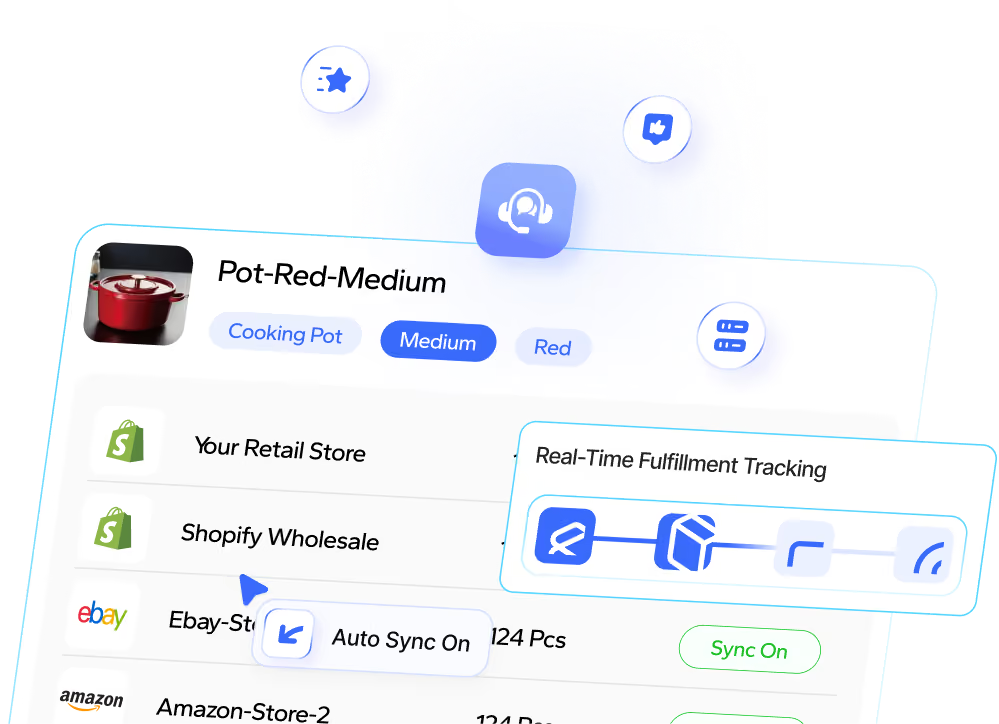
- Maintain real-time inventory sync across Shopify, Amazon, and multiple warehouses
- Track sales velocity separately for each channel
- Calculate accurate reorder points based on lead time and safety stock
- Monitor inventory in transit and open purchase orders
- Receive clear recommendations on what to reorder and when
Instead of reacting to low stock, automation gives you structured visibility and predictable replenishment planning across both channels.
Conclusion
Inventory replenishment for Shopify and Amazon sellers is no longer a simple reorder task.
It is a coordination strategy.
You are balancing two demand engines, multiple inventory locations, different lead times, and unequal stockout risks.
Without channel-level visibility and structured planning, replenishment quickly turns reactive. With the right system in place that tracks sales per channel, accounts for FBA delays, and provides clear reorder guidance, inventory becomes predictable instead of stressful.
The goal is to build a replenishment process that supports consistent, scalable growth across both platforms.
If you are ready to reduce stockouts, avoid overstocking, and automate replenishment across Shopify and Amazon then,
Start your free trial of Sumtracker today and take control of your inventory with confidence.
FAQs
1. How often should Shopify and Amazon sellers review inventory replenishment?
High-growth sellers should review replenishment weekly. During peak seasons or major campaigns, monitoring inventory coverage every few days is recommended.
2. Should I calculate reorder points separately for Shopify and Amazon?
Yes. Each channel has different demand patterns and stockout consequences. Channel-specific reorder points improve accuracy and reduce risk.
3. How much safety stock should Amazon inventory have compared to Shopify?
Amazon typically requires slightly higher safety stock because stockouts can affect rankings and sales momentum. The exact buffer depends on sales volatility and lead time reliability.
4. How do I factor FBA receiving time into replenishment planning?
Include FBA processing and check-in time as part of your total lead time. Your reorder point should reflect supplier lead time plus transit and Amazon receiving delays.
5. When should I automate inventory replenishment?
If you’re managing multiple SKUs across Shopify and Amazon, or manually tracking stock in spreadsheets, it’s time to automate. Automation improves accuracy, visibility, and scalability.
Conclusion

Bhoomi writes about inventory management and multichannel selling at Sumtracker. Her focus is on solving real operational problems for Shopify, Amazon, and marketplace sellers through well-researched content. She covers everything from multi-location inventory syncing and stock error troubleshooting to replenishment planning and platform comparisons, turning complex eCommerce operations into clear, actionable guidance.
LinkedInRelated Articles
Tool and strategies modern teams need to help their companies grow.


Ready to Simplify Your Inventory Management?
Join hundreds of e-commerce merchants who rely on Sumtracker to save time, eliminate errors, and grow their business.