.svg)
How to Track Variant Inventory (Size, Color & SKUs) Without Stock Errors


One missing size. One oversold color. One angry customer email.
That’s often how variant inventory problems first show up.
When you sell products with multiple sizes, colors, or configurations, inventory stops being a single number and becomes dozens or hundreds of moving parts.
What looks “in stock” at the product level can quietly break at the variant level, leading to stock errors you only notice after the damage is done.
In this guide, we’ll break down what variant inventory tracking actually means, the most common stock errors caused by poor variant management, and how to track size, color, and SKU-level inventory accurately without constant firefighting or guesswork.

What Variant Inventory Tracking Actually Means
Variant inventory tracking means managing stock at the individual SKU level, not just at the product level.
When a product comes in multiple sizes, colors, or configurations, each unique combination is its own SKU with its own inventory count.
For example, a Medium / Black t-shirt and a Large / Black t-shirt are not “two options of the same product”, they’re two separate inventory items that need to be tracked independently.
Proper variant tracking ensures that:
- Every size and color updates inventory separately
- Sales, returns, and adjustments affect the correct variant
- Stock availability is always accurate for customers
- Reports reflect what’s actually selling (and what’s not)
In simple terms, variant inventory tracking is about precision. It gives you a clear view of which exact variants you have, where they are, and how fast each one is moving, so inventory decisions are based on reality, not assumptions.
Common Stock Errors Caused by Poor Variant Tracking
When variant inventory isn’t tracked properly, stock issues don’t usually show up all at once, they creep in quietly and compound over time. What starts as a small mismatch in one size or color can quickly turn into daily firefighting.

Here are the most common stock errors businesses face when variant tracking breaks down:
Overselling Popular Sizes or Colors
Some variants naturally sell faster than others. Without SKU-level tracking and real-time updates, these fast-moving sizes or colors sell out first yet your store continues accepting orders.
Stock Showing Available When It’s Not
Poor syncing between systems can cause your storefront to show inventory that doesn’t exist anymore. Customers place orders, only to be told later that the item is out of stock, damaging trust and increasing support tickets.
Variant-Level Mismatches Across Channels
When the same variants are sold across multiple channels, delayed or partial updates lead to different stock counts showing in different places. One channel sells a variant that another channel still thinks is available.
Manual Adjustments Breaking Inventory Accuracy
Frequent manual edits, especially during busy periods, often update the wrong variant or overwrite existing quantities. Over time, inventory history becomes unreliable and hard to audit.
Dead Stock in Slow-Moving Variants
Without clear visibility into which sizes or colors are underperforming, slow-moving variants pile up. Meanwhile, best-sellers run out faster than expected.
Incorrect Reordering Decisions
When variant-level data is missing or inaccurate, restocking decisions are based on guesswork. Businesses end up reordering the wrong sizes, tying up cash in inventory that doesn’t move.
Best Practices to Track Variant Inventory Accurately
Accurate variant inventory isn’t about doing more work, it’s about putting the right rules in place so inventory stays accurate on its own. These best practices help prevent errors before they happen and keep every size, color, and SKU under control as you scale.
Track Inventory at the SKU Level (Always)
Every size and color combination should be treated as a separate inventory item. Avoid relying on parent product stock variant-level tracking is the only way to prevent fast-selling sizes from overselling.
Use Real-Time Inventory Sync
Inventory should update the moment a sale, return, or adjustment occurs. Even small delays can cause stock errors during promotions or high-traffic periods.
Set Low-Stock Alerts per Variant
Best-selling sizes usually need replenishment earlier than others. Variant-specific alerts ensure you restock the right SKUs at the right time, not too early and not too late.
Centralize Inventory Across Channels
Maintain a single source of truth for inventory. When each channel updates stock independently, mismatches are inevitable. Centralization keeps counts consistent everywhere you sell.
Limit Manual Inventory Adjustments
Manual edits increase the risk of updating the wrong variant or overwriting accurate data. Where possible, let systems handle adjustments automatically based on real activity.
Track Variant-Level Sales Trends
Understanding which sizes and colors sell fastest helps with smarter restocking and prevents slow-moving variants from piling up.
How to Track Variant Inventory in Shopify
Shopify makes it possible to track inventory at the variant level, which works well when your catalog is small and operations are simple.
Each size and color combination is treated as its own variant, with individual stock quantities.
.avif)
Here’s how variant inventory tracking typically works in Shopify and where it starts to fall short as you scale.
What Shopify Does Well
Shopify allows you to:
- Create multiple variants under a single product (size, color, material, etc.)
- Assign inventory quantities to each variant
- Track stock per location
- Automatically reduce stock when orders are placed
For early-stage stores, this setup is often enough to maintain basic accuracy.
Where Shopify Starts to Struggle
As variant count and sales velocity increase, common limitations appear:
- Limited visibility into fast-moving vs slow-moving variants
- No sales-based insights for restocking specific sizes or colors
- Manual exports needed for deeper SKU-level analysis
- Increased risk of errors when managing large catalogs or multiple locations
Shopify tracks inventory but it doesn’t help you optimize variant stock.
When Native Tracking Isn’t Enough
If you’re managing:
- Dozens (or hundreds) of size–color combinations
- Multiple warehouses or retail locations
- High-volume sales across variants
…native Shopify tools often become reactive rather than proactive.
When You Need Variant Inventory Software
You typically need variant inventory software when managing size, color, and SKU-level stock starts becoming hard to trust or hard to scale. Clear signs include:
- You’re frequently correcting stock errors
Regular inventory adjustments, order cancellations, or customer complaints due to stock issues.
- Some variants sell out fast while others don’t move
Best-selling sizes or colors run out early, while slower variants pile up unnoticed.
- Your SKU count is increasing quickly
Adding more sizes, colors, or configurations makes manual or basic tracking unreliable.
- You manage inventory across multiple locations or stores
Warehouses, retail locations, or multiple storefronts create inventory mismatches without centralized control.
- Manual processes are slowing your team down
Spreadsheets, CSV exports, and manual updates consume time and introduce errors.
- You don’t fully trust your inventory data
Hesitation before promotions or sales due to uncertainty around actual stock levels.
How Inventory Software Prevents Variant Stock Errors
Variant stock errors usually happen because systems can’t keep up with SKU-level complexity. This is where dedicated inventory software like Sumtracker changes how variant inventory is managed day to day.
.avif)
Here’s how inventory software actively prevents those errors:
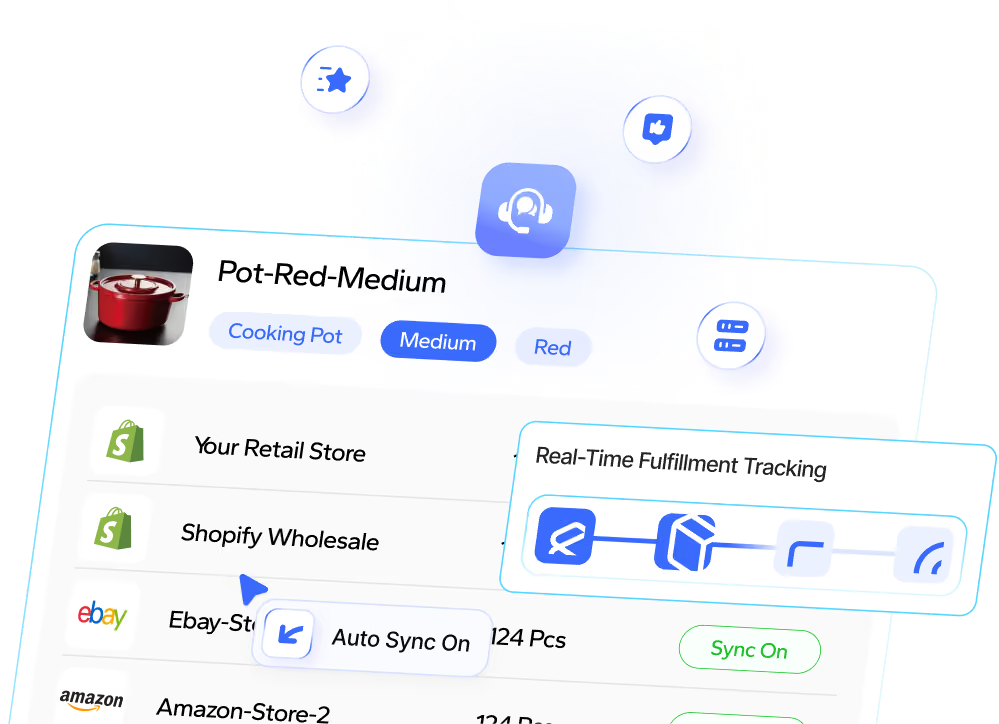
- Tracks inventory at the exact SKU level
Every size and color combination is treated as its own inventory unit. When a Medium / Black variant sells, only that SKU is updated nothing else gets affected.
- Syncs inventory in real time across systems
Sales, returns, and adjustments update inventory instantly. This prevents delays that often lead to overselling fast-moving variants.
- Maintains a single source of truth
Instead of inventory being updated in multiple places, software centralizes variant data so every channel, store, and location reflects the same stock numbers.
- Triggers low-stock alerts per variant
Inventory software monitors individual SKUs and alerts you when specific sizes or colors are running low, so you restock what actually sells.
- Reduces manual adjustments and human error
Automation replaces spreadsheets and frequent manual edits, lowering the risk of updating the wrong variant or overwriting accurate data.
- Improves restocking accuracy with real data
Variant-level sales trends help you reorder the right sizes and colors, avoiding both stockouts and excess inventory.
Conclusion
Variant inventory errors don’t happen because teams aren’t careful, they happen when systems aren’t built to handle size, color, and SKU-level complexity.
As your catalog grows, tracking inventory at the product level simply isn’t enough.
When variant inventory is managed at the SKU level, synced in real time, and backed by the right processes, stock accuracy becomes predictable. Overselling reduces, restocking improves, and teams regain confidence in their inventory data.
Inventory software like Sumtracker is built to handle variant complexity helping you track every SKU accurately, prevent stock errors, and scale without inventory becoming a bottleneck.
👉 Ready to take control of your variant inventory?
Explore how Sumtracker helps you accurately track size, color, and SKU-level stock, so you can grow without the chaos.
FAQs
1. What is variant inventory tracking?
Variant inventory tracking means managing stock at the SKU level for each size, color, or product variation, instead of tracking inventory at the overall product level.
2. Why do size and color variants cause stock errors?
Stock errors occur when variants aren’t tracked independently, inventory updates are delayed, or manual adjustments overwrite accurate SKU-level data.
3. Does Shopify track inventory by size and color?
Yes, Shopify tracks inventory at the variant level, but its native tools offer limited visibility and optimization as SKU count, locations, or sales volume increase.
4. When should I use variant inventory software instead of Shopify’s native tracking?
You should consider inventory software when stock errors become frequent, SKU counts grow, or manual tracking and native Shopify tools stop scaling with your operations.
5. How does inventory software prevent variant overselling?
Inventory software syncs inventory in real time at the SKU level, centralizes stock data, and updates quantities instantly after sales, preventing overselling of fast-moving variants.
Conclusion

Bhoomi writes about inventory management and multichannel selling at Sumtracker. Her focus is on solving real operational problems for Shopify, Amazon, and marketplace sellers through well-researched content. She covers everything from multi-location inventory syncing and stock error troubleshooting to replenishment planning and platform comparisons, turning complex eCommerce operations into clear, actionable guidance.
LinkedInRelated Articles
Tool and strategies modern teams need to help their companies grow.
.avif)
.avif)
.avif)
Ready to Simplify Your Inventory Management?
Join hundreds of e-commerce merchants who rely on Sumtracker to save time, eliminate errors, and grow their business.